-
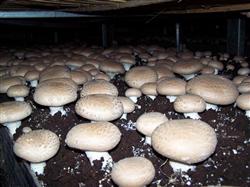
Control Methods and Technical Key Points for Mushroom Brown Blotch Disease
A rare mushroom delicacy -- the brown mushroom, also known as Xiangkou mushroom, has a large cap and thick stem, with plump and fleshy mycelium. Its taste is more delicate and savory than the white mushroom, and its aroma is richer and more palatable than the shiitake mushroom. At the same time, it has extremely high nutritional, health-care and medicinal value. It has now become a high-grade edible fungus popular in Europe, America and developed countries or regions around the world, and has formed its...
-
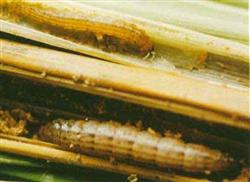
How to control rice stem borers? Practical methods and techniques explained
How to control rice stem borers? Please advise. Rice stem borers are commonly known as dead-heart borers, among which the most widespread and serious are the striped stem borer and the yellow stem borer, along with the rice skipper and the greater rice stem borer. The striped stem borer damages not only rice but also gramineous crops such as corn and wheat, while the yellow stem borer is a monophagous pest that attacks only rice. For...
-
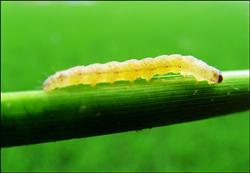
What are the control methods for the rice stem borer (Chilo suppressalis)?
How to control the rice stem borer (Chilo suppressalis) in rice? Please advise. The rice stem borer is one of the main pests on rice in our county. Its larvae mainly bore into the stems and cause dead hearts; when they attack during the booting and heading stages of rice, they form half-blighted panicles, dead booting panicles and white heads, seriously affecting rice yield. In our county, the control of the first generation of the rice stem borer was very uneven this year...
-
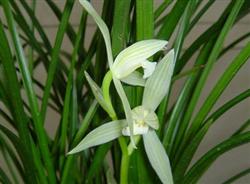
How to control orchid pests? Mastering these methods is enough
1. Orchid scale insect, commonly known as orchid louse, is one of the most common and widespread pests harming orchids. This scale insect is covered with a flat, round, earthy-brown waxy shell, about 0.1 cm in diameter, shaped like a flea, attaching to both sides of the leaves or inside and outside the leaf sheaths. The insect uses its thread-like mouthparts to suck the nutrient fluid from within the leaves. After scraping off the insect bodies, pale yellow marks appear on the leaf surface. If they cluster densely, the affected parts gradually turn yellow, growth vigor weakens, and in severe cases the plant progressively shrivels and dies.
-
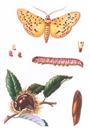
What are the control methods for the peach pyralid moth on Chinese chestnut?
How do you control the peach pyralid moth on Chinese chestnut? Please give guidance. The peach pyralid moth belongs to the order Lepidoptera, family Pyralidae. The larvae bore into and feed on the chestnut kernels, filling the seeds with frass and making them unfit to eat, and causing fruit drop, greatly affecting yield and quality. Its hosts also include peach, plum, and pear fruits, sunflower heads, corn stalks, and so on. Morphology...
-
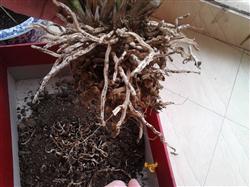
How to control ants on orchids? Introduction to practical methods
Some beginner orchid growers often do not understand orchid habits well and find it hard to grow orchids successfully; the leaf tips burn and the plants collapse, and after one or two years only a few withered stumps are left. The cause is mostly orchid root rot. As the saying goes, to grow orchids, first grow the roots. Good roots, vigorous leaves, fragrant flowers. To cultivate a good pot of orchids...
-
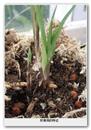
Detailed Explanation of the Harm and Control Methods of Soft Rot in Orchids
Generally speaking, if an orchid grows very robustly and its root system is very well developed, its disease resistance is relatively strong. If the orchid does not grow well and, on top of that, care is not adequate, then it becomes very prone to disease. In the current season, if ventilation is poor, orchids are very likely to develop soft rot. Soft rot is seriously harmful...
-
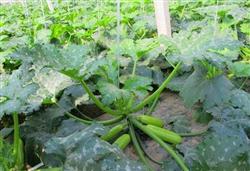
What to Do When Zucchini Grows Too Vigorously? A Detailed Guide to Practical Control Methods
What should you do when zucchini grows too vigorously? What methods can be used to control it? Zucchini can be controlled for excessive vigor using the following methods: 1. Temperature control management in the early stage. Temperature is the first factor in controlling excessive vigor. In the early fruiting stage of zucchini, the suitable daytime temperature for growth and development is 18-22°C, and the nighttime temperature is 8-10°C. If the daytime temperature is above 25°C, photosynthesis...
-
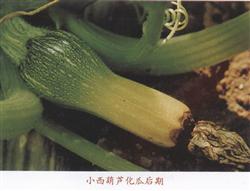
What are the control methods for zucchini fruit abortion?
How do you prevent and control fruit abortion in zucchini? What methods are truly effective? For zucchini fruit abortion, you can refer to the following methods for prevention and control: 1. Controlled cultivation. Keep the growing temperature for zucchini at around 25°C during the day and around 15°C at night, which favors the production, transport and accumulation of carbohydrates, and can greatly reduce fruit abortion....
-
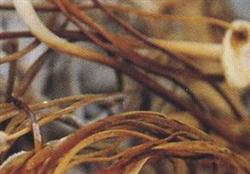
Control Methods and Technical Key Points for Enoki Mushroom Basal Rot
Symptoms: During the growth and development stage of the fruiting bodies, the base of the stipe turns dark brown to black and becomes rotten; after the base rots, the fruiting bodies topple over. Although young mushroom clusters affected by the disease do not topple over, they cannot continue to grow and develop upward; in severe cases, the needle-like young mushrooms turn black and rot in clusters. Pathogen: Penicillium claviforme, belonging to Deuteromycotina, ...
条件筛选