How to control orchid pests? Mastering these methods is enough
1. Orchid scale insect, commonly known as orchid louse, is one of the most common and widespread pests harming orchids. This scale insect is covered with a flat, round, earthy-brown waxy shell, about 0.1 cm in diameter, shaped like a flea, attaching to both sides of the leaves or inside and outside the leaf sheaths. The insect uses its thread-like mouthparts to suck the nutrient fluid from within the leaves. After scraping off the insect bodies, pale yellow marks appear on the leaf surface. If they cluster densely, the affected parts gradually turn yellow, growth vigor weakens, and in severe cases the plant progressively shrivels and dies.
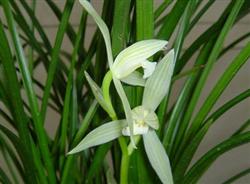
1. Orchid scale insect, commonly known as orchid louse, is one of the most common and widespread pests harming orchids. This scale insect is covered with a flat, round, earthy-brown waxy shell, about 0.1 cm in diameter, shaped like a flea, attaching to both sides of the leaves or inside and outside the leaf sheaths. The insect uses its thread-like mouthparts to suck the nutrient fluid from within the leaves. After scraping off the insect bodies, pale yellow marks appear on the leaf surface. If they cluster densely, the affected parts gradually turn yellow, growth vigor weakens, and in severe cases the plant progressively shrivels and dies.
Control method: A simple approach is to use a palm brush or a softer toothbrush, following the leaf veins, to gently remove them lengthwise (if too much force is used, brush marks may be scratched on the leaves, or the leaves may even be broken). You can also gently scrape off the insects with a fingernail. Or use medicinal cotton dipped in diluted nicotine sulfate solution, or lime sulfur mixture, to wipe the leaves. However, the few leaves at the center of the leaf cluster are tenderer; when wiping, pinch the base with two fingers of one hand with moderate pressure, and with two fingers of the other hand pinch the cotton soaked in the medicinal solution and clamp it on both sides of the leaf, then wipe upward along the leaf. This must be done carefully, otherwise the heart leaves are often pulled out or broken off. In addition to killing them with the above medicinal solutions, strengthen ventilation and light penetration in the daily orchid-growing area, and avoid an overly humid surrounding environment.
2. Ants: Orchid roots are fleshy roots that accumulate a certain amount of water and are slightly sweet in nature, while the surrounding soil is very loose. For this reason, ants are often attracted to build nests in the potting soil, making the soil loose and affecting root absorption.
Control method: According to the ancient Chinese way of growing orchids, a shallow bowl is filled with water, and the tripod-footed orchid pot is placed in it (the bottom hole must not be submerged) to prevent ants from invading. If an ant nest is found in the pot, the pot should be repotted and the soil changed immediately, or sweet and oily foods can be placed around the pot to lure the ants out and then gradually capture and kill them. The orchid pot can also be immersed in water, letting water seep in through the bottom hole to drive out and drown the ants. In addition, some DDT powder can be sprinkled on the pot stand to prevent ants from invading the orchid pot.
3. Mosquitoes and flies: The orchid-growing area is relatively shady and damp, making it easy for mosquitoes and flies to breed. This not only hinders workers from operating with peace of mind, but fly droppings also pollute the leaf surface, which is very unsightly. Moreover, mosquitoes and flies easily carry various pathogens, causing infection and other diseases.
Control method: Clear away surrounding weeds, garbage and other materials, fill in nearby low-lying areas and puddles, or turn upside down unnecessary water-holding containers to reduce their breeding sites. Keep fish in the watering vat to keep the stored water free of larvae. Regularly disinfect the surrounding environment with chemicals.
4. Earthworms: The environment around the orchid bench is shady and damp, making it easy for earthworms to breed. Especially during the rainy season, earthworms often climb onto the orchid bench and drill into the soft potting soil, wriggling about and feeding on nutrients, making the soil layer on the pot surface loose and disordered, with piles of worm castings. This is not only unfavorable to orchid root growth, but also mars
the appearance. If these conditions are found, a thin lead wire or bamboo skewer can be inserted into the castings to provoke the earthworms out, then catch or kill them one by one. The orchid pot can also be immersed in water for a moment to drive them out and catch them one by one. To eliminate this problem, frequently spray benzene hexachloride powder around the orchid bench pillars and frames to kill or repel them on contact.
5. Red spiders: These insects are small in body and vermilion red in color, often clustering densely on both sides of the leaves, sucking the sap or epidermal tissue from the leaves. After being damaged, in mild cases the leaf surface tissue becomes rough or mottled; in severe cases the leaf mesophyll dries up and the plant gradually dies.
Control method: Use medicinal cotton moistened with diluted dimethoate or derris extract solution and gradually wipe them off.
6. Caterpillars: These are the larvae of butterflies and moths, with many species. They often lodge in trees around the orchid bench and chew the leaves; blown by the wind, they drift down near the orchid bench, then climb onto the orchid bench and into the pots, damaging orchid leaves, flower buds and so on.
Control method: Regularly spray insecticide solution on the surrounding trees, or directly capture and kill them.