Control Methods and Technical Key Points for Enoki Mushroom Basal Rot
Symptoms: During the growth and development stage of the fruiting bodies, the base of the stipe turns dark brown to black and becomes rotten; after the base rots, the fruiting bodies topple over. Although young mushroom clusters affected by the disease do not topple over, they cannot continue to grow and develop upward; in severe cases, the needle-like young mushrooms turn black and rot in clusters. Pathogen: Penicillium claviforme, belonging to Deuteromycotina, ...
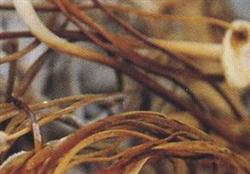
Symptoms
During the growth and development stage of the fruiting bodies, the base of the stipe turns dark brown to black and becomes rotten; after the base rots, the fruiting bodies topple over. Although young mushroom clusters affected by the disease do not topple over, they cannot continue to grow and develop upward; in severe cases, the needle-like young mushrooms turn black and rot in clusters.
Pathogen
Penicillium claviforme, belonging to Deuteromycotina, Hyphomycetes, Moniliales, Moniliaceae. When this pathogen is grown on potato sucrose medium, the mycelium is white and powdery. The medium turns dark reddish brown, and the colonies are pink. Conidiophores arise from aerial mycelium and branch symmetrically. The branching resembles that of Penicillium, but the conidia borne at the tips of the branchlets can form long chains, with chains reaching 400-600 micrometers in length; the conidia are elliptical, single-celled, and colorless.
Occurrence
It occurs in all regions, and is more common in indoor bed cultivation. It mostly occurs on mushroom beds cultivated with raw cottonseed hull substrate. During the growth stage, if the water content of the substrate is too high, water accumulates on the bed surface for a long time, and in addition the film is covered for a long time, ventilation is poor, and humidity is too high, this favors its occurrence.
Control
1. During the fruiting body growth stage, regulate the appropriate water content, and frequently eliminate accumulated water on the bed surface; especially during the fruiting body growth stage, eliminating accumulated water is particularly important.
2. After diseased mushrooms are found, they should be removed promptly, and then spray 25% carbendazim at 1:500 dilution or 65% zineb, which can achieve a certain control effect.