-
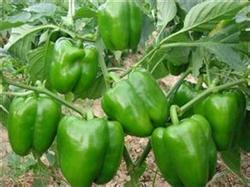
What are the control methods for sweet pepper plant death
What controls sweet pepper plant death? Please introduce the control methods. 1. Main causes of sweet pepper plant death: First, the soil temperature is too high within 0-15 cm of the topsoil near the root system; second, the soil moisture is too heavy within 0-20 cm of the topsoil near the root system. As long as one condition is met, a small number of plants will die; if both...
-
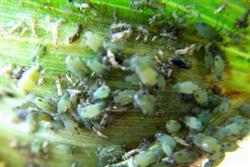
How to control sorghum aphids? These methods you need to know
How to control sorghum aphids? Please give me some guidance. The control methods for sorghum aphids can refer to the following: ① Detect early and control early: when aphids occur in spots and patches, eliminate them promptly to prevent spread. In the early stage, you can simply wipe off the aphids by hand; when severe, use pesticides for control. ② Chemical control methods: A. Dusting: at the seedling stage, use 2.5 kg of 1.5% dimethoate powder per mu; 2 to 3 kg of 1.5% 1605 powder. B. Spraying: use 50 to 70 L of a 1500-fold dilution of 40% dimethoate emulsifiable concentrate per mu; 500 mL of 25% methamidophos emulsifiable concentrate, add 500 to 750 L of water, with a per-mu dosage of 75 L (Note: this pesticide is a highly toxic pesticide, strictly follow the operating procedures, stop using it 28 days before harvest, do not mix it with alkaline pesticides, and wash the equipment clean after use); 0.01 to 0.02 kg of 50% pirimicarb wettable powder, diluted with 30 to 50 L of water (do not let it contact human skin, and do not mix it with strong acids or strong alkalis); 20 mL of 30% omethoate emulsifiable concentrate, diluted with 75 L of water, spray the plants during the occurrence period. C. Smearing on plants: use a 50- to 100-fold dilution of 40% omethoate emulsifiable concentrate, and smear it on the 3rd to 4th nodes at the base of the sorghum (about 17 cm). In the later stage, when the plants age, it is not suitable to use. D. Fumigation to kill aphids: use 0.2 to 0.3 kg of 5% 3911 granules per mu, mix with 2 kg of sand and soil, and apply the pesticide to one ridge every 12 ridges, which can fumigate and kill aphids.
-
Common Poplar Pest Control Methods and Technical Key Points
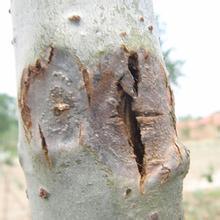
In recent years, poplar canker disease has occurred widely, with incidence rates reaching over 30% in severely affected plots. Canker disease severely weakens tree vigor and inhibits growth. If not controlled in time, it will inevitably cause significant economic losses to growers. Disease symptoms: Canker disease mainly affects the trunk and is a chronic disease. In the early stage, on the bark...
-
Poplar Pest Control Methods and Key Technical Points
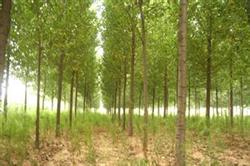
Poplar pests can be divided into the following major categories based on their mode of damage and the corresponding control measures: 1. Leaf-eating pests: mainly including Clostera anachoreta (poplar prominent moth), Micromelalopha troglodyta (poplar small prominent moth), Cerura menciana (poplar two-tailed prominent moth), Botyodes diniasalis (poplar yellow leaf-roller), slug moths, and scarab beetles. Poplars from the seedling stage to the timber stage are all damaged by the above pests, which feed and cause leaf defects or completely strip the foliage...
-
What to Do When Poplar Trees Get Canker Disease? A Detailed Guide to Prevention and Control Methods
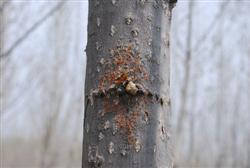
Poplar is the general term for deciduous trees of the genus Populus in the willow family (Salicaceae). The genus contains more than 100 species, mainly distributed in the temperate and cold zones of Europe, Asia, and North America, as well as the Mediterranean coastal countries and the Middle East. China has more than 50 species. The wood is used for civil construction materials, furniture production, matchsticks, sawn timber, papermaking, and is also used for...
-
What are the control methods for poplar canker?
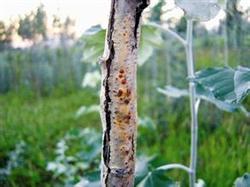
Canker, also known as rot disease, is mainly distributed in northeast, northwest, north China and other regions of our country. It mainly damages the branches and trunks of trees, is extremely contagious, and once the disease becomes epidemic, it often causes large-scale death of forest trees, resulting in great losses. In recent years, due to large-scale planting of poplars, this disease has occurred from time to time in various places, and planting a single poplar variety...
-
Detailed Explanation of Prevention and Control Methods and Occurrence Patterns of Poplar Black Spot Disease
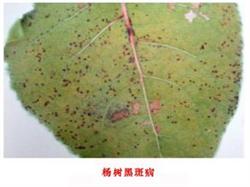
Poplar black spot disease, also known as poplar brown spot disease, generally occurs on young leaves, tender shoots and fruit clusters, spreading from top to bottom, mainly damaging leaves. In the early stage of the disease, needle-like sunken shiny small spots first appear on the underside of leaves, then the lesions expand to about 1 mm, black, slightly raised, and brown spots also appear on the upper side of the leaves, 5-6 days...
-
Identification and Control Methods of Poplar Black Spot Disease Explained in Detail
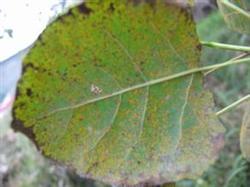
Poplar black spot disease, also known as poplar brown spot disease, is caused by a pathogen that can infect many species of poplar. Seedlings, young trees and mature trees can all be affected. When the disease is severe, it affects the normal growth of the trees and causes economic losses. Symptoms: it generally occurs on young leaves, shoot tips and fruit clusters, spreading from top to bottom, mainly damaging leaves. When the disease starts...
-
Symptom Identification and Control Methods of Poplar Canker
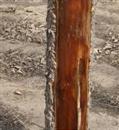
Distribution and Damage Poplar canker, also known as poplar rot disease. It occurs in all poplar cultivation areas in China, but is mainly distributed in the Northeast, Northwest, North China and other regions. It is a common and frequently occurring disease of poplars in parks, green spaces, street trees and nurseries, often causing mass death of street trees, and newly transplanted poplars are especially severely affected. Symptoms...
-
What are the control methods for banana bunchy top disease?
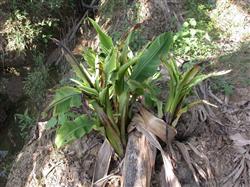
What control methods are there for banana bunchy top disease? Please describe the methods. Banana bunchy top disease can be controlled by referring to the following methods: 1. Establish disease-free nurseries and cultivate disease-free seedlings. The nursery should be set up in a place with no banana plantations within a 2000-3000 m radius, to prevent aphids from entering and transmitting the disease; insect-proof nets can be added over the seedling shed. ...
条件筛选