What are the control methods for the rice stem borer (Chilo suppressalis)?
How to control the rice stem borer (Chilo suppressalis) in rice? Please advise. The rice stem borer is one of the main pests on rice in our county. Its larvae mainly bore into the stems and cause dead hearts; when they attack during the booting and heading stages of rice, they form half-blighted panicles, dead booting panicles and white heads, seriously affecting rice yield. In our county, the control of the first generation of the rice stem borer was very uneven this year...
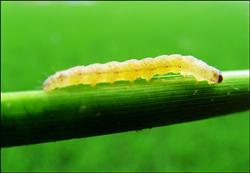
How to control the rice stem borer (Chilo suppressalis) in rice? Please advise.
The rice stem borer is one of the main pests on rice in our county. Its larvae mainly bore into the stems and cause dead hearts; when they attack during the booting and heading stages of rice, they form half-blighted panicles, dead booting panicles and white heads, seriously affecting rice yield. In our county, the control of the first generation of the rice stem borer was very uneven this year. Some farmers missed the optimal control period because of the busy farming season, or used the wrong pesticides, and some even carried out no control at all, resulting in relatively severe borer damage in some fields and a large number of surviving larvae per mu, which increased the task of controlling the second generation of the rice stem borer. According to surveys from the end of June to July 8, the average damage rate of the first generation of the rice stem borer was 5.1%, the borer damage rate in severely affected fields reached 21.7%, and the number of surviving live larvae per mu was 6,740. On July 11, dissection and examination showed a pupation rate of 28.7% and an emergence rate of 1.6%. Based on a comprehensive analysis of pest conditions, crop conditions, meteorological conditions and historical data, the emergence peak will be around July 15, and the egg hatching peak will be from July 20 to 25. Farmers in all townships are urged to pay attention to field surveys and carry out control work in a timely manner.
1. Control threshold: fields with 120 egg masses per mu, or 60 concentrated damaged plants per mu. The target fields for control are rice fields where too much nitrogen fertilizer has been applied, the leaves are dark green, and the growth is luxuriant.
2. Optimal control period: July 20 to 25
3. Control method: use 200 grams of 18% bisultap, or 50 milliliters of 40% chlorpyrifos, or 100 grams of 18% monosultap·triazophos per mu, mix with 40 kilograms of water and spray evenly.
Click to get a massive amount of rice cultivation techniques
Click to get a massive amount of grain cultivation techniques