-
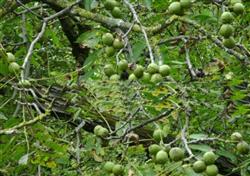
Pecan Pest and Disease Control Methods and Key Technical Points
How do you control pests and diseases in pecans? Please provide guidance. The methods for controlling pecan pests and diseases can refer to the following: Pecan seedlings have many pests and diseases. Common pests include aphids, scarab beetle larvae, and cutworm larvae, while the main disease is root rot. In controlling pests and diseases, grasp the principle of "prevention is more important than cure, with prevention as the priority"...
-
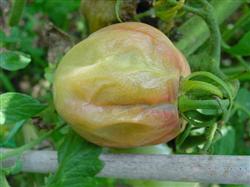
What are the control methods for autumn tomato fruit rot?
What methods can prevent autumn tomato fruit rot? Please explain. Fruit rot during the fruiting stage of autumn tomatoes is mainly caused by soft rot, brown rot, and anthracnose. Strengthening scientific management and preventing these three diseases are effective ways to control fruit rot. 1. Management on sunny days. In general, tomato fruit rot is caused by pathogen infection...
-
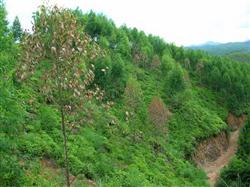
What are the control methods for bacterial wilt in eucalyptus?
Bacterial wilt of eucalyptus and its control. Bacterial wilt of eucalyptus, caused by Ralstonia solanacearum (Smith) Yabuuchi, is a bacterial wilt disease that seriously harms eucalyptus in South China. In the early stage of infection, seedlings generally become wilted, followed by leaf blight, and the seedlings die rapidly; the roots of diseased plants become necrotic, appear water-soaked, and have...
-
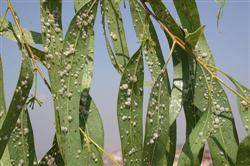
Eucalyptus Pest and Disease Control Methods and Key Practical Techniques
The main pests and diseases of eucalyptus include: bacterial wilt, leaf blight (commonly known as defoliation disease), eucalyptus seedling stem rot, eucalyptus leaf roller, termites, and scarab beetles, etc. (1) Bacterial wilt: When the bacterial wilt pathogen infects young trees in the forest, the above-ground symptoms can be divided into two types. The first is the acute type, in which the leaves of the diseased plant rapidly lose water and wilt, hanging on the branches without falling off, showing the typical "green wilt" symptom. For this type of diseased plant, the time from onset to the death of the whole plant is relatively short, generally only 2-3 weeks. The second is the chronic type, in which the diseased plant shows stunted growth, dwarfism, and the lower leaves first turn purplish-red, then gradually deepen and spread upward, and finally the leaves dry up and fall off. Some stems and side branches develop irregular dark brown necrotic spots, and in severe cases the entire plant dies. For this type, the time from onset to the death of the whole plant is relatively long, generally 3-6 months. Eucalyptus bacterial wilt is prone to epidemic outbreaks under high temperature and high humidity. Root collar injury, surface runoff, and root-to-root contact between plants are the main pathways for pathogen invasion and spread. Control measures: select disease-resistant strains; carry out quarantine of seedlings before leaving the nursery, and try to avoid bringing diseased seedlings to the plantation; also try to avoid establishing eucalyptus plantations on forest land that is likely to carry Pseudomonas solanacearum (soil where peanuts, tobacco, potatoes, tomatoes, mulberries, kapok, beefwood, and canna have been planted); do not apply undecomposed organic fertilizer; strengthen tending and management to improve tree disease resistance. After a plant becomes diseased, there is still no proven effective control method; once discovered, the only option is to immediately pull it out roots and all, spread lime on the soil in the planting hole for disinfection, and destroy the diseased plant.
-
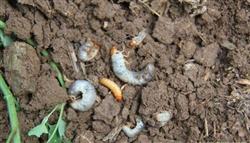
What are the control methods for potato soil pests?
How do you control potato soil pests? Please give guidance. The main soil pests of potatoes are white grubs and wireworms. The more convenient methods for controlling these two pests are seed potato coating and applying chemicals in the furrow at sowing. For seed potato coating, you can choose 70% thiamethoxam dispersible seed treatment agent, at 100 kg seed potatoes...
-
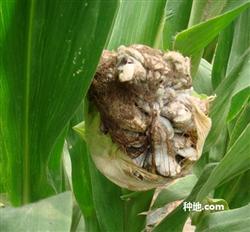
What to Do About Corn Stalk Rot? Detailed Control Methods
What is corn barren stalk disease? An introduction to the symptoms of corn barren stalk disease: corn usually produces 1-2 ears, most commonly one ear, but during production, barren stalks often appear, affecting yield increases. For example, surveys in Kuandian, Yanyan, Benxi, Huanren and other places in Liaoning found barren stalk rates of 12%-20%, with a yield reduction of 50kg per 667 sq m...
-
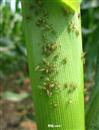
How to control aphids in cornfields? These methods are very practical
How to control aphids in cornfields? The methods for controlling aphids in cornfields are as follows: (1) Chemical control: use 5% phorate granules at 200 g per 667 sq m, mix with 1.5 kg of fine sand or soil, apply the pesticide every other ridge, and fumigate to kill the aphids; spray 0.5% dimethoate powder at 1.5-2.0 kg per 667 sq m, or 50% dimethoate...
-
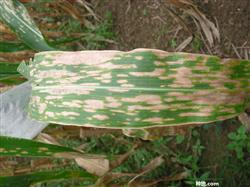
How to treat southern corn leaf blight? Mastering the control methods is key
How to treat southern corn leaf blight? For guidance on southern corn leaf blight, you can refer to the following control methods: 1. Symptom presentation. Southern corn leaf blight can occur throughout the entire growth period of corn, mainly damaging leaves and leaf sheaths, and the husks and ears can also be affected. It usually starts on the lower leaves of the plant and spreads and expands upward. Leaf lesions...
-
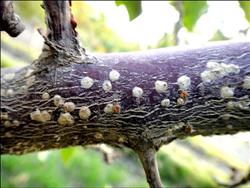
What are the control methods for scale insects on apricot trees?
How do you control scale insects on apricot trees? When do scale insects on apricot trees appear? What methods can be used for control? Please explain. As the apricot tree area expands year by year, the number of scale insect pest species on apricot trees increases and the affected area expands, and the damage is becoming increasingly serious. At present, scale insects have become one of the main factors affecting apricot production in our county...
-
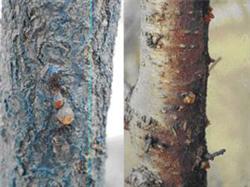
What are the control methods for gummosis in apricot trees?
How to control gummosis in apricot trees? What causes gummosis in apricot trees? What methods can control it? Please explain. Gummosis in apricot trees is a non-infectious disease that can affect both the trunk and the fruit. When it occurs, a soft gummy substance oozes from the bark of branches and trunks or from cracks in wounds, and after contact with air and drying, it forms a hard amber...
条件筛选