-
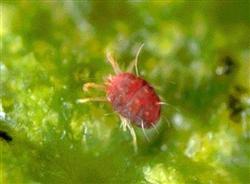
How to Control Red Spider Mite Infestations on Mung Beans
Chemical control is the main approach. Strengthen field inspections; once localized, patchy occurrences are found, spray promptly for control. Use a 1000-fold dilution of 50% malathion emulsifiable concentrate, or a 2000-fold dilution of 50% naled, or a 5000-fold dilution of 25% deltamethrin. Spray once every 7 days, for 2 to 3 consecutive applications.
-
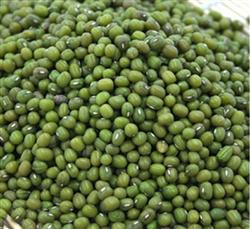
How to prevent pests in mung beans in winter? All the practical remedies are here
Mung bean, also known as green small bean, is named for its green color. It has a cultivation history of more than two thousand years in our country. Because it is rich in nutrients and has many uses, Li Shizhen called it "the best of vegetables." But although it is nutritious and much loved by people, storing mung beans is a headache. Because the originally intact...
-
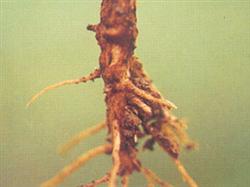
What to Do When Mung Beans Get Root Rot? A Detailed Guide to Prevention and Control Methods
(1) Symptoms In the early stage of the disease, the young leaves turn yellow. If the root system is pulled out for observation, the lower part of the stem and the upper part of the main root can be seen to be dark brown and slightly sunken. When the stem is cut open, the vascular bundles have turned dark brown. When most of the roots have rotted, the plant withers and dies. (2) Disease conditions Low-lying terrain, high soil moisture, low soil temperature, and poor root development make the disease likely to occur. Stormy weather helps the pathogen spread and proliferate.
-
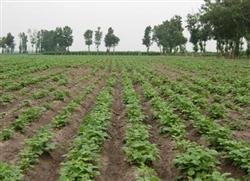
Methods and key technical points for applying sufficient basal fertilizer to mung beans
Although mung bean rhizobia have nitrogen-fixing ability, applying additional farmyard manure and phosphorus and potassium fertilizers has a clear yield-increasing effect. Before sowing, apply 2500 kg of farmyard manure, 20 kg of phosphate fertilizer and 1 kg of biological potassium fertilizer per mu as basal fertilizer. For fields where there is not enough time to apply basal fertilizer, during the early growth stage, that is, the branching and early flowering stage, apply 7.5 kg of ternary compound fertilizer per mu as topdressing...
-
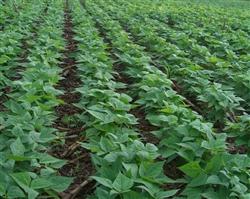
Detailed Explanation of Key Points for High-Yield Cultivation Techniques of Black Kidney Beans
Black kidney beans, commonly known as black small beans, have nutritional and immune-boosting benefits. They are a black food that is excellent both as medicine and as food. They are in great demand on the international market. Because of their low input, high output, ease of cultivation, and low risk, they are deeply welcomed by farmers. I. Variety Characteristics: Growth period 90 days, requiring active accumulated temperature of 2000-2200 degrees, seed coat black,...
-
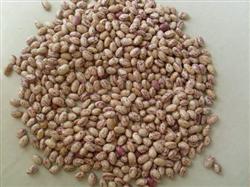
Detailed Explanation of Key Techniques for High-Yield Cultivation of Runner Beans
Key tips: Main technical indicators: soil fertility indicators; fertilization indicators; density and yield indicators; pesticide use restriction indicators. Runner beans are a major cash crop in the Altay region. Due to the high-quality and unique light, heat, water and soil resources of the Altay region, the runner beans produced are of superior quality, with an average of 130 to ... grains per 100g.
-
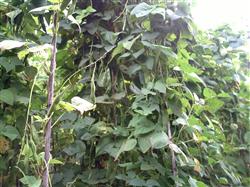
Three-dimensional cultivation techniques for summer maize, autumn kidney beans and over-summer garlic sprouts
Autumn kidney beans are a warm-loving vegetable that is not tolerant of high temperatures or frost; they are generally sown in early autumn and finish growing before frost. Their main supply season is in August and September, and the returns are quite considerable. The key points of the cultivation technique are as follows: 1. Variety selection. For autumn kidney beans, choose varieties that are heat-tolerant, disease-resistant, highly adaptable and have a high pod-setting rate, such as Lulong...
-
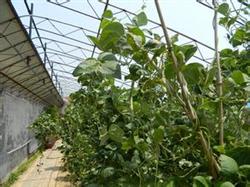
For kidney beans, remove leaves first, then pinch the growing tips: earlier harvest brings higher returns
Currently, greenhouse-cultivated kidney beans are in the vine-extension and flowering stage. How can you ensure a bumper harvest? Here, the reporter suggests that vegetable growers grasp the following key measures for management. First, pinch the tips at the right time. Greenhouse kidney beans and open-field kidney beans have different cultivation environment conditions. Because the temperature inside the greenhouse is higher, the growth rate...
-
Many taboos during the flowering period of kidney beans, keep these precautions in mind
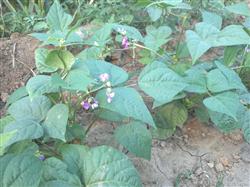
The main cause of low flowering and pod-setting rates in kidney beans is improper management during the flowering period. Therefore, vegetable growers are reminded that they must manage the flowering period of kidney beans well to ensure high quality and high yield. In production, the following points should be noted: 1. Avoid high temperatures. Kidney beans do not like high temperatures, and higher temperatures often cause the vines...
-
Effectiveness of first supplementing then regulating when watering kidney beans
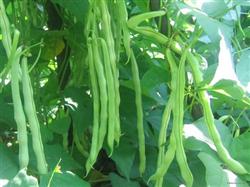
Vegetable growers often say, "Water kidney beans at the pod stage, not at the flower stage." Based on several years of experience and theoretical exploration, the author believes that "water kidney beans at the pod stage, not at the flower stage" should become a thing of the past. The reason is: with the advent of humic acid foliar fertilizer, it can be directly absorbed by the leaves and stems, and high concentrations of humic acid foliar fertilizer can inhibit vegetative growth and promote...
条件筛选