-
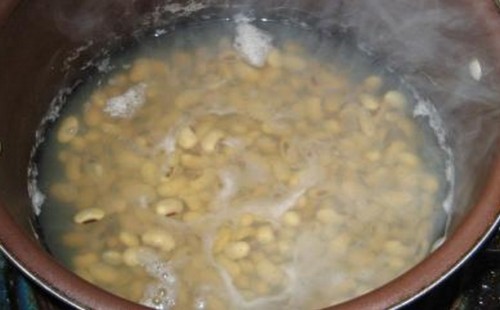
Is it good to soak soybeans in water and use it to water flowers? Disease prevention methods you need to master
Scientific and reasonable water and fertilizer intake is an effective means of promoting the growth of potted flowers and plants, and it is also the most basic and commonly used care measure. Whether potted flowers and plants grow well depends to a large extent on whether water and fertilizer management is done properly
-

How to grow pothos with soybeans? Practical care methods shared
Pothos is a very easy-to-grow green plant. Because of its strong sprouting ability and easy care, it is very suitable for beginner growers to practice with. But for newly bought pothos, how to make it grow lush is a problem many beginner growers face. So, how do you make pothos grow lush?
-
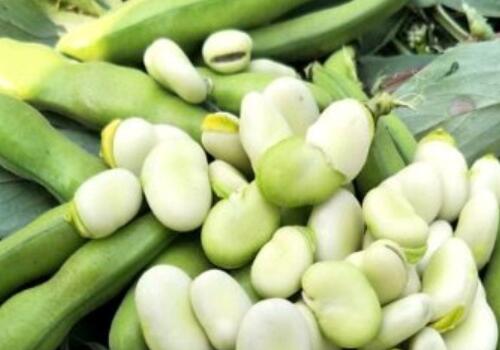
Planting Time, Methods and Causes of Flower and Pod Drop in Broad Beans as an Annual Herbaceous Crop
Broad bean is also called nandou, hudou, shudou and fodou. It is an annual herbaceous plant, 30-100 (120) cm tall. It is a dual-purpose crop for grain, vegetables, feed and green manure. So when are broad beans planted? What are the methods? What causes flower and pod drop? When are broad beans planted
-
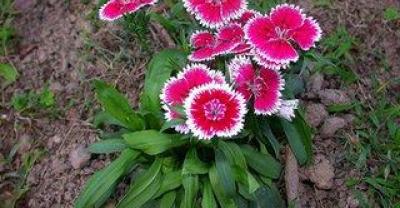
How to Grow Castor Beans? Detailed Explanation of High-Yield and High-Efficiency Cultivation Techniques
Castor bean (Ricinus communis) is an annual or perennial herbaceous plant of the genus Ricinus in the spurge family (Euphorbiaceae), and it is an important oil crop in China. At the same time, castor bean also has certain medicinal value; its leaves and roots...
-
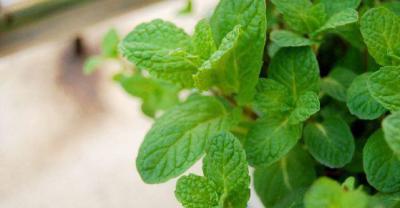
How to Grow Hyacinth Beans? A Detailed Guide to Planting Methods for School Vegetable Gardens
Hyacinth bean (scientific name: Lablab purpureus (Linn.) Sweet), commonly known as bian dou, also called huolian biandou, pengpi dou, tengdou, yanli dou, quedou...
-

Detailed Guide to Growing and Caring for Yardlong Beans
The seasonal vegetable yardlong bean is loved by young and old alike, and it is one of the most popular vegetables to grow right now. The yardlong bean is a high-quality legume vegetable with an attractive appearance and rich...
-

How to grow spring hyacinth beans? Keep these planting precautions in mind
Hyacinth bean, also known as hedge bean, magpie bean, and flour bean, is locally also called eyebrow bean, sword bean, etc. Its tender pods and seeds are eaten. Hyacinth beans not only have high nutritional value, but also have medicinal value such as strengthening the spleen and draining dampness...
-
New High-Yield Cultivation Technique for Soybeans: "Four Changes and One Addition"
With the traditional tillage and sowing method for growing soybeans, the rows are narrow and the plants too dense, and combined with various other reasons, yields have long hovered around 100-150 kg. Through years of experimental research, we have worked out a new approach that can increase soybean yields by more than 40%, namely the "Four Changes and One Addition" technique. The usual measures for raising soybean yields, besides selecting new high-quality, high-yield varieties, also include paying attention to crop rotation. According to experiments, after many years of continuous cropping, soybeans show slow growth, short plants, yellowing lower leaves, early leaf drop, and few pods with small seeds. Experiments have also proven that continuous cropping (monocropping) for more than 3 years can reduce yields by 20%-30%, or even more, and 2 years of continuous cropping following a one-year break can reduce yields by more than 30%. Therefore, crop rotation and changing to a different crop are of great significance in soybean production. To achieve high-yield and super-high-yield soybean cultivation, the new "Four Changes and One Addition" cultivation technique should be implemented on this basis. The specific methods of "Four Changes and One Addition" are:
-
How to Achieve High Yield and High Efficiency in Soybeans? Six Measures to Help You Get There
Matching superior varieties with good methods. While planting existing high-yield, high-quality soybean varieties in the project area, new and superior varieties such as Jidou No. 12, Handou No. 3, Jihuang No. 13, and Japanese high-oil soybean were introduced according to local conditions through a combination of introduction, demonstration, and promotion, bringing the coverage rate of superior varieties in the soybean project area to 100% and laying the foundation for matching superior varieties with good methods. Seed dressing with molybdenum fertilizer to increase the pod-setting rate. In high-yield soybean areas, use 3 grams of ammonium molybdate per mu, dilute with water into a 2% solution, and dress 1 kg of soybean seed. According to multi-site trials, soybeans treated with molybdenum
-
How to Achieve Early Maturity and High Yield in Soybeans
1. Choose suitable varieties. When selecting seeds, choose varieties with shorter plant height that can be planted at wider spacing; these varieties have relatively lower water requirements and suffer less yield loss in dry years. 2. Strengthen field management and weed promptly. Weeds compete with soybeans for fertilizer and water, affect photosynthesis and hinder ventilation, so weeds must be removed promptly. Cultivate and hill up at the right time. When cultivating and hilling, cultivate deeply and hill up plenty of soil to enhance soil permeability and its capacity to retain water and fertilizer. 3. Apply sufficient base fertilizer. On the basis of applying farmyard manure, the amount of chemical fertilizer applied must not be
条件筛选