-
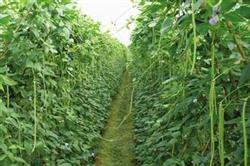
Field management of winter-planted beans is crucial, and growers should pay close attention to it.
For raising bean seedlings, direct sowing was mostly used in the past; on the basis of fully protecting the roots from cold damage, it ensures uniform and strong seedlings; it allows early sowing, early harvest, and an earlier market launch. In production, nutrient pots are mostly used for raising seedlings, and 50-cell plug trays can also be used, sowing 2~3 seeds per cell, watering thoroughly, and controlling the temperature reasonably. The seedling age is about 25 days...
-
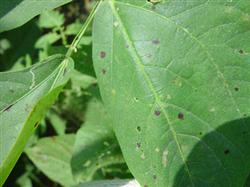
A Detailed Guide to the Main Diseases of Yardlong Beans and Their Control Methods
The main diseases of yardlong beans are leaf spot, fusarium wilt, phytophthora blight, root rot and rust; the insect pests include the legume pod borer, cutworm, thrips, leafminer and mites, and integrated pest management techniques should be used for control. The main methods for preventing and controlling diseases and pests are: choose fields that have not grown legume crops for more than two years for planting; clear weeds around the field...
-
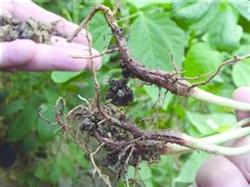
What causes the bottom leaves of yardlong beans to turn yellow?
Yellowing leaves on yardlong beans are something many vegetable growers who plant yardlong beans encounter often, but there are many different causes of leaf yellowing, and some of these causes, if not treated promptly, can even lead to a total loss of the crop. The following is an introduction to several causes of yellowing leaves in yardlong beans. 1. Symptom presentation. Yellow leaves on yardlong beans are mainly...
-
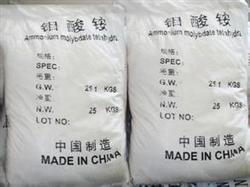
Key Technical Points and Methods for Applying Molybdenum Fertilizer to Soybeans
Molybdenum is a trace element essential for nitrogen metabolism in crops, and especially essential for the process by which nitrogen-fixing bacteria fix atmospheric nitrogen, so the effect of applying molybdenum fertilizer to legume crops is consistent. Xiao County has about 300,000 mu of soybeans planted year-round, and according to tests by the Suzhou City Soil and Fertilizer Station, 95% of the soil in Xiao County is deficient in molybdenum. In response to this situation, the Xiao County Soil and Fertilizer Station...
-
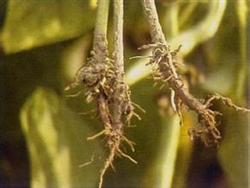
How to identify fusarium wilt in yardlong beans? A detailed explanation of symptom characteristics
Symptoms When a plant is affected, it first starts from the lower leaves. Irregular water-soaked lesions appear on the leaf edges, especially at the leaf tips, after which the leaves turn yellow and die, and the disease gradually spreads to the upper leaves, until finally the whole plant wilts and dies. The cortex at the root-stem junction of diseased plants often splits, and its vascular bundle tissue turns brown; when humidity is high, a pink mold layer appears on the surface of the diseased part...
-
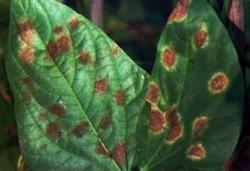
Detailed Explanation of Key Points of Formula Fertilization Technology for Yardlong Beans
1. Symptoms mainly affect leaves, stems and vines, and pods. In the early stage of the disease, purple-brown spots appear on both sides of the leaves, and after expanding they become nearly circular dark brown lesions, 1-2 cm in diameter, with indistinct edges; when humid, the lesion surface is densely covered with sooty mold (especially prominent on the underside of the leaves). In severe cases, it causes early defoliation, leaving only the young leaves at the top, ...
-
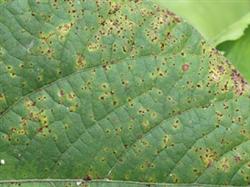
What are the main symptoms of rust disease in yardlong beans?
Yardlong beans can be infected by the pathogen throughout the entire growing period, but resistance weakens and susceptibility increases from the beginning of flowering to the podding stage. The disease mainly attacks the leaves. In the early stage of the disease, scattered chlorotic yellowish-white spots appear on the underside of the leaves, and the spots gradually multiply until they densely cover the entire leaf. On the corresponding reverse side of the lesions, yellowish-brown...
-
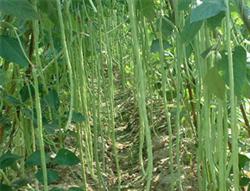
How to Grow Yardlong Beans? A Complete Guide to Scientific Cultivation Techniques
Extra-Early-Maturing Yardlong Bean - Zaosheng Wang. Zaosheng Wang yardlong bean was bred by Hunan Tiancheng Seed Industry Company. As the name suggests, it is the king among early-maturing yardlong beans. This variety is sown in February and reaches the market in April, becoming a sought-after vegetable on the market at that time, with high prices and good returns; 1 mu can match 3 mu of other vegetables. It has currently been promoted in Sichuan, Shanghai, Hunan, Hubei,...
-
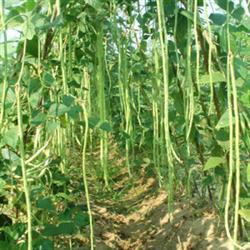
Cucumbers and long beans planted in two crops, two harvests from one greenhouse
Long beans are known for being difficult to manage in off-season cultivation, with high requirements for temperature and light, but their yield and returns are also high. 1. Raising seedlings 1. Use 5×5 nutrient cups, or 32-cell seedling trays, with good substrate as the nutrient soil, and two seeds per planting cell. Specific method: first moisten the substrate with water at a 1000-fold...
-
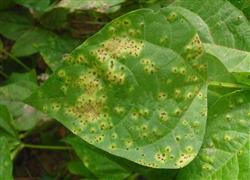
Methods and Key Technical Points for Pest and Disease Control in Oil Beans
Main symptoms: Beans can be infected by pathogens throughout the entire growth period, but resistance weakens and susceptibility increases from the beginning of flowering to the fruiting stage. The disease mainly attacks leaves. In the early stage of the disease, chlorotic yellowish-white spots appear on the leaves, and the spots gradually increase until they densely cover the entire leaf. Plants are stunted, pods are few and small, and the growth period is shortened...
条件筛选