Detailed Explanation of Key Techniques for High-Yield Cultivation of Runner Beans
Key tips: Main technical indicators: soil fertility indicators; fertilization indicators; density and yield indicators; pesticide use restriction indicators. Runner beans are a major cash crop in the Altay region. Due to the high-quality and unique light, heat, water and soil resources of the Altay region, the runner beans produced are of superior quality, with an average of 130 to ... grains per 100g.
Key tips: Main technical indicators: soil fertility indicators; fertilization indicators; density and yield indicators; pesticide use restriction indicators.
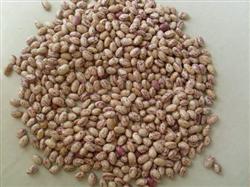
Runner beans are a major cash crop in the Altay region. Due to the high-quality and unique light, heat, water and soil resources of the Altay region, the runner beans produced are of superior quality, with an average of 130 to 175 grains per 100g. The seeds are oval, with a smooth surface and red-brown speckles on a milky white background, and the quality is excellent. They have been favored by foreign merchants for many years and are also an important source of income for the broad masses of farmers and herders in our region. The average yield per 667 sq m in our region is 170kg, with a maximum of 330kg, and the general market price is about 3 yuan per kilogram. The main high-yield cultivation techniques for runner beans in our region are summarized as follows.
1 Main technical indicators
1.1 Soil fertility indicators Select loam or sandy loam with a soil matured layer >30cm, total salt <2g/kg, organic matter >8g/kg, alkaline hydrolyzable nitrogen >30mg/kg, available phosphorus >8mg/kg, available potassium >120mg/kg, and pH <8.
1.2 Fertilization indicators Apply more than 1000kg of organic fertilizer per 667 sq m, along with 15kg of urea, 15kg of diammonium phosphate, and 7kg of potassium sulfate, or apply 15kg of Sakefu (N16-P16-K8) as a base fertilizer (or as a deep banded seed fertilizer), and apply 15kg of Sakefu (N20-P10-K10) as a top dressing; spray molybdenum-containing foliar fertilizer or molybdenum micro-fertilizer on the leaves.
1.3 Density and yield indicators Row spacing 50cm, generally no fewer than 16000 seeds sown per 667 sq m, with 11 to 13 seeds per sq m; more than 12800 plants retained per 667 sq m, more than 12000 plants harvested, an average of 8 to 10 plants harvested per sq m, an average of 12 to 20 pods per plant, 38 to 45 grains per plant, 100-grain weight 55 to 71g (that is, 140 to 181 grains per 100g), and an average yield of 250 to 300kg per 667 sq m.
1.4 Pesticide use restriction indicators It is strictly forbidden to use highly toxic, highly poisonous, or high-residue pesticides. When diseases and insect pests occur in the field and reach the control threshold, pesticides should be applied promptly according to the control methods in these regulations, with alternating pesticide use, and it is strictly forbidden to use pesticides at excessive concentrations. If diseases and insect pests occur severely or new pesticides are used, pesticides should be applied under the guidance of agricultural technicians. It is strictly forbidden to blindly mix pesticides, and it is strictly forbidden to use pesticides without authorization.
2 Main pre-emergence measures
2.1 Fertilizer preparation Advocating heavy application of seed fertilizer, generally applying 5kg of urea and 10kg of diammonium phosphate per 667 sq m respectively. For top dressing, generally apply 10kg of urea, 5kg of diammonium phosphate, and 7kg of potassium sulfate per 667 sq m respectively.
2.2 Land preparation Select mature land with deep and loose soil, a low groundwater table, and good drainage. The best previous crops are potato, wheat, and corn (2349, 8.00, 0.34%). Avoid continuous cropping and avoid alternating crops. Autumn plowing is not advocated; spring plowing is the main method. Before the suitable sowing period, if the soil moisture is insufficient, irrigate with a light flush of water. After spreading organic fertilizer, plow the land promptly when the soil is dark and moist, to a depth of 20cm. After a short period of moisture evaporation, harrow and level to preserve moisture (advocating the use of a combined land preparation machine), leaving the field ready for sowing.
2.3 Seed preparation Runner beans are a conventional variety. Select large, plump, glossy seeds free from disease and insect damage and without breakage as seeds, in order to improve germination vigor and enhance the large-seed heredity of the variety. Generally, a 100-grain weight >57g is required, that is, fewer than 175 grains per 100g. Tests have shown that seed dressing with Raxil can inhibit the growth of various miscellaneous fungi. Although seedling emergence is delayed by 1 to 2d after dressing, the growth vigor is significantly enhanced, with a stimulating effect on growth and development. For every 100kg of seeds, use 2 to 3g of the active ingredient of Raxil (if using 2% Raxil seed dressing agent, use 100 to 150g), and 3kg of water per 100kg of seeds. Pour into a sprayer, then add the seed dressing agent, stir evenly, spray and mix the seeds, pile and cover for 3 to 4 hours, then spread out in the shade to dry before sowing.
2.4 Timely sowing Sow 5 to 7d before the local final frost, and sow promptly when soil moisture is suitable. In the Altay region, this is generally from May 5 to 10. For small areas, manual dibbling is advocated; for large areas, pneumatic precision seeders are advocated for dibbling, or a 24-row drill adjusted to 8-row drilling, with a row spacing of 50cm. For manual dibbling, the hill spacing is 15cm, with 2 to 3 grains per hill, and a sowing depth of 4 to 6cm. After dibbling and covering with soil, press lightly with the foot. For pneumatic precision seeders, the sowing depth is 4 to 6cm, with 10 to 12 seeds per sq m, and a press wheel attached behind the seeder. For conventional sowing, use a 24-row drill adjusted to 8 rows, with a sowing depth of 5 to 7cm, and 11 to 13 seeds per sq m, with a press wheel attached behind the drill. Appropriately enlarge the seed discharge lower opening of the seeder, reduce the rotation speed of the seed metering cup, and increase the size of the seed metering cup opening.
2.5 Sowing rate Calculation formula: if the 100-grain weight is known, sowing rate per 667 sq m (kg) = planned number of seeds per 667 sq m / 100000 x 100-grain weight (g); if the number of grains per 100g is known, sowing rate per 667 sq m (kg) = planned number of seeds per 667 sq m / 10 / number of grains per 100g (grains).
2.6 Seed fertilizer application For manual hill sowing, before sowing make a furrow 10cm deep with a hoe, scatter in the seed fertilizer and cover with 2cm of moist soil, then dibble the seeds; for pneumatic sowing, use a dedicated fertilizer applicator to place the seed fertilizer to the side of the seed and 5 to 7cm deeper than the seed; for conventional sowing, additionally adjust 8 furrow openers, each placed close to the sowing furrow opener, with a distance of 6 to 8cm between the two, and adjust the pressure spring tension of the fertilizer furrow opener to the maximum, appropriately reduce the tension of the sowing furrow opener, then adjust the sowing depth device so that the sowing depth is set to the appropriate position.
2.7 Advocating intercropping Advocating strip intercropping of runner beans and corn to improve the border effect and enhance the ability to control diseases and insect pests. Generally, the width of the runner bean strip should be no less than the height of the intercropped corn.
3 Main post-emergence measures
3.1 Checking seedlings and replanting, light seedling restraining This should be done as soon as the seeds in the field push through the soil. If there are gaps in the seedlings exceeding 20cm, replant immediately. Soak the seeds in warm water 3 to 4d before replanting, and dibble promptly after the seeds show white sprouts, with supplemental water. Runner bean seedlings are generally not watered during the seedling stage; instead, light seedling restraining is practiced to promote deep rooting of the plant root system, and watering is carried out only when the leaves show water deficiency at noon.
3.2 Cultivation and top dressing The first cultivation is generally carried out from the emergence of seedling rows to the appearance of the first compound leaf, with a cultivation depth of 4 to 5cm. The second cultivation is carried out at the 3rd to 4th compound leaf, with a cultivation depth of 8 to 10cm. The third cultivation can be carried out simultaneously with top dressing, applying the seed fertilizer to the side of the plant near the roots and opening a furrow 10 to 12cm deep. Manual top dressing can be done by hole application, and mechanical top dressing can be done by band application, generally combined with the third cultivation, with a top dressing amount of no less than 15kg per 667 sq m. Foliar top dressing can be carried out during the flowering and pod-setting stage, and foliar fertilizers such as amino acid leaf fertilizer, Aofeng, Lufeng 95, and Dafeiwang can be sprayed respectively, or aqueous solutions such as urea or diammonium phosphate can be sprayed along with an appropriate amount of ammonium molybdate.
3.3 Irrigation and weeding Furrow irrigation is advocated. The principle of irrigation is not to irrigate unless water is deficient, especially for the first watering. Once the seedlings show water deficiency, irrigate promptly. The first watering should be sufficient and thorough, and ensure that afterward the plants do not show signs of drought, but there should be no standing water in the field. In the later stage, if maturity is difficult, stop watering as early as possible; if normal maturity can be achieved, water should also be appropriately controlled.
For small areas, manual hoeing is the main method of weed control, and when hoeing, take care to thin out overly dense seedlings. For large areas, cultivation is the main measure for weed control. After irrigation, monocotyledonous weeds grow faster, so chemical weed control should be carried out. Commonly used are 20% haloxyfop emulsion or 6.9% Weiba emulsion at 400 times dilution. When spraying, strive for even application, using no less than 2 tanks of the Gongnong 16 type per 667 sq m, or use a motorized sprayer for ultra-low-volume spraying.
3.4 Control of diseases, insect pests, and weeds Refer to the technical regulations for the control of diseases and insect pests of runner beans. Red spider mites should be controlled at the stage of spot or patch occurrence, using specialized acaricides, generally 2 to 3 applications. Bacterial blight is the main disease harming runner bean production in our region. On the basis of strengthening field management, actively carry out prevention from the seedling stage, and spray 5000 to 10000 times dilution of agricultural streptomycin or 77% Kocide at 500 times dilution or Bordeaux mixture at 1:1:200. For sclerotinia, appropriately control water in the middle and late stages and reduce field humidity to reduce disease occurrence. In the early stage of the disease, spraying 40% sclerotinia net at 600 times dilution or 12.5% Subaoji wettable powder at 3000 times dilution both have good effects. In the middle and late stages, when dicotyledonous weeds such as Chenopodium album occur in the field, they should be pulled out as early as possible during field management.
4 Timely harvest
4.1 Maturity signs When most leaves in the field turn yellow, the stems and pods basically turn yellow or yellow-brown, and the beans harden and show the inherent color of alternating milky white and coffee color, harvesting can begin. If field maturity is poor, harvest should wait until after the first frost, so as to reduce losses to the lowest possible level.
4.2 Harvesting method Pull up by hand and pile into small heaps, transport by machine to the drying yard, fully sun-dry or air-dry, then spread to a thickness of 1m, and thresh with a small four-wheel tractor or similar machine with a trailer or roller. After manual clearing and winnowing, it becomes a commodity. When the weather is dry and field humidity is low, try to pull in the early morning and evening, and also transport back in the early morning and evening, to reduce losses; when the field soil is hard and difficult to pull up, irrigate first, then pull for harvest.