Detailed Explanation of Key Points for High-Yield Cultivation Techniques of Black Kidney Beans
Black kidney beans, commonly known as black small beans, have nutritional and immune-boosting benefits. They are a black food that is excellent both as medicine and as food. They are in great demand on the international market. Because of their low input, high output, ease of cultivation, and low risk, they are deeply welcomed by farmers. I. Variety Characteristics: Growth period 90 days, requiring active accumulated temperature of 2000-2200 degrees, seed coat black,...
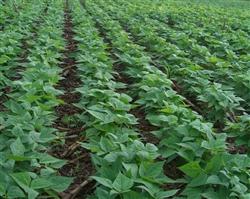
Black kidney beans, commonly known as black small beans, have nutritional and immune-boosting benefits. They are a black food that is excellent both as medicine and as food. They are in great demand on the international market. Because of their low input, high output, ease of cultivation, and low risk, they are deeply welcomed by farmers.
I. Variety Characteristics: Growth period 90 days, requiring active accumulated temperature of 2000-2200 degrees, seed coat black, white embryo, white interior, 100-seed weight 19 grams, purple flowers, round leaves. Seed rate per mu is 3 kg, with 20-22 plants per sq m. Branching begins on the main stem at 4-5 cm from the root, with 4-6 branches. Generally, plant height is 35-45 cm, with 30-60 pods per plant and 6 seeds per pod. Yield per mu is generally 150 kg in ordinary plots and can reach 250 kg in high-yield plots. There are basically no pests or diseases throughout the entire growth period.
II. Cultivation Key Points: There are no strict requirements for the previous crop. Choose sloped plateau land; medium or medium-low fertility plots are both acceptable. Apply a total of 7.5 kg of nitrogen, phosphorus, and potassium chemical fertilizer per mu, or apply 10 kg of special soybean fertilizer per mu. Seeds can be treated with a soybean seed treatment agent, 35% duokefu seed coating agent. Sowing depth is 4 cm, dibbled on ridges, with a hole spacing of 15 cm and 2 plants per hole. For pre-emergence chemical weed control, use clomazone plus acetochlor or oxadiazon. Timely hoeing and ridging are required, with three hoeings. Field management should be fully completed by the early flowering stage. At this time, spray foliar micronutrients mixed with potassium dihydrogen phosphate to promote early maturity, increase yield, and improve quality.
III. Harvest: When all leaves of the whole plant have turned yellow and 2/3 of the leaves have fallen, pull the plants by hand every morning and thresh with an ordinary soybean thresher. Broken seeds must be strictly avoided during threshing. Then dry in the sun for 1-2 days and air-dry naturally. Before storage, incomplete and empty seeds should be controlled at 1%, impurities at 1%, and moisture at 15%.