-
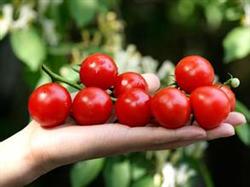
Key Technical Points for Early Spring Cultivation of Fresh-Eating Cherry Tomatoes
Cherry tomato, originally from Taiwan, China, is a type of cherry tomato grown mainly for fresh fruit consumption, commonly known as cherry tomato. For early spring cultivation, a 6 m span plastic greenhouse can be used, with seedlings raised in mid-November, transplanting in February of the following year, and fresh fruit harvest in early May, yielding 6000 kg of fresh fruit per mu. 1. Seed treatment....
-
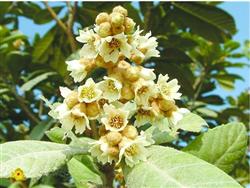
How to manage loquat trees after they finish flowering in early spring
1. Apply fruit-setting fertilizer. When the young fruit appears after the loquat has finished flowering, apply fruit-setting fertilizer, mainly a quick-acting, fast-dissolving complete nitrogen-phosphorus-potassium fertilizer. For bearing trees over five years old, apply 1.5-2 kg of nitrogen-phosphorus-potassium compound fertilizer per tree, or 40-50 kg of decomposed and rotted human and livestock manure water. 2. Prevent and control pests and diseases. When the young fruit appears after the loquat has finished flowering, ...
-
How to manage spring early-maturing eggplant during the fruiting period? Practical technical key points
For eggplants grown in spring under plastic film low tunnel cover, from flowering to fruit harvest, under suitable conditions it takes about 18-25 days, and the initial harvest period of the first fruit (door eggplant) is in early to mid-May. During fruit growth, the weather has already turned warm, so the film can be fully uncovered during the day to give the plants plenty of light, but it must be covered well again in the evening. If the nighttime temperature...
-
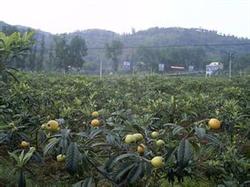
What are the key points of loquat cultivation techniques in spring and summer in southern China?
Loquat cultivation management in spring and summer in southern China is very important, and has a great impact on the level of loquat yield and the quality. Only by conscientiously grasping loquat cultivation management, doing well in fertilization, pest and disease control, flower and fruit thinning, and fruit bagging and other management techniques, can the loquats produced not only have high yield, good quality and low pesticide residues, as far as...
-
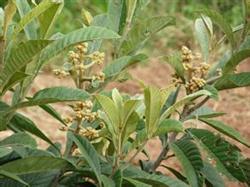
For mature loquat trees, apply spring shoot fertilizer in time in spring
Loquat trees prefer a warm and humid climate, bloom in autumn and winter, and their fruit ripens in late spring and early summer. Since last autumn, various parts of Guangdong have experienced drought with little rain. Fruit growers should actively water and fertilize loquat trees, especially mature trees, which should be given spring shoot fertilizer in time to strive for a bumper harvest this year. 1. Fertilizing young trees (1-3 years) Loquat young trees...
-
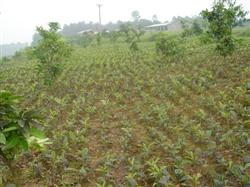
Detailed Explanation of Key Technical Points for Spring Management of Loquat
(1) Land preparation: When building a loquat orchard on flat land, planting trenches should be dug, generally 0.80-1.0 m wide and about 0.80 m deep, with the distance between planting trenches generally about 3 m, and the length of the planting trenches determined by the size of the orchard plot or the length of the slope. When digging the trenches, place the topsoil and subsoil separately, with the topsoil placed on the upper edge; when backfilling, backfill the topsoil first, and divide it into 3-...
-
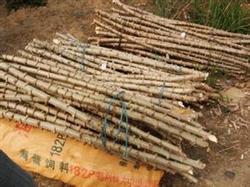
Key Points of High-Yield Cultivation Techniques for Spring-Planted Cassava
1. Deep plowing to improve the soil. One month before planting cassava, plow the land first and let it dry white in the sun so the soil is fully weathered. At planting time, apply 250-300 kg per mu of phosphate fertilizer composted and rotted with poultry and livestock manure as a base fertilizer. 2. Select good varieties. Be sure to choose varieties that form many tubers, have low toxicity and give high yields. Also select stems from the middle and lower parts that are thick, have close nodes, and are free of pests, diseases and damage for use as seed stems.
-
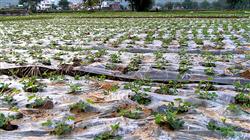
A Complete Analysis of the Key Points of Spring Peanut Cultivation Techniques
I. Fine land preparation and sufficient base fertilizer. For spring peanuts, choose sandy soil with relatively high soil fertility and convenient drainage and irrigation. Apply 150 dan of high-quality farmyard manure, 100 jin of compound fertilizer, and 2 jin of boron fertilizer per mu. After plowing and harrowing to level, open furrows with a bed width of 5.2 chi and a ditch depth of 0.6 chi, ensuring the three ditches are connected. II. Select...
-
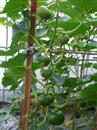
Key points of spring greenhouse cultivation techniques for pumpkin
I. Variety selection: Jinglüli and Jinghongli pumpkins. II. Seedling raising: The suitable sowing period for spring greenhouse pumpkin cultivation is generally mid-February. 1. Preparation before seedling raising: When sowing in early to mid-February, the temperature is relatively low, so electric heating seedbeds must be used for seedling raising. (1) Making the electric heating seedbed: Choose a greenhouse with good light transmission and strong heat preservation as the seedling-raising greenhouse, and build a seedbed inside the greenhouse that is 22.5 m long, 1.5 m wide, and 15 cm deep. After leveling and firming the bottom surface, use 2 heating wires with a power of 1000 watts, lay 12 lines longitudinally on the seedbed bottom, with a line spacing of 8-10 cm, completely cover the heating wires with fine soil, with a soil coverage depth of 1.5-2 cm.
-
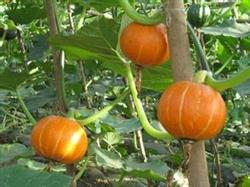
Detailed Key Points of Spring Cultivation Techniques for Mini Pumpkins
I. Timely Sowing: For greenhouse cultivation, sow in spring from mid-January to early February, with a seedling age of 20-25 days; for low-tunnel open-field cultivation, sow in mid-to-late February, with a seedling age of 20-25 days, and transplant into low tunnels in early-to-mid March. II. Seed Treatment and Sowing: Soak pumpkin seeds in clean water for 3-4 hours, then soak in a 500-fold dilution of 50% carbendazim...
条件筛选