Key Points of High-Yield Cultivation Techniques for Spring-Planted Cassava
1. Deep plowing to improve the soil. One month before planting cassava, plow the land first and let it dry white in the sun so the soil is fully weathered. At planting time, apply 250-300 kg per mu of phosphate fertilizer composted and rotted with poultry and livestock manure as a base fertilizer. 2. Select good varieties. Be sure to choose varieties that form many tubers, have low toxicity and give high yields. Also select stems from the middle and lower parts that are thick, have close nodes, and are free of pests, diseases and damage for use as seed stems.
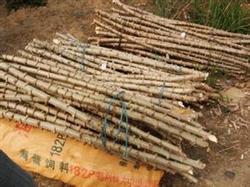
1. Deep plowing to improve the soil. One month before planting cassava, plow the land first and let it dry white in the sun so the soil is fully weathered. At planting time, apply 250-300 kg per mu of phosphate fertilizer composted and rotted with poultry and livestock manure as a base fertilizer.
2. Select good varieties. Be sure to choose varieties that form many tubers, have low toxicity and give high yields. Also select stems from the middle and lower parts that are thick, have close nodes, and are free of pests, diseases and damage for use as seed stems.
3. Seedling treatment. Before planting, cut seed stems 33 cm long, and cut the lower end into a 3-6 cm slanted mouth shaped like a duck bill. On both sides of the seed stem above the slanted mouth, make alternating partial cuts through the stem bark every 2 nodes, severing the cambium at 2-3 places; the cut should be 1/4 of the circumference of the seed stem and 2 cm long. This allows more roots and tubers to form at the slanted mouth and the severed cambium areas. When planting, adopt the method of controlling axillary buds to grow at fixed nodes: except for leaving the axillary buds at the top three nodes of the seed stem, remove the axillary buds at all the other nodes, and change slanting insertion to horizontal insertion. This can control the growth of one ideal, robust main-stem plant.
4. Apply fertilizer by stages and direction. After planting, when the seedlings grow to 12-15 cm, apply the first fertilizer, using 30 loads of dilute manure water per mu as a drench. Besides applying it properly below the seedling roots, focus the application around the seedlings at about 40 cm to promote more root formation and rapid spreading. When the cassava shoots reach 50 cm, apply the second fertilizer, using 40-50 loads of high-quality manure water per mu mixed with 8-10 kg of urea as a drench, applying the fertilizer around the plants at 50-60 cm so the cassava roots spread along the surface soil tillage layer. When the cassava shoots reach 70-100 cm, choose a sunny noon to top them, removing 3-5 cm of the growing point. Then drench with 60 loads of manure water plus 10-12 kg of urea per mu to encourage more branching.
5. Loosen the soil and apply heavy fertilizer in autumn. After autumn begins, choose a sunny day and use a sharp hoe to scrape away the soil on one side of the base (be careful not to damage the tubers), exposing the tubers and letting the soil bake in the sun for 4-5 hours. Then mix 30 kg of ammonium bicarbonate with 100 kg of phosphate fertilizer per mu, compost for 12 hours, spread it into the cassava base, and then earth up. This keeps cassava from shedding leaves in late autumn, prolongs the growth period, and lets the cassava grow fast and long, with smooth skin, good quality and high yield.