What are the key points of loquat cultivation techniques in spring and summer in southern China?
Loquat cultivation management in spring and summer in southern China is very important, and has a great impact on the level of loquat yield and the quality. Only by conscientiously grasping loquat cultivation management, doing well in fertilization, pest and disease control, flower and fruit thinning, and fruit bagging and other management techniques, can the loquats produced not only have high yield, good quality and low pesticide residues, as far as...
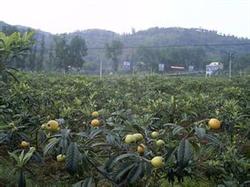
Loquat cultivation management in spring and summer in southern China is very important, and has a great impact on the level of loquat yield and the quality. Only by conscientiously grasping loquat cultivation management, doing well in fertilization, pest and disease control, flower and fruit thinning, and fruit bagging and other management techniques, can the loquats produced not only have high yield, good quality and low pesticide residues, but also meet the requirements for pollution-free green fruit as far as possible, enhance their market competitiveness, and thus obtain better economic benefits.
I. Apply fruit-swelling fertilizer well.
Loquat fertilization should be based mainly on organic fertilizer, with chemical fertilizer as a supplement.
March to May is an important period for loquat growth and rapid fruit enlargement, requiring a large amount of water and nutrients to meet the needs of fruit growth. Therefore, in the first and middle ten days of March, fruit-swelling fertilizer must be applied once. For loquat trees producing more than 20 kg of fruit per plant, apply 50 kg of human and livestock manure, 0.25 kg of potassium sulfate or 0.20 kg of potassium chloride, and 1 kg of superphosphate or calcium-magnesium phosphate fertilizer per plant. For loquat trees producing less than 20 kg of fruit per plant, apply 25 kg of human and livestock manure, 0.2 kg of potassium sulfate or 0.15 kg of potassium chloride, and 0.5 kg of superphosphate or calcium-magnesium phosphate fertilizer per plant. Only in this way can fruit growth and coloring be promoted, fruit sweetness increased, and fruit quality improved.
II. Do a good job in pest and disease control.
Spring and summer are the seasons when loquat pests and diseases occur most frequently. The main insect pests include loquat yellow hairy caterpillar, aphids, fruit borers, and longhorn beetles. The main diseases and pests include loquat brown rot, anthracnose, and brown spot disease. We should seize the key periods for treating pests and diseases in good time, select suitable pesticides, rotate pesticides, and treat both pests and diseases at the same time, so as to reduce pests and diseases and improve yield and quality.
(1) In the first and middle ten days of March, use 50 g of omethoate, add 50 g of carbendazim, dilute with 50 kg of water, and spray, focusing on spraying the fruit clusters wet and thoroughly.
(2) Before April 10, use 50 g of fenvalerate, add 50 g of thiophanate, and 100 g of potassium dihydrogen phosphate, dilute with 50 kg of water, and spray the tree canopy and fruit.
III. Thin fruit and bag fruit to improve quality.
Loquat in Chongqing has a relatively high flowering and fruiting rate, with as many as dozens of fruits per cluster, but the fruits are small, poor in quality, and sour in taste. High-quality large fruits are priced at 5-6 yuan per kg, while inferior small fruits are only 1 yuan/kg, and are very difficult to sell. Flower and fruit thinning of loquat is an important measure to improve fruit quality and economic benefits. Therefore, fruit growers in loquat-producing areas should actively promote flower and fruit thinning of loquat. Fruit thinning method: first disinfect the fruit-thinning scissors in boiling water, and only then use them for fruit thinning. When thinning fruit, for large-fruit varieties keep 2-3 large fruits per cluster, for medium-fruit varieties 3-5 fruits, and for small-fruit varieties no more than 8 fruits. When thinning fruit, focus on removing diseased, insect-damaged, and weak small fruits, and retain healthy large fruits. After fruit thinning is completed, immediately use 50 g of deltamethrin, add 100 g of carbendazim, dilute with 50 kg of water, mix evenly, and spray the tree canopy, branches, leaves, and fruit to control pest and disease damage.
To improve the quality of loquat, in addition to other measures, bagging must also be carried out, because bagging can not only reduce the amount of pesticide used, so that the resulting fruit can meet the requirements for pollution-free green food, but also make the fruit surface smooth, thereby improving quality and increasing market competitiveness. The bagging time is at the initial stage when loquat fruit turns from green to yellow. Before bagging, 50 g of deltamethrin must be mixed with 50 g of carbendazim, diluted with 50 kg of water, and sprayed on the tree canopy and fruit. Bagging can be carried out on the second day after the liquid dries.
IV. Management of loquat trees top-grafted and variety-changed in autumn.
(1) Cut the rootstock and expose the buds: in the first and middle ten days of March, for loquat trees top-grafted and variety-changed last autumn, cut or saw the rootstock 0.5 cm above the grafted bud, and after cutting or sawing the rootstock, expose the grafted bud.
(2) Remove the film and remove sprouts: after cutting or sawing the rootstock, remove sprouts once about every 10 days, and remove the binding film after the spring shoots lignify in June to July.
(3) Fertilize to promote shoots: apply shoot-promoting fertilizer once each in March and July, and according to the size of the tree, apply 15-25 kg of human and livestock manure, 0.25 kg of potassium sulfate, and 1 kg of superphosphate per plant. Dig trenches for fertilization, and cover with soil after the fertilizer dries.
(4) Pinching: when the shoot from the grafted bud grows to 15 cm long, pinch it in time to promote robust shoot growth and more shoots.
(5) Pest and disease control: during the shoot sprouting period of top-grafted and variety-changed loquat trees, promptly control loquat aphids, yellow hairy caterpillars, anthracnose, and so on, and use pesticides and formulas according to the above loquat pest and disease control.