-
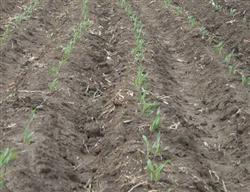
Key Technical Points for High-Ridge, Sparse-Planting, High-Yield Cultivation of Spring Corn
Many excellent spring corn varieties now require high ridges and sparse planting, but farmers generally adopt low ridges and dense planting, so the superior traits of corn cannot be fully expressed, seriously affecting farmers' income growth. This is especially true for excellent varieties such as Dongdan 60, Sanbei No. 6, Dongdan 13, and Zunyan No. 1, whose planting density per mu must not exceed 3000 plants, while...
-
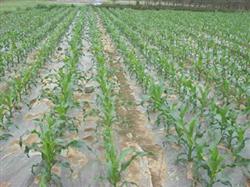
What are the key cultivation techniques for spring corn?
Adapt measures to local conditions and select improved varieties. In plain and hilly areas, promote Yedan 13 and Xiyu No. 3, paired with Huayu No. 4, Zhongdan 32, Chenghai No. 1, and Yuanzheng 808; for intercropping in cotton fields, select short-stalked, short-growth-period Yedan 22 and Yedan 51; in suburban areas, where fresh eating is the main purpose, waxy corn such as Zhongnuo No. 1 can be planted. Apply sufficient base fertilizer and skillfully apply topdressing...
-
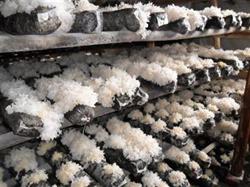
How to reduce contamination in spring cultivation of white fungus
In spring white fungus cultivation, most damage is caused by green mold, with some contamination by Rhizopus and Mucor, while Neurospora is rare. Green mold, Mucor and Rhizopus often occur at the edges of the inoculation holes in the fungus bags, or when the mycelial rings of two holes meet 9-10 days after inoculation, appearing at the front of the mycelium, and also on the bag walls. Green mold also occurs on the fruiting bodies, causing the fungus fronds to rot. Neurospora mostly occurs at the gaps where the bag openings are tied. The main causes of contamination are incomplete sterilization of the substrate bags, lax aseptic technique, holes in the bag film, impure spawn carrying contamination, or contamination of the environment.
-
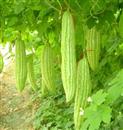
Detailed Explanation of Key Techniques for High-Yield Cultivation of Spring Bitter Gourd
Bitter gourd fruit is rich in vitamin C, higher than tomatoes, and contains a glycoside that gives it a special bitterness, making it one of the popular health vegetables. Planting spring bitter gourd has mild diseases, low cost, high yield, and good returns. The high-yield cultivation techniques for spring bitter gourd mainly include the following four key points: select good varieties and raise seedlings at the right time. Spring planting...
-
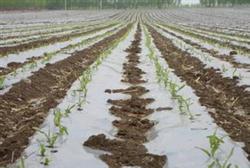
High-Yield Film-Mulched Cultivation Techniques for Spring-Sown Black Corn
Black corn is a new corn variety introduced in recent years and is a precious health-promoting fruit-and-vegetable food. After two consecutive years of trial planting, it achieved a yield of 400-500 kg per 667 sq m. Black corn has a plant height of 120 cm, a growth period of 90 days, a ear length of 12-15 cm, and a single ear weight of 150 g. It is suitable for sale as fresh-eating corn cobs, and can also...
-
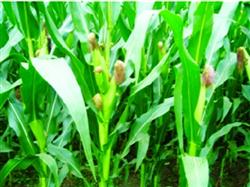
Planting spring corn requires good seed plus good methods
Fresh-eating type corn is generally divided into sweet corn and waxy corn; it has a unique flavor, is rich in nutrients, has a large market capacity, high yield and good returns. When grown as spring corn, it takes about 90 days from sowing to fresh ear harvest and does not affect the planting of hybrid late rice. To grow spring fresh-eating type corn well, the following points should mainly be grasped: first, choose...
-
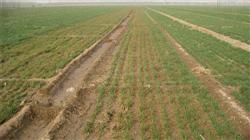
Spring Field Management Measures for Winter Wheat in Northern Xinjiang
Green-up Stage Management: After the beginning of spring (late March to early April), carry out spring harrowing in a timely manner, with a harrowing depth of 5 cm. Harrowing with a smoothing harrow or diagonal harrowing is preferable. Green-up fertilizer should be applied just before or at the early stage of wheat green-up, and it is advisable to apply more to weak seedlings, less or none to strong seedlings, and none to excessively vigorous seedlings. For wheat fields where the total number of stems per mu before winter is less than 400,000 and the wheat seedlings are growing weakly, late...
-
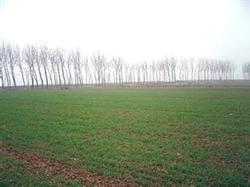
Wheat Suffering Low Temperatures in Spring Needs Timely Potassium Supplementation
To support the spring action on soil testing and formulated fertilization, experts from the Chinese Academy of Agricultural Sciences recently went to Gaocheng, Hebei, to conduct a follow-up survey of wheat growth. The survey found that due to low soil temperatures this spring, winter wheat in the region resumed growth 10 days later than in previous years. The first internode of the wheat was longer than in previous years, while the second internode had not yet developed well, and the stems were rather soft. ...
-
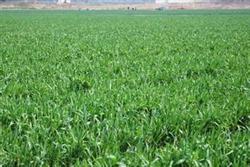
Timely potassium supplementation for spring wheat is crucial
Since the launch of the spring action for soil testing and formulated fertilization, soil and fertilizer experts from the Chinese Academy of Agricultural Sciences have taken active action, going deep into the fields to guide scientific fertilization. Recently, experts from the Chinese Academy of Agricultural Sciences went to Gaocheng, Hebei, to conduct a follow-up survey of wheat growth. The survey found that due to the low ground temperature this spring, the winter wheat in this area has turned green...
-
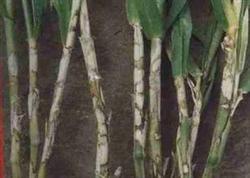
Key Techniques for Spring Control of Wheat Sharp Eyespot
Wheat sharp eyespot is a fungal disease mainly spread through the soil. With the improvement of yield levels, the promotion of high-yielding varieties, and wheat field management with heavy irrigation and fertilization, its damage has become increasingly serious. After wheat sowing, if the germ is infected by the pathogen during germination, the coleoptile turns brown, and in severe cases rots and dies; after the standing and jointing stages, the diseased plant rate rises significantly...
条件筛选