-
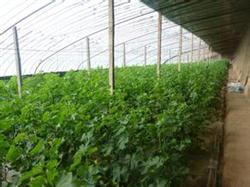
Key Points of Greenhouse Cucumber Management Techniques After Spring Festival
Manage Fertilizer and Water Well In mid-to-late February, most greenhouse cucumbers enter the peak fruiting period, and their demand for fertilizer and water gradually increases. Therefore, topdressing cucumbers should preferably be carried out after the end of February, generally applying 20 kg of urea, 5-8 kg of monopotassium phosphate, or 30-35 kg of potassium sulfate compound fertilizer per 1/15 hectare, once every 20...
-
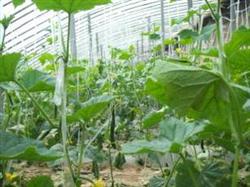
Integrated Pest and Disease Control Methods for Greenhouse Cucumbers in Spring
I. Common Diseases in Spring 1. Downy mildew (1) Occurrence characteristics: persistent (long-term companion), devastating (rapid spread, outbreaks). (2) Occurrence conditions: High humidity: relative humidity above 83% favors disease development, (water droplets or water film on leaf surface), spore germination and invasion. Optimum temperature: 15-20°C. Nutritional status...
-
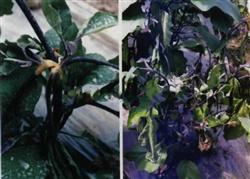
How to prevent and control pests and diseases in early spring eggplant? Key technical points to master
For eggplant seedlings raised in early spring, the main focus is preventing and controlling soil-borne diseases: damping-off, rhizoctonia rot and sclerotinia rot. For seedbed soil disinfection, mix 50 kg of seedbed soil with 20 g of 68% Jinlei water-dispersible granules and 10 ml of 2.5% Shileshi suspension concentrate, sift the soil and mix well, then fill nutrient pots, or spread it over the seedling bed. During the seedling stage, spray 0.1%-0.2% monopotassium phosphate...
-
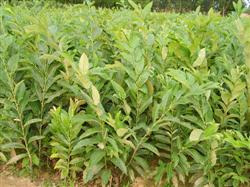
Key Technical Points for Spring Irrigation and Moisture Conservation in Chestnut Orchards
Chestnut (Castanea mollissima) is a deciduous tree and one of the woody grain tree species, with a long lifespan, known as the "iron-stemmed crop." The chestnut fruit is nutritious and delicious, and can serve as a substitute for grain; all parts of the chestnut tree can be used medicinally, and tannin extract can also be obtained from the bark, branches and leaves, and the pith of the wood, while the leaves can also be used to raise camphor silkworms and oak silkworms. Chestnut wood is hard, with straight grain, moisture-resistant and rot-resistant...
-
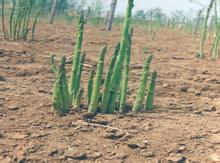
Full Analysis of Key Techniques for Spring Asparagus Seedling Cultivation
Asparagus production generally uses seedling raising followed by transplanting. Centralized seedling raising and transplanting gives a high emergence rate, can save seeds, reduce costs, facilitate centralized management, and helps with pest and disease control and the cultivation of strong seedlings; it can extend the growing period in the planting year and increase the yield in the second year; during cultivation, seedlings can be planted in a directional orientation according to the growth direction of asparagus, which facilitates ridge building, spear harvesting and management operations.
-
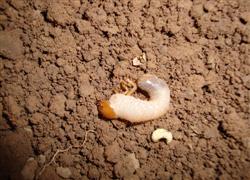
Spring Wheat Soil Pest Control Methods
Soil pests are mainly white grubs, mole crickets and wireworms, among which wireworms cause the most serious damage to wheat. After the Spring Festival, the peak period of soil pest damage runs from mid-March to early April, when they bite through wheat roots and stems, causing severe gaps and broken rows of seedlings and greatly affecting wheat yield. In recent years, soil pests have become...
-
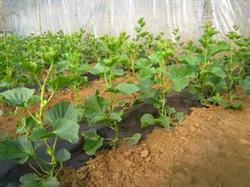
Detailed Explanation of Key Cultivation Techniques for Spring Greenhouse Melons
Melon production is developing very rapidly. Whether in greenhouses or spring greenhouse production, the economic benefits are quite significant, with returns per mu around 10,000 yuan. Based on the characteristics of spring greenhouse production - low investment, easy management, high yield, good quality, short production cycle, and quick market capture - to promote production development, the management techniques are now organized as follows for...
-
How to fertilize spring cabbage? Mastering its nutritional characteristics is key
The early-maturing cabbage grown in Changde is deeply favored by consumers for its firm heads, high proportion of clean edible leaves, and high quality and pollution-free nature, with a yield of 4000--4500 kg per mu and an economic benefit of more than 2000 yuan. Its cultivation techniques are described as follows: 1. Sowing and raising seedlings 1.1 Seedling raising time. In order to harvest early, generally in December...
-
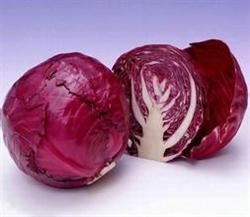
Key Points of Pest and Disease Control Techniques for Spring-Planted Purple Cabbage
Pest and disease control: As long as management is proper, purple cabbage generally has few diseases, so it is easy to produce pollution-free products that can be eaten raw. Purple cabbage may only suffer from seedling-stage diseases such as damping-off and downy mildew when humidity is high during the seedling stage, which can be controlled with pesticides such as Yunsheng, Dasheng, carbendazim, Xinluling, and Anke. Pests...
-
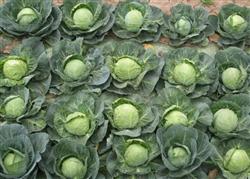
What causes premature bolting in spring cabbage
Cabbage is a vegetable that loves fertilizer and tolerates it well. Generally, about 35 days after transplanting, the plant's uptake of nitrogen, phosphorus, calcium and other elements reaches its peak, while potassium uptake peaks at 50 days. Before reaching the peak values, the plant's fertilizer uptake basically shows a straight upward trend as the growth period progresses. Cabbage at different growth stages has different...
条件筛选