For mature loquat trees, apply spring shoot fertilizer in time in spring
Loquat trees prefer a warm and humid climate, bloom in autumn and winter, and their fruit ripens in late spring and early summer. Since last autumn, various parts of Guangdong have experienced drought with little rain. Fruit growers should actively water and fertilize loquat trees, especially mature trees, which should be given spring shoot fertilizer in time to strive for a bumper harvest this year. 1. Fertilizing young trees (1-3 years) Loquat young trees...
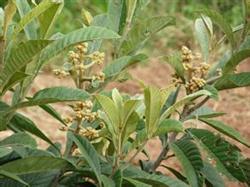
Loquat trees prefer a warm and humid climate, bloom in autumn and winter, and their fruit ripens in late spring and early summer. Since last autumn, various parts of Guangdong have experienced drought with little rain. Fruit growers should actively water and fertilize loquat trees, especially mature trees, which should be given spring shoot fertilizer in time to strive for a bumper harvest this year.
1. Fertilizing young trees (1-3 years)
The fertilization of young loquat trees should follow the principle of light and frequent application. After planting and survival, when the new shoots grow to 5 cm, apply the first fertilizer, mainly quick-acting nitrogen fertilizer plus quick-acting phosphorus fertilizer and clear water manure. Apply once every 15 days, each time applying 5-10 grams of urea, 5 grams of superphosphate, and 3-5 kg of clear manure water per tree. After September, apply fertilizer once a month, with a combination of nitrogen, phosphorus, and potassium, applying 10 grams of urea and 10 grams of superphosphate per tree each time. In the second year, apply fertilizer once each in February, March, May, September, and October, stop fertilizing from early June to August, and control water to promote flower bud differentiation, apply nitrogen, phosphorus, and potassium in combination, and increase the amount of fertilizer as the crown expands. In the third year, apply fertilizer once each in February, March, June, September, and November.
2. Fertilizing mature trees
Mature loquat trees only need to be fertilized three times a year. The first is spring shoot fertilizer, applied in early to mid-February, when the root system is at its first growth peak, which facilitates nutrient absorption. The main purpose of this fertilizer is to promote spring shoots and enlarge fruit. The amount applied accounts for about 30% of the whole year, mainly quick-acting fertilizer, and potassium fertilizer is also applied at this time to promote the expansion of young fruit. Per mu, apply 30 kg of urea, 15 grams of superphosphate, 30 kg of potassium sulfate, and about 1500 kg of human and livestock manure water. The second is summer shoot fertilizer, applied after fruit harvest from mid-May to early June (for late-maturing varieties, apply before harvest). At this time, the root system is at its second growth peak, mainly to promote summer shoots, cultivate excellent fruiting branches, and promote flower bud differentiation in July-August. Because summer shoots sprout abundantly and neatly, and most can form fruiting mother branches in the same year, promoting summer shoots is the main measure to ensure high yields year after year. Therefore, the amount of fertilizer applied this time is relatively large, accounting for about 50% of the whole year, with quick-acting nitrogen fertilizer combined with organic fertilizer, and all the phosphorus fertilizer for the whole year is applied. Generally, per mu, apply 50 kg of urea, 60 kg of superphosphate, and 2000-3000 kg of organic fertilizer (pig manure water). The third is autumn fertilizer or pre-flowering fertilizer, applied before heading and flowering from September to early October, accounting for about 20% of the whole year, mainly to promote good flowering, improve fruit setting, and increase cold resistance for overwintering. Mainly slow-acting fertilizer, per mu apply 15 kg of urea and 1500 kg of clear manure water.