-
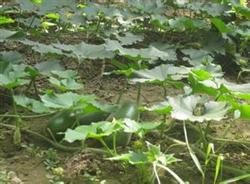
Key Technical Points for Spring Open-Field Cultivation of Ground-Trailing Winter Melon
Ground-trailing winter melon has the advantages of saving trellis materials, reducing labor for building trellises and tying vines, lower costs, being convenient for intercropping and relay cropping, and relatively extensive cultivation management. During spring open-field cultivation in the early spring low-temperature season, intercropping pak choi, small radish, garland chrysanthemum and other vegetables in the vine-running beds can improve land utilization and increase vegetable yield. Our local farmers...
-
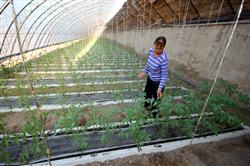
How to manage spring tomatoes after transplanting? Practical methods are here
1. Timely intertillage. Intertillage should be carried out promptly after transplanting. Early and deep intertillage helps raise soil temperature and promotes rapid root development and recovery growth. It is even more important for early-maturing cultivation. Intertillage should be carried out 3-4 times in succession, with the depth becoming shallower each time. This promotes the growth of adventitious roots at the stem base and expands the root system. 2. Fertilizer and water management. Tomatoes...
-
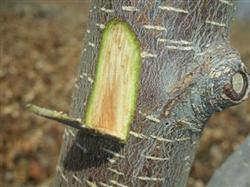
Pear Tree Early Spring Frost Damage Protection Methods and Technical Key Points
I. Frost Prevention 1. Spray salt water: Before the late frost arrives, spray the tree with 10-20% salt water. This can increase the concentration of cell sap in the tree, lower the freezing point, and also increase air humidity. When water condenses in the cold, it releases latent heat, thereby protecting against frost damage. 2. Spray hormones: In early spring, spray 0.1-0.2% maleic hydrazide solution to inhibit budding and delay flowering,...
-
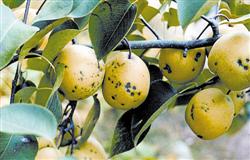
Key Points and Technical Details for Spring Management of Pear Orchards
In mid-May, some fruit growers in Xinji, Shenzhou and other places found that after spraying pear trees with pesticides, the young fruit of some pear varieties developed black spots, affecting fruit quality. In order to investigate the causes of the black spots, on May 22, Ni Qunzhou of the Shijiazhuang Fruit Tree Research Institute of the Provincial Academy of Agriculture and Forestry Sciences, Liu Pingjun of the Jinzhou Forestry Bureau, and Xie Zhuang Technicians of Zhaoxian County...
-
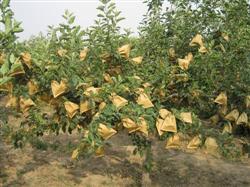
Pest and Disease Control Methods for Pear Trees Before Bagging in Early Spring
The period before and after bud break in early spring is when diseases and pests begin their activity, and once the pear orchard is bagged, spraying becomes considerably more difficult. Therefore, pest and disease control before bagging is the key to pest and disease management in bagged pear orchards. During this period, the focus should be on strengthening control of the pear psylla (Psylla pyrisuga), pear aphid, and red spider mite, among others. (1) Strengthen soil, fertilizer, and water...
-
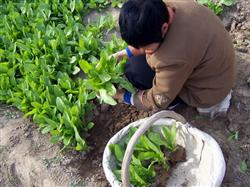
High-Efficiency Multiple Cropping Technique for Winter Lettuce and Early Spring Peppers in Greenhouses
1. Select good varieties: For greenhouse cultivation of early spring lettuce, it is advisable to choose early-maturing pointed-leaf varieties with strong cold resistance, such as Hefei pointed-leaf duck-egg lettuce and Beijing crucian carp lettuce. 2. Grow strong seedlings: Sow and raise seedlings in a greenhouse in mid-to-late January. Before sowing, first soak the seeds in clean water at 20°C for 3-4 hours, rub and wash them, then remove and drain the water, and put them into...
-
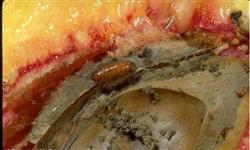
Spring Pest and Disease Control Methods for Protected Plum Trees
1. Mound soil at the base of the trunk. Before overwintering adults emerge from the soil (mid to late May), build a 10 cm thick mound of soil around the tree basin and tamp it down firmly so that emerging adults cannot come out of the soil. 2. Apply pesticide to the ground. Before overwintering adults emerge (after petal fall), spray the tree basin with 75% phoxim emulsifiable concentrate at 0.5 kg/mu, or 40...
-
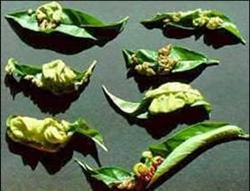
Technical Guidance on Early Spring Pest and Disease Control for Peach Trees
Peach leaf curl mainly damages leaves, but can also harm young shoots and young fruit. It generally occurs from April to May and happens only once a year. When fruit is affected, it turns red, the diseased part swells, the fuzz falls off, and the surface becomes smooth. For agricultural control, select high-yield, high-quality, disease-resistant varieties. In peach orchards that have entered the fruiting stage, manage the soil and fertilizer well...
-
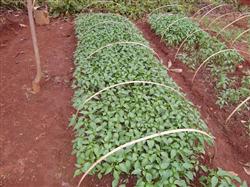
Detailed Explanation of Key Techniques for Raising Chili Pepper Seedlings in Spring
Site selection and bed preparation: Choose a plot of fertile land, sheltered from the wind and facing the sun, where eggplants and tomatoes have not been grown in the previous crop, and build a hotbed. For each mu planted, raise seedlings using 150 grams of seed. Scientific fertilization: Apply sufficient base fertilizer, irrigate heavily to build up soil moisture, and use a small amount of urea, phosphate fertilizer and active potassium fertilizer. Because the hotbed is sealed, do not apply...
-
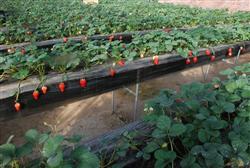
Five timely measures for spring strawberry management
Strengthening spring management is the key to promoting high quality, early ripening and increased yield in strawberries. The specific measures involve doing a good job of the "five timely actions." 1. Remove cold-protection covers in good time. The strawberry is a temperate evergreen plant, and its root system begins to grow when the soil temperature is 1°C to 2°C. In practice, generally when the air temperature is around 5°C, it is time to...
条件筛选