-
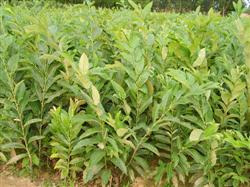
Key Technical Points for Spring Irrigation and Moisture Conservation in Chestnut Orchards
Chestnut (Castanea mollissima) is a deciduous tree and one of the woody grain tree species, with a long lifespan, known as the "iron-stemmed crop." The chestnut fruit is nutritious and delicious, and can serve as a substitute for grain; all parts of the chestnut tree can be used medicinally, and tannin extract can also be obtained from the bark, branches and leaves, and the pith of the wood, while the leaves can also be used to raise camphor silkworms and oak silkworms. Chestnut wood is hard, with straight grain, moisture-resistant and rot-resistant...
-
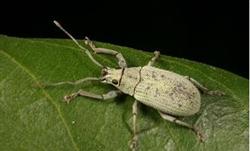
Management Measures for Spring Planting and Cultivation of Chestnut
The chestnut weevil, also known as the chestnut snout beetle, lays eggs in August, and the eggs hatch into larvae in September. The larvae bore into and feed on chestnut fruits, causing the damaged fruits to be filled with insect droppings, affecting their edibility and making them unsuitable for seed. Fruit damage generally ranges from 20% to 40%, and can reach 90% in severe cases. The control method is to spray insecticide on chestnut trees. Use 50% fenitrothion at 800 times dilution...
-

Winter Pruning Techniques for Spring Branches of Persimmon Trees
Methods to Improve Persimmon Tree Yield and Quality: 1. The prospects of the persimmon industry. In recent years, most Fuping persimmons (not pressed into cakes) have been purchased and exported by Japanese and South Korean buyers at a price of over ten yuan per kilogram. Meanwhile, several large supermarkets in Xi'an have long been selling Guangxi dried persimmons, with a retail price of under 10 yuan per (0.5 kg). This shows...
-
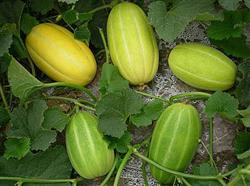
Key Technical Points for Open-Field Cultivation of Melons in Spring
Open-field melon cultivation in spring has low input costs and is easy to manage, making it one of the best choices for farmers to increase income and get rich in the short term. Optional varieties include Xiangmi 900, the Shabai series, and others. 1. Seed soaking: After selecting good varieties, the seeds can be appropriately sun-dried in fine weather and then screened. For warm-water seed soaking, soak in 55-degree water for 1 minute, then cool to 25 degrees, remove after 6 hours and let them dry slightly, then promote germination (keep the germination temperature at around 28 degrees). When the seeds sprout and turn white, sow them promptly.
-
Key Technical Points for Open-Field Spring Muskmelon Cultivation
Apply all the base fertilizer at once, open a furrow 30 cm from the plants, and apply 50-100 kg of potassium sulfate compound fertilizer per mu, or 2-3 cubic meters of decomposed livestock and poultry manure. Or apply 50-100 kg of ternary bio-organic fertilizer, and in the middle and late stages spray the leaves with potassium dihydrogen phosphate + Xin Gao Zhi Mo (New High Lipid Film) at 600-800 times dilution, while also spraying Cuihua Wang No. 3 to balance vegetative growth...
-
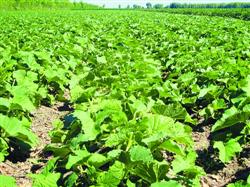
Key Technical Points for Spring Field Management of Melons
Fertilization: Apply the base fertilizer all at once in sufficient quantity. Dig a furrow 30 cm from the plants, and apply 50-100 kg of potassium sulfate compound fertilizer per mu, or 2-3 cubic meters of decomposed livestock and poultry manure. Or apply 50-100 kg of ternary bio-organic fertilizer. In the middle and late stages, spray the leaves with potassium dihydrogen phosphate + 600-800 times dilution of Xin Gao Zhi Mo, and at the same time spray Cui Hua Wang No. 3 to balance vegetative growth...
-
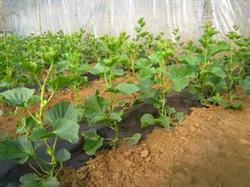
Detailed Explanation of Key Cultivation Techniques for Spring Greenhouse Melons
Melon production is developing very rapidly. Whether in greenhouses or spring greenhouse production, the economic benefits are quite significant, with returns per mu around 10,000 yuan. Based on the characteristics of spring greenhouse production - low investment, easy management, high yield, good quality, short production cycle, and quick market capture - to promote production development, the management techniques are now organized as follows for...
-
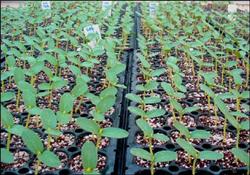
Detailed Explanation of Key Technical Points for Raising Muskmelon Seedlings in Early Spring
To prepare the nutrient soil, use fertile soil that has never been planted with melons or vegetables and fully fermented and decomposed chicken manure or human waste, sift and mix them thoroughly at a ratio of 7:3. For each cubic meter of nutrient soil, add 2.5 kg of superphosphate, 0.5 kg of potassium sulfate, and 15-20 g of 95% hymexazol. To build an electric heating hotbed, 24-26 sq m of seedbed is needed per mu of field. The seedbed is wide 1...
-
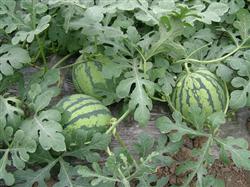
Five scientific measures for spring cultivation of mini watermelons
Cultivating mini watermelons in early spring has become a planting project favored by many melon growers, but due to climate and other reasons, the cultivation of mini watermelons still requires very scientific methods. Below, we explain 5 measures for scientifically cultivating mini watermelons: 1. Temperature management. Because the natural temperature in early spring is low, after transplanting the focus should be on keeping warm, keeping the greenhouse film tightly closed...
-
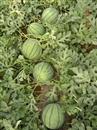
Key Technical Points for High-Yield Open-Field Watermelon Cultivation in Spring
It is currently the season for sowing and raising seedlings of open-field watermelons. To do a good job of watermelon cultivation and increase farmers' income, the key technical points for spring open-field watermelon cultivation are introduced as follows: 1. Variety selection. Varieties should be chosen according to market demand, selecting those that are well-suited to the market, with good quality, high yield and strong disease resistance, such as Qinghong...
条件筛选