-

Key management points for cold-frame peaches in the Beijing-Tianjin region around the Spring Festival
1. Frame-covering period. Because cold-frame peaches have no cold-protection facilities and rely solely on sunlight for warming and the frame film for insulation, the day-night temperature difference is large. The frame-covering period should preferably be around February 20, so that the flowering period is March 25-31 and the peach ripening period is early June, 10-15 days earlier than open-field peaches. For heated cold-frame peach sheds, install 1 heater per 350-450 sq m at the center of the cold frame, burning wood or coal; the gas is discharged outside the frame through the chimney in the middle of the stove, and the air is preheated through the stove's interlayer and then
-
How to store pears in spring? Four methods to help you extend their shelf life
1. Chemical fumigation method. The fumigation method mainly prevents and controls diseases that invade the fruit. First, seal the pears with plastic film, then place a fumigant (such as acetaldehyde) inside the sealed plastic film so that the fumigant concentration inside the plastic film reaches 0.5% and is maintained for 180 minutes, or so that the fumigant concentration inside the plastic film reaches 1% and is maintained for 120 minutes. 2. Medicinal solution soaking method. This method mainly prevents pears from being infected by pathogens after harvest. Soak the pears in a 400-fold dilution of 4% Nongkang 120 fruit tree-specific solution for 50 minutes, then remove and air-dry, then package and store
-
Why peach blossoms are called a good spring medicine
In the third month of spring, peach blossoms are in full bloom. Besides being ornamental, peach blossoms also have fairly high medicinal value. They contain kaempferic acid, coumarin, trifolioside, naringenin, and vitamins A, B, and C, among other components. They are bitter in taste and neutral in nature, non-toxic, and suitable for treating illness both internally and externally. Traditional Chinese medicine holds that the peach is sweet and warming in nature, with a pungent and sour taste, and has the effects of improving complexion and relieving consumptive fever. Fresh peaches tonify the middle and boost qi, and promote fluid production to quench thirst. For patients with high blood pressure, eating one peeled fresh peach morning and evening each day is beneficial for keeping blood pressure stable; for patients with iron-deficiency anemia and iron deficiency, regularly eating fresh peaches has a certain
-
New almond cultivar 'Charm' is suitable for early spring flower viewing
The ornamental almond 'Charm' is an ornamental cultivar with bright flower colors and multiple petals, discovered and selected from seedlings of Uzbek almond. It belongs to the genus Prunus in the subfamily Prunoideae of the Rosaceae family. 'Charm' has white or pink flowers, emerald green leaves, and a graceful tree form, with an ornamental effect similar to that of peach and ornamental peach. However, in landscaping practice, peach and ornamental peach are seriously affected by aphids, scale insects, and sooty mold, which greatly reduces their ornamental effect; 'Charm' precisely has characteristics such as resistance to scale insects, resistance to aphids, resistance to sooty mold, and tolerance to poor soil, so it can replace peach and ornamental peach in relatively weak environments such as forest parks,
-

Detailed Explanation of Key Points for Spring Management Techniques of Plum Trees
Key Points for Spring Management of Plum Trees
-
Detailed Explanation of Key Management Techniques for Peach Orchards in Early Spring
I. Clearing ditches and drainage. Low-lying terrain, heavy clay soil and waterlogging are the main constraints on high yield and quality of peach trees. If the ditch system in a peach orchard drains poorly, wet damage will injure the roots and weaken tree vigor. Therefore, the outflow ditches of the peach orchard must be thoroughly cleared to ensure unimpeded drainage, and where conditions permit, the furrow ditches should be deepened. II. Applying spring fertilizer early according to tree vigor. For all mid-season varieties with heavy fruit set, such as: Bai Feng, Feng Lu, Taqiao and other peach trees, as well as weak trees that have not received winter fertilizer since the start of winter, spring fertilizer should be applied early. Fertilizer rate: imported compound fertilizer 0.5-1 per tree
-
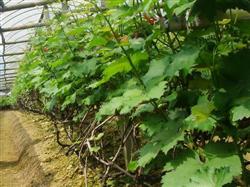
Grape Spring Management Technical Knowledge Guide
Spring is the season when grapes bud and unfold leaves, vines extend, and they send out clusters and bloom and bear fruit. Strengthening spring grape management can improve grape yield and quality. 1. From mid-to-late February to early March, the budding stage: irrigate to promote bud break and apply quick-acting nitrogen fertilizer. At this stage, orchards with the conditions should irrigate the whole orchard in a timely manner to ensure uniform budding...
-
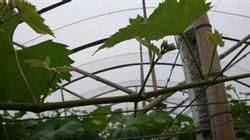
What are the key technical points for spring grape management?
Spring is the season when grapes bud and unfold leaves, canes extend, and clusters form and flowers set fruit. Strengthening spring grape management can improve grape yield and quality. From mid-to-late February to early March, during the budbreak stage, irrigate to promote budbreak and apply quick-acting nitrogen fertilizer. At this stage, orchards with the conditions should irrigate the whole orchard promptly to ensure uniform budbreak. And at this time...
-
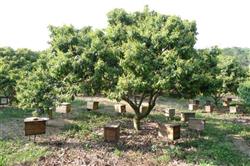
What are the key measures for spring management of lychee?
From September last year to January this year, the weather remained warm and dry, with little rain, which promoted nutrient accumulation and flower bud differentiation in lychee and longan. Due to different varieties of lychee, tree conditions vary greatly, and corresponding measures should be taken according to specific situations for management: (1) Apply flower-strengthening fertilizer: after flower panicle formation...
-
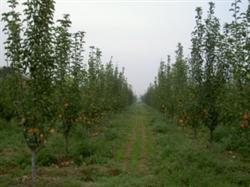
Detailed Explanation of Early Spring Management Techniques for Pear Trees
1. Dig planting holes or planting trenches. ① For pear orchards with colored varieties spaced more than 3 m apart, planting holes can be dug; centering on the planting hole, dig a circular or square planting pit 1 m deep and 1 m wide, placing the topsoil and subsoil separately on either side of the hole. ② For pear orchards with spacing below 2 m, planting trenches must be dug, with a trench depth of 1 m, ...
条件筛选