-
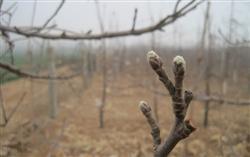
Spring notching and branch-bending management methods for 1-3 year old young apple trees
How should 1-3 year old young apple trees be notched and branch-bent in spring? Are there any apple growers who can help explain? As prices rise, the economic value of apples has also increased, and many farmers have joined the apple growing boom. Therefore, Zhongdiwang has compiled the spring notching and branch-bending methods for 1-3 year old young apple trees,...
-
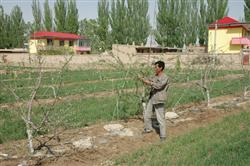
Spring Pruning Methods and Technical Key Points for Jujube Trees
How to prune jujube trees in spring? Please introduce the detailed methods and their effects. Spring pruning of jujube trees is generally done from bud break to before flowering (late April to mid-May). Common pruning methods include opening the angle, scoring, bud removal, and pinching. For detailed operations, refer to the following: Opening the angle of jujube trees uses measures such as propping and pulling: open the branches...
-
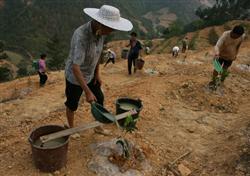
How to manage navel oranges in spring? Master these technical points
How to manage navel oranges in spring when growing them? Is there a difference between young trees and fruiting trees? We ask knowledgeable netizens to help explain. Spring is the stage when navel oranges sprout spring shoots, and it is also a period of the year when pests and diseases occur more frequently. Tree vigor growth, the degree of pest and disease control, yield level, and fruit quality are all related to the management during this period...
-

Key Techniques for Spring Greenhouse Cultivation of Hami Melon
Hami melon is deeply favored by the public for its rich nutrition, sweet taste, and properties that help cool and relieve summer heat. Since 2002, with the technical support of Academician Wu Mingzhu of the **Hami Melon Research Center, Hami melon has been successfully introduced, demonstrated, and promoted in Jiading District, and new Hami melon varieties better adapted to the climate characteristics of the southern region have been selected...
-
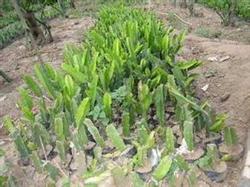
Technical Recommendations for Spring Protected Cultivation of Hami Melon
Pitaya (dragon fruit) is a perennial succulent-stemmed plant in the Cactaceae family, with a plant height of over 2 m, growing in very loose, porous, fertile sandy soil, intolerant of waterlogging, and growing well at 28°C to 38°C. I. Cuttings are most suitable in spring and summer; for cuttings, select fully developed stem segments, and the discarded branches cut off can also be used for cuttings...
-
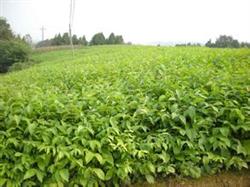
Spring Propagation Methods and Technical Key Points for Walnut Seedlings
1. Seed selection: Choose fully mature seeds from superior varieties, as this ensures a high germination rate. That is, at the time of walnut harvest, those whose husks (green skin) have split open and fallen off on their own, or those whose husks have not split open and fallen off about half a month past the maturity period. 2. Seed treatment: In early March, subject the seeds intended for propagation to sand storage treatment...
-
How to manage kiwifruit in early spring? These key points must be remembered
Prevent pests and diseases early. Before budding and during the sprouting stage, use 100-150 times diluted barium polysulfide to spray the trees for pest control, or use 3 to 5 degree lime sulfur mixture to kill insect eggs and overwintering pathogens. Apply sprouting fertilizer early. For large fruiting trees, apply 1.5-2 jin of compound fertilizer per tree; for small trees, apply 0.5-1 jin per tree. Set up support posts early and tie...
-
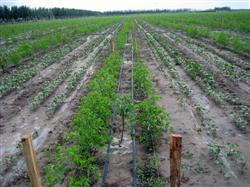
Control methods for pests that feed at the door in spring on jujube trees
Autumn management of young jujube orchards mainly involves controlling fertilizer and water, strengthening loosening of the soil, promoting continuous thickening and lignification of the trunk, and creating good conditions for young trees to overwinter. The key technical points for autumn management of young trees are summarized as follows: Control irrigation. Jujube trees are drought-tolerant, prefer warmth, sprout late, and shed leaves early. Young trees should be watered appropriately, with the basic principle...
-

Spring Field Management Methods and Key Technical Points for Melons
Spring Field Management Methods for Melons
-
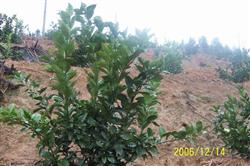
Introduction: Why do navel oranges need "thinning spring shoots and removing summer shoots"
Scientifically "thinning spring shoots and removing summer shoots" on navel orange trees in the year before they come into production or after they have come into production is an important measure for retaining fruit and increasing yield. However, because many fruit growers do not know how to use it or apply it improperly, they not only fail to achieve the expected goal of a bumper harvest, but instead end up with small navel orange tree canopies, few branches and leaves, and low yields. The following is "thinning spring shoots...
条件筛选