-
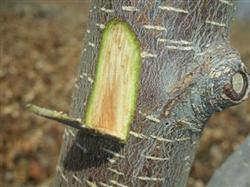
Pear Tree Early Spring Frost Damage Protection Methods and Technical Key Points
I. Frost Prevention 1. Spray salt water: Before the late frost arrives, spray the tree with 10-20% salt water. This can increase the concentration of cell sap in the tree, lower the freezing point, and also increase air humidity. When water condenses in the cold, it releases latent heat, thereby protecting against frost damage. 2. Spray hormones: In early spring, spray 0.1-0.2% maleic hydrazide solution to inhibit budding and delay flowering,...
-
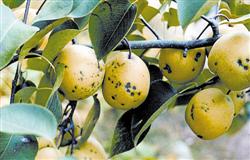
Key Points and Technical Details for Spring Management of Pear Orchards
In mid-May, some fruit growers in Xinji, Shenzhou and other places found that after spraying pear trees with pesticides, the young fruit of some pear varieties developed black spots, affecting fruit quality. In order to investigate the causes of the black spots, on May 22, Ni Qunzhou of the Shijiazhuang Fruit Tree Research Institute of the Provincial Academy of Agriculture and Forestry Sciences, Liu Pingjun of the Jinzhou Forestry Bureau, and Xie Zhuang Technicians of Zhaoxian County...
-
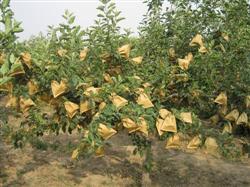
Pest and Disease Control Methods for Pear Trees Before Bagging in Early Spring
The period before and after bud break in early spring is when diseases and pests begin their activity, and once the pear orchard is bagged, spraying becomes considerably more difficult. Therefore, pest and disease control before bagging is the key to pest and disease management in bagged pear orchards. During this period, the focus should be on strengthening control of the pear psylla (Psylla pyrisuga), pear aphid, and red spider mite, among others. (1) Strengthen soil, fertilizer, and water...
-
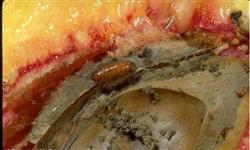
Spring Pest and Disease Control Methods for Protected Plum Trees
1. Mound soil at the base of the trunk. Before overwintering adults emerge from the soil (mid to late May), build a 10 cm thick mound of soil around the tree basin and tamp it down firmly so that emerging adults cannot come out of the soil. 2. Apply pesticide to the ground. Before overwintering adults emerge (after petal fall), spray the tree basin with 75% phoxim emulsifiable concentrate at 0.5 kg/mu, or 40...
-
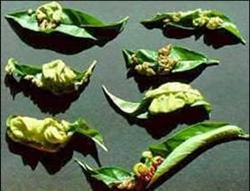
Technical Guidance on Early Spring Pest and Disease Control for Peach Trees
Peach leaf curl mainly damages leaves, but can also harm young shoots and young fruit. It generally occurs from April to May and happens only once a year. When fruit is affected, it turns red, the diseased part swells, the fuzz falls off, and the surface becomes smooth. For agricultural control, select high-yield, high-quality, disease-resistant varieties. In peach orchards that have entered the fruiting stage, manage the soil and fertilizer well...
-
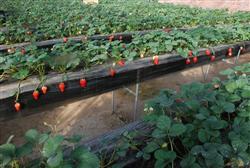
Five timely measures for spring strawberry management
Strengthening spring management is the key to promoting high quality, early ripening and increased yield in strawberries. The specific measures involve doing a good job of the "five timely actions." 1. Remove cold-protection covers in good time. The strawberry is a temperate evergreen plant, and its root system begins to grow when the soil temperature is 1°C to 2°C. In practice, generally when the air temperature is around 5°C, it is time to...
-
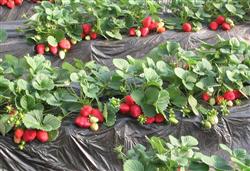
Detailed Explanation of Early Spring Strawberry Management Techniques
1. Do not single-mindedly pursue large-fruited varieties. Large-fruited strawberries have become the goal pursued by many growers; however, the fruit size of the same variety varies within a certain range. Fruits from the primary inflorescence are all relatively large, and the higher the order, the smaller the fruit. Fruit size is not the only indicator for evaluating quality; one must also consider flesh firmness, soluble...
-
Detailed Explanation of Key Cultivation Techniques for Watermelon in Early Spring Greenhouses
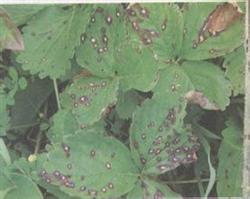
Strawberry snake-eye disease, also known as leaf spot disease, is a common disease of strawberries and occurs widely. When the disease is mild, it has no obvious effect on production; when severe, the incidence rate reaches 60%, and some leaves become necrotic and dry, significantly affecting strawberry yield. Symptom identification: it mainly damages leaves, petioles, fruit stalks, tender stems and seeds. On the leaves it forms small dark purple spots...
-
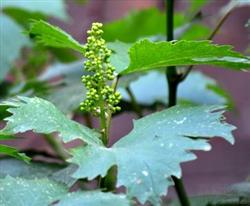
Detailed Explanation of Key Grape Spring Management Techniques
Spring is the season when grapes bud and unfold leaves, canes extend, and they send out clusters and bloom and set fruit. How to strengthen spring grape management and improve grape yield and quality is a matter of widespread concern among fruit growers. The following focuses on the main management work for grapes from February to April. 1. Late February to early March, budding stage: irrigate to promote bud break,...
-
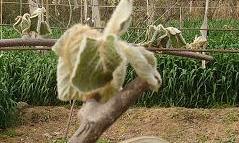
Protect kiwifruit from frost damage in spring, growers should prepare early
In recent years, the "late spring cold" phenomenon has been extremely prominent. Spring frost damage is one of the disastrous weather events that causes few kiwifruit buds to sprout, poor pollination, a low fruit-setting rate, delayed growth period, and setbacks to high yield and increased income. Preventing spring frost damage to kiwifruit is an important part of spring management work for kiwifruit. Recently, the reporter went to Shaanxi...
条件筛选