Five timely measures for spring strawberry management
Strengthening spring management is the key to promoting high quality, early ripening and increased yield in strawberries. The specific measures involve doing a good job of the "five timely actions." 1. Remove cold-protection covers in good time. The strawberry is a temperate evergreen plant, and its root system begins to grow when the soil temperature is 1°C to 2°C. In practice, generally when the air temperature is around 5°C, it is time to...
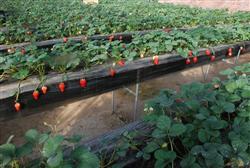
Strengthening spring management is the key to promoting high quality, early ripening and increased yield in strawberries. The specific measures involve doing a good job of the "five timely actions."
1. Remove cold-protection covers in good time. The strawberry is a temperate evergreen plant, and its root system begins to grow when the soil temperature is 1°C to 2°C. In practice, generally when the air temperature is around 5°C, the winter cold-protection materials should be removed in good time, and leaves and other debris should be picked up clean. For strawberries covered with plastic film, after uncovering the film, the plants must be hardened off properly to prevent freezing damage in early spring.
2. Loosen the soil and thin the seedlings in good time. After the beginning of spring, cultivate and loosen the soil in good time to raise the soil temperature. Cultivation should be shallow rather than deep, to prevent clods of soil from burying the crown of the plant. At the same time, thinning should be done well, removing the runners that emerge as early as possible.
3. Fertilize in good time. After the beginning of spring, the temperature gradually rises and the plants begin to grow. Timely topdressing can increase the number of effective flower buds and raise the fruit-setting rate. Because strawberries have shallow roots and are sensitive to fertilizer, fertilization should be based mainly on urea and compound fertilizer, and the amount applied should not be too large. Generally, applying 5 to 6 kg of urea and 10 to 15 kg of compound fertilizer per mu is suitable. In addition, spraying a 0.2% potassium dihydrogen phosphate solution on the leaves during the flowering and fruiting period has a good effect on improving quality and increasing yield.
4. Thin flowers and fruits in good time. The inflorescences that emerge from the new stems of strawberries generally have 10 to 30 flowers; too many flower buds consume nutrients, the plants grow weakly, and small fruits and misshapen fruits increase. Therefore, flower and fruit thinning must be carried out in good time, so that each plant retains 2 to 3 inflorescences, with 3 to 5 fruits kept per inflorescence.
5. Prevent and control pests and diseases in good time. The main diseases harming strawberries are leaf spot, gray mold, powdery mildew, bud blight and viral disease; the pests include aphids, underground pests and red spider mites. In practice, monitoring and forecasting should be strengthened, and once damage is found, prevention and control should be carried out in good time.