-
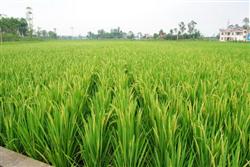
What are the key management points for rice at the heading and flowering stage?
How should rice be managed at the heading and flowering stage? Please explain the methods. When rice encounters continuous low temperature and rainy weather at the heading stage, fungicides should generally be applied to control rice blast. For susceptible varieties, two applications should be made: at the breaking stage (10%-50% of rice in the field breaking) and at the full heading stage (80% of rice panicles in the field emerged). Suitable fungicides include isoprothiolane...
-
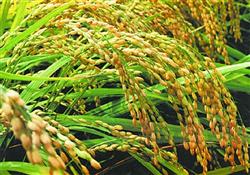
How can rice avoid the impact of high temperatures on grain filling?
How can high temperatures be avoided so they do not affect rice grain filling? Please provide methods to avoid the impact of high temperatures on rice grain filling. Sow at the right time to avoid hot, high temperatures. Schedule the optimal heading and flowering period of single-season middle rice for mid-August, effectively avoiding the frequently occurring high-temperature summer drought weather from late July to early August. Reasonably select...
-
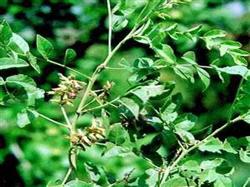
Detailed Explanation of Licorice Plastic Mulch Ridge-Furrow Cultivation Techniques
1. Site selection range. Licorice has strong adaptability and can grow in most soils, but slightly alkaline or alkaline sandy loam with a pH of 7.2--8.5 is most suitable. 2. Crop rotation selection. Licorice is a perennial herbaceous plant of the genus Glycyrrhiza in the Fabaceae family. The previous crop should preferably be a grass-family crop; legume crops should be avoided. 3. Land preparation and fertilization...
-
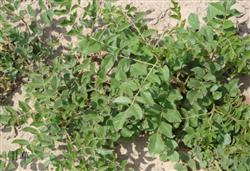
Detailed Guide to Harvest Time and Processing Methods of Licorice
Key technical measures for high-yield cultivation: choose fertile, loose-textured, well-drained sandy loam soil for planting. Treat seeds before sowing to improve germination rate, water during the seedling stage to keep seedlings alive, and apply sufficient phosphorus and potassium fertilizer every early spring. Harvest and processing 1. Harvest: Licorice propagated by seed generally grows for 4...
-
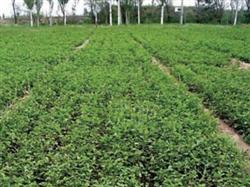
Licorice Market Prospects Analysis and Scientific Planting Techniques
Licorice is a plant of the Fabaceae family, the dried root and rhizome of Glycyrrhiza uralensis, Glycyrrhiza inflata, or Glycyrrhiza glabra, and is a commonly used bulk medicinal material. Wild licorice is mainly distributed in Inner Mongolia, Ningxia, **, Gansu, and other places; cultivated licorice is mainly distributed in the Hexi Corridor of Gansu, the surrounding area of Longxi, and parts of Ningxia. Licorice is a national-level se...
-
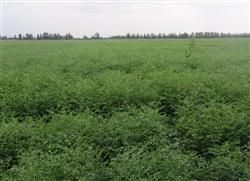
What Does Licorice Look Like? A Detailed Guide to Its Morphological Characteristics and Suitable Growing Environment
[Morphological Characteristics]Licorice (Glycyrrhiza) is a perennial herb, 30-100 cm tall. The entire plant is covered with short white pubescence and glandular hairs. The above-ground stem is upright, woody at the lower part, and the branchlets are angular and green. The leaves are alternate and odd-pinnately compound. There are 3-8 pairs of leaflets, ovate or ovate-elliptic, with entire margins, and the terminal leaflet is larger. The raceme...
-
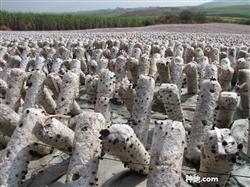
Methods and Technical Key Points for Cultivating Wood Ear Mushroom (Black Fungus) with Rice Straw
How to cultivate wood ear mushroom with rice straw? Please explain. After the autumn harvest, rural areas have large amounts of leftover rice straw, and throwing it away is a great pity. Cultivating wood ear mushroom with rice straw works very well and is also a path to wealth for farmer friends. Practice has shown that generally every 100 kg of rice straw can yield more than 10 kg of dried wood ear mushroom,...
-
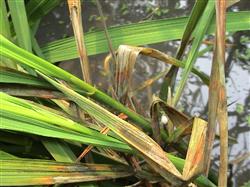
What are the common types of rice pests and diseases?
What pests and diseases affect rice? Please introduce control methods. Rice pests and diseases include rice blast, sheath blight, rice stem borers, rice planthoppers, and the rice red-spotted black spittlebug. They cause serious damage to rice, so control should be taken seriously. For control methods, refer to the following: Rice blast: long-term deep flooding or excessive drought, and excessive application of nitrogen fertilizer, lead to severe rice blast. Rice has three susceptible periods in its life, namely the seedling stage, the active tillering stage, and the full heading stage. Neck blast has the greatest impact on rice yield, so early prevention should be carried out at the booting stage and full heading stage. Rice blast is divided into: seedling blast, leaf blast, node blast, neck blast and grain blast. Rice blast control should adopt comprehensive control measures centered on planting disease-resistant high-quality varieties, based on healthy cultivation, and supplemented by chemical protection.
-
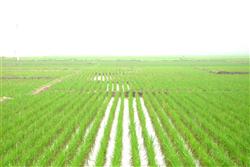
What are the key points of rice planting management techniques?
How should rice be managed during cultivation? Please provide an introduction to the management methods. For rice cultivation management, you can refer to the following methods: 1. Water-saving irrigation techniques. Irrigation during the rice growth period should adopt water-saving techniques, carrying out irrigation and drainage according to the water requirements and characteristics of rice at each growth stage, mainly divided into deep-water greening, shallow-water tillering...
-
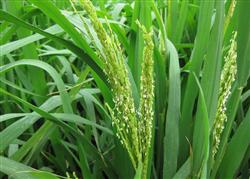
How should water be managed during the heading and grain-filling stage of rice?
How should water be managed during the heading and grain-filling stage of rice? Please explain. Mid-to-late July is when rice enters the heading and grain-filling stage, and scientific water management is quite critical for increasing rice yield and achieving high yields. For reference, see below: 1. The heading and flowering stage is a period when rice is relatively sensitive to water, second only to the late booting stage in sensitivity...
条件筛选