-
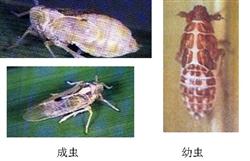
How to control the brown planthopper and white-backed planthopper in rice?
How to control the brown planthopper and white-backed planthopper in rice? Please provide an explanation of the methods. The brown planthopper has occurred at level 5 for two consecutive years, with strong pesticide resistance, while the white-backed planthopper has occurred at levels 3 to 4 for many consecutive years; the main factors affecting their occurrence are the amount of immigration and the summer-autumn climate conditions. In the winter of 2006, the brown planthopper broke out massively in the rice-growing areas of Vietnam, indicating that this...
-
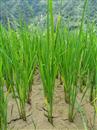
What is the correct method and purpose of draining paddy fields for rice?
How do you drain a paddy field for rice? What does it do? Please explain the field-draining method. Draining paddy fields is one of the main technical measures for increasing rice yields and promoting early ripening. 1. Main purposes of field draining. 1) Control ineffective tillering and consolidate effective tillering. When rice tillering has reached a certain number, that is, once there are enough seedlings, in our province, in terms of time, the effective tillering termination period is around the end of June. Early tillers can form panicles, while tillers after the termination period cannot form panicles or only form small panicles. In production, by draining the field, the young tiller buds at higher positions cannot get water and fertilizer and stop growing, reducing nutrient consumption, so that the main stem and large tillers receive more nutrient supply, laying a foundation for strong stems and large panicles.
-
What are the correct methods and precautions for draining and drying rice fields?
How to dry a rice field properly? An introduction. Draining and drying a rice field is an important measure for improving paddy soil structure, promoting rice seedling roots to grow downward, enhancing rice root vigor, increasing rice stalk toughness and lodging resistance, controlling ineffective tillering, raising the percentage of productive tillers, improving the field microclimate, and reducing the occurrence of rice diseases and insect pests. But...
-
Key Technical Points for Late-Stage Rice Growth Management
How should rice be managed in the late growth stage? What should be noted? In the late growth stage of rice, premature senescence must especially be prevented. If premature senescence occurs from the heading to maturity stage, it will lead to poor grain filling and an increase in blighted grains, causing reduced yield. There are many factors causing premature senescence in the late growth stage of rice. First, improper cultivation management. Planting...
-
What are the precautions for fertilizing rice?
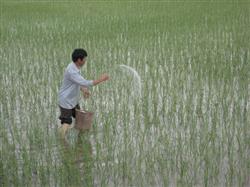
What should be noted when fertilizing rice? Please give an introduction. The principle of rice fertilization should be to use organic fertilizer and phosphate fertilizer as base fertilizer, potassium fertilizer mainly as tillering fertilizer, and nitrogen fertilizer applied evenly in multiple applications, with special attention to fertilizer for plump panicles and plump grains, so as to achieve large panicles and large grains while ensuring sufficient panicles. (1) Base fertilizer should be mainly organic fertilizer...
-
When is the best time to fertilize rice?
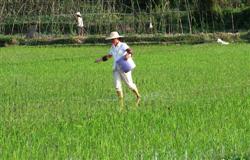
When is the best time to fertilize rice? Please explain. Because the natural conditions, farming systems, production levels and fertilization levels vary greatly across the rice-growing regions of southern China, different fertilization methods also exist. The front-stable, mid-boost, late-supplement fertilization method: this method involves applying a certain amount of fertilizer in the early stage as a base, increasing the amount of topdressing in the mid stage to promote large panicles, and applying grain fertilizer in the late stage depending on the crop's condition. Generally, the base fertilizer accounts for 40%-60%; among the mid-stage topdressings, tillering fertilizer accounts for 30%, panicle fertilizer accounts for 50%, and grain fertilizer accounts for 20%. This method is mainly used for large-panicle, large-grain varieties of single-season hybrid mid-season and late rice with a longer growth period, and for fields with poor soil fertilizer retention capacity and insufficient fertilizer.
-
Causes of Open Rice Glumes Without Grain Filling and Control Methods
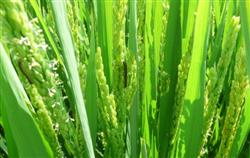
What should be done when rice glumes open without grain filling? What solutions are available? Please advise. The phenomenon of rice glumes opening without grain filling after heading occurs in many places, mainly on hybrid indica rice; it basically does not occur on japonica rice. Since this phenomenon occurs in different years, and occurs in fields both with and without pesticide application...
-
What are some practical methods to increase rice yield?
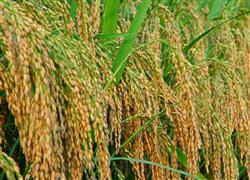
What methods can increase rice yield? Is there any effective method? To increase rice yield, you can refer to the following methods for management: 1. Increase the number of panicles. ① Cultivate strong seedlings. This provides a good foundation for early greening and early tillering after transplanting. ② Reasonable close planting. According to the planned number of panicles to be harvested and an estimate of the tillering situation of the seedlings after transplanting...
-
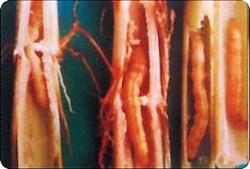
What are the pollution-free control methods for rice stem borers?
How are rice stem borers controlled in a pollution-free way? Please explain the control methods. Stem borers are the common name for the rice striped stem borer and the rice yellow stem borer. The rice striped stem borer is distributed throughout the country. Besides damaging rice, the rice striped stem borer also damages wild rice stem, corn, sugarcane, reeds and other grass weeds. After overwintering, some larvae can invade broad...
-
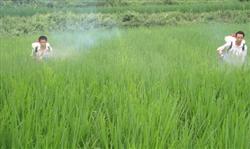
When is the best time to spray foliar fertilizer on rice?
When is the best time to apply foliar fertilizer to rice? Here is a detailed introduction: Applying foliar fertilizer during the middle and late stages of rice growth can increase grain number and grain weight, generally increasing yield by 5%-10%, and improve quality. Therefore, the following foliar fertilizers can be selected according to conditions. For Guli Bao (Grain-Filling Fertilizer), during the heading stage and milk-ripening stage of rice, use 1 packet (50 grams) per mu dissolved in 50...
条件筛选