What are the key points of rice planting management techniques?
How should rice be managed during cultivation? Please provide an introduction to the management methods. For rice cultivation management, you can refer to the following methods: 1. Water-saving irrigation techniques. Irrigation during the rice growth period should adopt water-saving techniques, carrying out irrigation and drainage according to the water requirements and characteristics of rice at each growth stage, mainly divided into deep-water greening, shallow-water tillering...
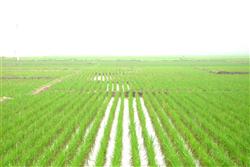
How should rice be managed during cultivation? Please provide an introduction to the management methods.
For rice cultivation management, you can refer to the following methods:
I. Water-saving irrigation techniques
Irrigation during the rice growth period should adopt water-saving techniques, carrying out irrigation and drainage according to the water requirements and characteristics of rice at each growth stage, mainly divided into deep-water greening, shallow-water tillering, deep-water booting and heading, and shallow-water ripening. During the greening stage, because the roots of the seedlings are damaged at transplanting and absorb little water while leaf transpiration is high, deep water must be maintained after transplanting to prevent physiological water loss, with a water depth of about 2-3 cm being appropriate. If the water is too deep, nutrient decomposition is slow, which is unfavorable for tillering; the booting and heading stage is the period of greatest water demand in the entire life of rice, and especially during the meiosis stage, it is even more sensitive to water. A shortage of water at this time will cause degeneration of spikelets, resulting in short panicles, few grains and many empty shells, so during the booting and heading stage a 2 cm water layer should be maintained in the field.
II. Measures to prevent low-temperature cold damage
When rice encounters periodic low temperatures and also continuous fine rain, the pollen absorbs water and readily ruptures, increasing empty shells. If an early frost occurs in early September, rice cannot carry out normal grain filling and milk ripening. When wind speed is too high, it causes direct damage to rice organs and increases empty and blighted grains, directly affecting the seed-setting rate of rice and causing yield reduction.
Prevention methods:
1. Select superior varieties with strong stress resistance, cultivate strong seedlings, increase the application of silicon fertilizer, increase leaf toughness, promote root development, prevent leaves from drooping, reduce shading, and create a good light-receiving environment. Improve stress resistance.
2. During the heading stage of rice, pay attention to weather changes. When the temperature is below 17°C, deepen the water layer to 15-17 cm to keep warm with water, and after the temperature rises, restore the original water layer to facilitate normal ripening of rice.
3. Without affecting yield, appropriately reduce the application rate of nitrogen fertilizer and increase the application of potassium fertilizer. Starting from the flower-promoting fertilizer, apply once at the same leaf age each time, which can enhance the rice plant's ability to absorb potassium fertilizer, reduce side effects, enlarge panicles and increase grain weight. Increase rice yield.
III. Harvest at the appropriate time
The timing of harvest, early or late, will directly affect the appearance quality, eating quality and yield of rice. If harvested too early, the grains are not yet fully mature, with many blighted and green grains, a low milling rate and poor rice quality; if harvested too late, nutrients in the grains flow back, yield decreases, and it is susceptible to early frost damage, stem lodging, thick rice husks, and dull, lusterless rice quality, etc., causing direct economic losses. Therefore, failure to harvest at the appropriate time has a great impact on yield. When the rachis is dry and yellow at the top and bottom, two-thirds of the branches on the upper part of the panicle have turned yellow, and the grains on the lower part of the panicle have set and hardened, this is the best harvest period.
Click to get more rice planting techniques
Click to get more grain crop planting techniques