-
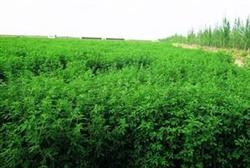
Detailed Explanation of Licorice Seedling Raising Methods and Key Planting Techniques
Abstract: Licorice is the source material for a large number of traditional Chinese medicine preparations, and is widely used in food, beverages, tobacco, daily chemicals and other fields, with broad application prospects. However, due to the lack of wild licorice resources, artificial planting efforts need to be increased. In order to improve licorice seedling raising and planting techniques, the Urumqi Grassland Station conducted licorice seedling raising and planting...
-
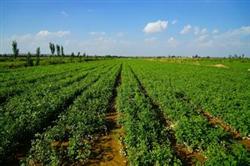
Licorice is best planted after autumn plowing; otherwise it affects seedling emergence and seedling survival.
1. Seed treatment: before sowing, treat the seeds with 60-100°C water for 30 seconds; then soak them in warm water for 1 day and night, and the germination rate can reach 50%. If concentrated sulfuric acid is used, remove the seeds immediately when the seed coat turns black and rinse them in clean water, then soak them in warm water; sow when the seeds swell, and the germination rate can reach more than 90%. 2. Planting metho...
-
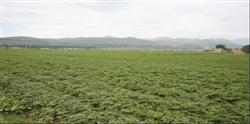
How to Grow Licorice? A Detailed Guide to Cultivating the Medicinal Plant Licorice
●Growth Habits. Licorice, also known as sweet grass root, red licorice, and powdered licorice. It is a plant of the Fabaceae family. Its roots and rhizomes are used as medicine. It has the effects of clearing heat and detoxifying, moistening the lungs and relieving cough, tonifying the spleen and boosting qi, and harmonizing various medicines. Licorice mostly grows in the northern temperate zone, in plains, mountainous areas, or river valleys at an altitude of 0-200 m. The soil is mostly sandy soil. Soil...
-
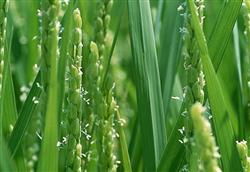
What are the key management considerations for the late stage of rice cultivation?
What should be noted in the late stage of rice cultivation? Please provide an introduction. In the late stage of rice cultivation, attention should be paid to the following aspects: 1. Late-stage water management: Do a good job of field water management to ensure smooth heading and flowering, maintain root vitality, and effectively guarantee smooth grain filling. During the booting and heading stages, keep deep water in the field, but it is not advisable to irrigate deep water for too long at one time...
-
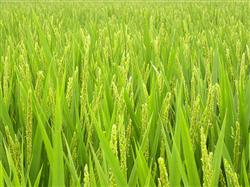
What are the key points of rice late-stage management techniques?
How should rice be managed in the late stage? Please provide an introduction to the management methods. Rice late-stage management can refer to the following methods: 1. Disaster prevention and resistance. The late growth stage of rice is a season with frequent typhoons, rainstorms, abnormally low temperatures, and extreme high temperatures. We must firmly establish the awareness of fighting disasters to secure a bumper harvest, always pay attention to weather information, and for rice fields with incomplete supporting facilities...
-
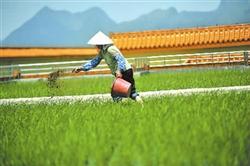
How to fertilize rice at the late stage? Master these technical points
How to fertilize rice at the late stage? Please introduce the method. Late-stage rice cultivation requires skillful fertilizer application. The sowing period for soybean after rice is from late July to early-to-mid August; too early or too late will both affect soybean growth. Specifically, sowing should be done within one week after the rice harvest. The sowing rate depends on the seed size of the variety, plant height, number of branches, soil fertility and fertilizer level.
-
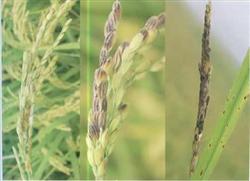
Why does rice produce empty and blighted grains, and how should it be prevented and controlled?
Why does rice produce empty and blighted grains, and how should it be prevented and controlled? Please give a detailed introduction. Under normal conditions, the rate of empty and blighted rice grains is generally 10%-20%, and in severe cases can reach 40%, which greatly affects rice yield. 1. Causes of formation. The rate of empty and blighted rice grains is mainly affected by 3 factors. 1. Climatic...
-
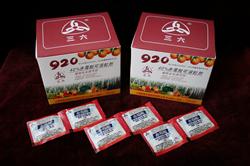
Can gibberellic acid (920) be sprayed on rice to promote heading?
Can gibberellic acid (920) be sprayed on rice to promote heading? Please give an introduction. Gibberellic acid, also known as gibberellin, 920, is a broad-spectrum plant growth regulator. It mainly enters the plant body through leaves, young shoots, flowers, seeds or fruits, and then is transported to actively growing parts to take effect. This agent can promote cell elongation,...
-
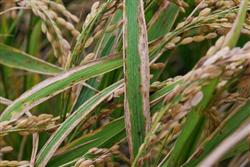
What are the control methods for the three major rice diseases?
How do you control the three major rice diseases? Please explain the control methods. The three major rice diseases can be controlled by referring to the following methods: 1. Rice blast (1) Leaf blast: dark green, nearly round or oval lesions, which later become slightly pointed at both ends; generally, when acute-type lesions appear or an infection center develops, especially in rice fields with high nitrogen fertilizer rates and tender, lush green growth, when the total number of leaf blast lesions occurring on 20 hills of rice during the entire growth period before heading reaches more than 400, spraying must be carried out, with an interval of 3 to 5 days, and continuous spraying 2 times.
-
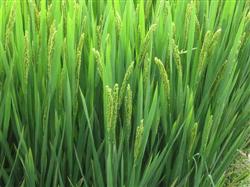
How to scientifically manage water and fertilizer in the middle and late stages of rice?
How should water and fertilizer be managed in the middle and late stages of rice? Please provide an introduction to the management methods. Water and fertilizer management in the middle and late stages of rice can refer to the following: (1) Apply panicle fertilizer cautiously as appropriate to promote large panicles, full grains, and high yield. Based on the earlier rice seedling growth and field diagnosis results, for fields with high soil fertility, strong water and fertilizer retention capacity, many tillers, and darker leaves, delay, reduce, and lower the application rate of panicle fertilizer, generally applying 4-5 kg of urea per mu at the 5th-7th stage of panicle differentiation or at the penultimate leaf stage; for fields with poor fertilizer retention capacity, insufficient tillering, and lighter leaf color, appropriately increase the panicle fertilizer rate earlier, generally applying 6-8 kg of urea per mu at the 4th leaf from the top stage when entering the panicle initiation stage, and spray trace element fertilizers such as potassium dihydrogen phosphate on the leaves at the initial heading stage to increase grain filling and raise yield.
条件筛选