What Does Licorice Look Like? A Detailed Guide to Its Morphological Characteristics and Suitable Growing Environment
[Morphological Characteristics]Licorice (Glycyrrhiza) is a perennial herb, 30-100 cm tall. The entire plant is covered with short white pubescence and glandular hairs. The above-ground stem is upright, woody at the lower part, and the branchlets are angular and green. The leaves are alternate and odd-pinnately compound. There are 3-8 pairs of leaflets, ovate or ovate-elliptic, with entire margins, and the terminal leaflet is larger. The raceme...
[Morphological Characteristics]
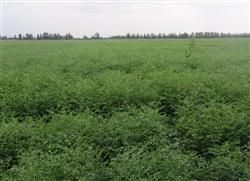
Licorice (Glycyrrhiza) is a perennial herb, 30-100 cm tall. The entire plant is covered with short white pubescence and glandular hairs. The above-ground stem is upright, woody at the lower part, and the branchlets are angular and green. The leaves are alternate and odd-pinnately compound. There are 3-8 pairs of leaflets, ovate or ovate-elliptic, with entire margins, and the terminal leaflet is larger. The inflorescence is a raceme, axillary, with very short pedicels, and an ovate small bract below the base; the calyx is campanulate and green, and the corolla is papilionaceous, purple-red or blue-purple. The fruit is a legume, narrowly rectangular, curved into a sickle shape or semi-ring shape, brown, densely covered with prickly hairs. There are 5-8 seeds, ovate and slightly flattened, with a smooth surface, brown.
[Suitable Growing Environment]
Licorice prefers light and is cold-tolerant, drought-tolerant, and tolerant of poor soil, and can withstand low temperatures of -10°C. Because licorice is a deep-rooted plant, places with a high groundwater table are not suitable for its growth and can easily cause root rot and seedling death. Sandy loam is the best soil; clay soil and poorly drained low-lying land are not suitable for cultivating licorice.