What are the common types of rice pests and diseases?
What pests and diseases affect rice? Please introduce control methods. Rice pests and diseases include rice blast, sheath blight, rice stem borers, rice planthoppers, and the rice red-spotted black spittlebug. They cause serious damage to rice, so control should be taken seriously. For control methods, refer to the following: Rice blast: long-term deep flooding or excessive drought, and excessive application of nitrogen fertilizer, lead to severe rice blast. Rice has three susceptible periods in its life, namely the seedling stage, the active tillering stage, and the full heading stage. Neck blast has the greatest impact on rice yield, so early prevention should be carried out at the booting stage and full heading stage. Rice blast is divided into: seedling blast, leaf blast, node blast, neck blast and grain blast. Rice blast control should adopt comprehensive control measures centered on planting disease-resistant high-quality varieties, based on healthy cultivation, and supplemented by chemical protection.
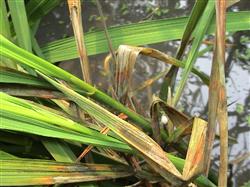
What pests and diseases affect rice? Please introduce control methods
Rice pests and diseases include rice blast, sheath blight, rice stem borers, rice planthoppers, and the rice red-spotted black spittlebug. They cause serious damage to rice, so control should be taken seriously. For control methods, refer to the following:
Rice blast: long-term deep flooding or excessive drought, and excessive application of nitrogen fertilizer, lead to severe rice blast. Rice has three susceptible periods in its life, namely the seedling stage, the active tillering stage, and the full heading stage. Neck blast has the greatest impact on rice yield, so early prevention should be carried out at the booting stage and full heading stage. Rice blast is divided into: seedling blast, leaf blast, node blast, neck blast and grain blast. Rice blast control should adopt comprehensive control measures centered on planting disease-resistant high-quality varieties, based on healthy cultivation, and supplemented by chemical protection.
(1) Rational use of disease-resistant varieties.
(2) Scientific field management: cultivate strong seedlings, apply sufficient base fertilizer, increase potassium fertilizer, zinc fertilizer and organic fertilizer, apply heading fertilizer skillfully, and drain the field at the right time.
(3) Seed treatment: soak seeds for 48 hours in a 1000-fold dilution of 10% 401 antibacterial agent, or soak seeds for 48-72 hours in a 2000-fold dilution of 80% 402 antibacterial agent and then germinate directly, or soak seeds for 24 hours in a 500-700-fold dilution of 20% tricyclazole wettable powder, then wash and germinate.
(4) Chemical control: leaf blast should be sprayed for protection at the early stage of disease onset (when the diseased leaf rate is 3%), and neck blast should be sprayed for protection at the early heading stage, after which the number of sprays should be decided according to weather conditions. Chemical selection: 30 g of 75% tricyclazole wettable powder per mu, or 100 g of 40% Fuji No. 1, or 150-200 g of 40% hinosan emulsifiable concentrate. To ensure the effect of chemical control, 50 kg of water per mu should be ensured, and the dosage should not be increased blindly.
Rice sheath blight: excessive nitrogen, dense planting, and excessive irrigation easily lead to severe occurrence of sheath blight. The control of rice sheath blight should be based on agricultural measures, combined with chemical control. (1) Focus on cultivation-based disease prevention centered on fertilizer and water management. Fertilizer should focus on stable application of nitrogen and phosphorus, and increased application of potassium and zinc fertilizer. With the principle of applying sufficient base fertilizer and ensuring heading fertilizer, nitrogen fertilizer should not be applied to promote seedlings in the middle growth stage of rice. Irrigation should implement the principle of "shallow water early, field drying in the middle, and moist later". (2) Chemical control: focus on protecting the last 3-4 leaves of the rice plant, and application should not be too early (before the jointing stage) or too late (after the heading stage). Chemical selection: 150 ml of 5% validamycin aqueous solution per mu, or 100-200 ml of 12.5% wenmeiqing aqueous solution, or 60-100 ml of 20% wenmeiqing suspension concentrate, or 50 g of 15% triadimefon wettable powder, diluted with 50-70 kg of water for spraying. The chemical should be sprayed on the middle and lower parts of the rice plant, and the key control period should be from booting to full heading.
Rice stem borers: including the striped stem borer, the yellow stem borer, and the rice leaf roller. Severe damage by stem borers can cause white heads. Control method: use 90 ml of 15% leizuan emulsifiable concentrate per mu, or 90 ml of 13.5% zuanxinpao emulsifiable concentrate, or 90 ml of 13.5% fake emulsifiable concentrate, or 50 ml of 13.5% juedou emulsifiable concentrate, or 40 ml of 10% jinfo emulsifiable concentrate, or 90 ml of 20% chlorpyrifos • or xin emulsifiable concentrate, diluted with 60 kg of water for spraying.
Control periods for rice stem borers:
(1) Striped stem borer: apply chemical control at the peak of young larvae.
(2) Yellow stem borer: the first application is at the booting stage of rice (three days before the booting stage), and another application can be made seven days later.
(3) Rice leaf roller: apply chemical control when new small leaf rolls appear, with sufficient water and even spraying.
Rice planthoppers, commonly known as "mengzi", are also one of the main pests of rice. The more common ones are the white-backed planthopper and the brown planthopper. Both planthoppers migrate in from southern rice-growing areas with the southwest airflow. Generally, the white-backed planthopper is dominant in the early stage of rice, and the brown planthopper is dominant in the later stage. That is, the white-backed planthopper mainly damages from tillering to the jointing stage. In affected fields, rice leaves turn yellow and tillering decreases, and in severe cases rice plants die in patches, forming "dead patches". The brown planthopper mainly damages from booting to maturity. When the damage is severe, the base of the rice clump turns dark brown and the whole plant gradually dies. Affected fields often form "yellow patches", and in severe cases the whole field turns yellow and withered, as if burned by fire. The appropriate control period for both planthoppers is when the field population reaches more than 50 insects per 100 clumps, at which point spraying should begin, adopting the strategy of "suppressing the early and controlling the later" and vigorously controlling the main damaging generation.
① Spraying: choose 10% imidacloprid wettable powder, 25% buprofezin wettable powder 2000-fold dilution, 25% metolcarb wettable powder, 10% leafhopper powder wettable powder 300-fold dilution, 80% dichlorvos emulsifiable concentrate 800-fold dilution, and spray. All can have good results.
② Splash irrigation: choose 10% imidacloprid or 25% buprofezin wettable powder, 40 g per mu; 40% monocrotophos emulsifiable concentrate, 50 ml per mu, splash-irrigate with abundant water, using 400 kg of water per mu.
③ Broadcast granules or toxic soil: broadcast 2-3 kg of 3% carbofuran granules or 4% leafhopper powder granules per mu into the rice field; alternatively, use 150 g of 80% dichlorvos emulsifiable concentrate, dilute with an appropriate amount of water, mix with 20-25 kg of fine soil and broadcast.
The rice red-spotted black spittlebug, also known as the red-spotted spittlebug or rice spittlebug, is commonly called "thunder fire insect" or "bubble-blowing insect". It generally moves in a scattered manner, mostly feeding in rice fields in the morning and evening, and hides in weeds during high temperature and strong light. When outbreaks occur, adults fly in groups in the field in the evening. After feeding their fill, adults hide on the undersides of crop leaves or in weeds. Generally, damage at the field edge is heavier than at the field center. After feeding, adults can continuously excrete colorless transparent liquid feces, contaminating crop leaves. Adults are active by nature, good at flying and jumping, can fly 2-3 m at a time, and have the characteristic of feeding away from light. The rice red-spotted black spittlebug, mostly in adult form, sucks leaf sap and flower juice on cloudy days, early morning or evening, causing empty grains and affecting yield. Affected leaves turn red, and damage gradually worsens from the field center to the field edge, looking like fire from a distance. For nymph control, after the peak of the 3rd instar and before adults emerge, when many white foam masses are found on field ridge soil cracks, field ridge plant stems or leaves; for adult control, when there are more than 3 insects per square meter in the rice field. The nymphs of the rice red-spotted black spittlebug live in the soil and suck sap from weed roots through cracks in the soil surface. At this time, 3% carbofuran granules mixed with fine soil can be broadcast on the field ridges for control. At the peak of adult occurrence, use 20% triazophos emulsifiable concentrate 600-fold dilution, or 40% supusha emulsifiable concentrate 400-fold dilution, or 40% isocarbophos emulsifiable concentrate 600-fold dilution, or 45% malathion emulsifiable concentrate 1000-fold dilution, or 40% omethoate emulsifiable concentrate 1500-fold dilution for spray control.
Click to get more rice cultivation techniques
Click to get more grain crop cultivation techniques