Detailed Explanation of Licorice Plastic Mulch Ridge-Furrow Cultivation Techniques
1. Site selection range. Licorice has strong adaptability and can grow in most soils, but slightly alkaline or alkaline sandy loam with a pH of 7.2--8.5 is most suitable. 2. Crop rotation selection. Licorice is a perennial herbaceous plant of the genus Glycyrrhiza in the Fabaceae family. The previous crop should preferably be a grass-family crop; legume crops should be avoided. 3. Land preparation and fertilization...
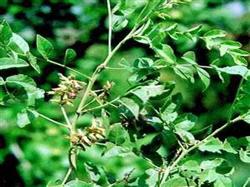
1. Site selection range. Licorice has strong adaptability and can grow in most soils, but slightly alkaline or alkaline sandy loam with a pH of 7.2--8.5 is most suitable.
2. Crop rotation selection. Licorice is a perennial herbaceous plant of the genus Glycyrrhiza in the Fabaceae family. The previous crop should preferably be a grass-family crop; legume crops should be avoided.
3. Land preparation and fertilization. After the previous crop is harvested, during deep plowing and land preparation, apply 3500--4000 kg of high-quality farmyard manure and 50 kg of phosphate fertilizer per mu, then harrow finely, level, and preserve soil moisture ready for planting.
4. Timely planting. In mid-to-late April, in the prepared plot, open small furrows 15--20 cm deep at a row spacing of 20 cm, place the seedlings along the furrows at a plant spacing of 30 cm in a "pin" shape with the rhizome heads tilted slightly upward into the furrows, then cover the previous row of seedlings with the soil from opening the furrows and harrow finely. Following this pattern, make every three small furrows one group, cover and press firmly with plastic mulch 80 cm wide, forming a "three ridge-furrow" cultivation pattern, planting about 10,000 plants per mu.
5. Field management. After planting and emergence, carefully tear open the plastic mulch to release the seedlings in time to prevent scorching the seedlings, and press the torn openings in the mulch firmly with sandy loam. In artificial cultivation of licorice, the soil layer around the rhizome heads must be kept loose and soft to encourage weak buds to emerge above ground and grow into new main branches. Combined with intertillage and weeding, promptly remove any underground horizontal stems found to promote main root growth and increase the proportion of higher-grade licorice.
6. Pest and disease control
6.1 Rust. In the early stage of disease, spray with a 1000-fold dilution of 70% triadimefon.
6.2 Powdery mildew. Spray with a 100-fold dilution of 50% thiophanate-methyl.
6.3 Gray leaf spot. Spray with a 500--600-fold dilution of 75% chlorothalonil wettable powder.
6.4 Insect pests. Use 90% trichlorfon or 40% dimethoate as a root drench for control.
7. Harvesting. After 2--3 years of growth, it reaches the standard for graded licorice. The best digging season is autumn after the leaves turn yellow. The method is to first cut off the stems and leaves, remove the plastic mulch, dig deeply along both sides of the rows, and when the rhizomes are exposed more than 40 cm above ground, pull them out forcefully, shake off the soil, remove the rhizome heads, root tails, and lateral roots, sort by grade, and sun-dry until completely dry before selling on the market.