Licorice Market Prospects Analysis and Scientific Planting Techniques
Licorice is a plant of the Fabaceae family, the dried root and rhizome of Glycyrrhiza uralensis, Glycyrrhiza inflata, or Glycyrrhiza glabra, and is a commonly used bulk medicinal material. Wild licorice is mainly distributed in Inner Mongolia, Ningxia, **, Gansu, and other places; cultivated licorice is mainly distributed in the Hexi Corridor of Gansu, the surrounding area of Longxi, and parts of Ningxia. Licorice is a national-level se...
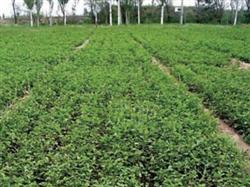 Benefit Analysis and Market Prospects
Licorice is a perennial herbaceous plant of the Fabaceae family, with its roots and rhizomes used as medicine. Sweet in taste, neutral in nature. Licorice is the king of Chinese medicine; "Compendium of Materia Medica" lists it as the first of a hundred medicines, and its uses are extremely wide-ranging. The underground part of licorice has effects such as clearing heat and detoxifying, moistening the lungs and stopping cough, quenching thirst and removing phlegm, tonifying the spleen and harmonizing the stomach, and reconciling various medicines. Chinese medicine prescriptions cannot do without licorice, commonly known as "nine out of ten formulas contain licorice." The acid-type compounds of licorice have effects in preventing and treating viral hepatitis, high blood lipids, anti-cancer and cancer prevention, and regulating human cellular immune function. The above-ground part of licorice has high crude protein and crude fat content, lower crude fiber content, and the stems and leaves contain various trace elements needed by animals. The feeding effect is similar to that of alfalfa, with output returns slightly higher than alfalfa, and it can serve as an excellent leguminous forage. Artificially planting licorice has attractive business opportunities, with market demand and export volume increasing day by day, so developing licorice in the coming years is still a heaven-sent opportunity.
The main reasons for the continuous rise in licorice prices are as follows: First, the medicinal material is used in large quantities and has wide applications. Second, years of predatory harvesting have pushed wild licorice to the brink of extinction. Third, licorice needs 2 to 3 years of growth (including the seedling growth period) before it can be harvested, and many people dare not plant it for fear that prices will fall after planting. This fully proves that developing artificial licorice cultivation is imperative. According to national customs statistics, after China's accession to the WTO, licorice export volume has continued to increase, and exported raw materials are gradually transforming into semi-finished products. Therefore, licorice is being widely used in industries such as medicine, food, beverages, chemicals, brewing, and national defense construction.
Planting Management and Harvesting Techniques
Growth habits: Licorice originally grew wild on desert and semi-desert grasslands and is a plant with strong alkali resistance. It is distributed in continental climate zones. After its roots become lignified, it is drought-tolerant, waterlogging-tolerant, cold-tolerant, light-loving, and suited to cool and dry climates. It has low requirements for soil, and generally any soil can be used for planting. It is particularly suitable for newly reclaimed barren hills and hills, and is especially useful for large land contract holders.
Propagation methods: Seeds treated by scientific methods and technical processing can be planted by direct sowing or seedling transplanting.
Sowing time and transplanting: Spring sowing: March to April; summer sowing: May to July; autumn sowing: any time before White Dew. Regardless of which month the seedlings are raised, they can be transplanted to the field around the Spring Festival, with about 12,000 seedlings per mu. Transplanting: After the land is leveled, plant at 40 cm row spacing, 15 to 18 cm plant spacing, 8 cm deep, laid flat in the furrow, and covered with soil.
Fertilization and land preparation: 20 kg urea per mu, 20 to 40 kg potassium fertilizer, 50 to 100 kg superphosphate or 50 to 100 kg compound fertilizer are all acceptable, then apply low-residue pesticide to kill underground insects, deep plow the land 30 to 40 cm, harrow finely and level, make 60 cm wide high beds for direct sowing, and make 120 cm wide high beds for seedlings.
Harvesting and processing: Licorice is used medicinally for its roots and can generally be harvested from October to December or before spring sprouting. For large-scale planting, a 50 tractor can be hitched to a plow to plow them out, then manually picked out. After harvesting licorice, cut off the stems and branches, dig out the roots, clean off the soil, chop off the reed head, branch forks, and fibrous roots, sun-dry until half dry, tie into small bundles, then sun-dry completely before selling. Quality is best when the skin is red, the powder is abundant, and the taste is sweet.