What is the correct method and purpose of draining paddy fields for rice?
How do you drain a paddy field for rice? What does it do? Please explain the field-draining method. Draining paddy fields is one of the main technical measures for increasing rice yields and promoting early ripening. 1. Main purposes of field draining. 1) Control ineffective tillering and consolidate effective tillering. When rice tillering has reached a certain number, that is, once there are enough seedlings, in our province, in terms of time, the effective tillering termination period is around the end of June. Early tillers can form panicles, while tillers after the termination period cannot form panicles or only form small panicles. In production, by draining the field, the young tiller buds at higher positions cannot get water and fertilizer and stop growing, reducing nutrient consumption, so that the main stem and large tillers receive more nutrient supply, laying a foundation for strong stems and large panicles.
How do you drain a paddy field for rice? What does it do? Please explain the field-draining method.
Draining paddy fields is one of the main technical measures for increasing rice yields and promoting early ripening.
1. Main purposes of field draining
1) Control ineffective tillering and consolidate effective tillering. When rice tillering has reached a certain number, that is, once there are enough seedlings, in our province, in terms of time, the effective tillering termination period is around the end of June. Early tillers can form panicles, while tillers after the termination period cannot form panicles or only form small panicles. In production, by draining the field, the young tiller buds at higher positions cannot get water and fertilizer and stop growing, reducing nutrient consumption, so that the main stem and large tillers receive more nutrient supply, laying a foundation for strong stems and large panicles.
2) Improve the soil environment and enhance root vigor. From transplanting to field draining, the field surface maintains a certain water layer for a relatively long time, resulting in poor aeration in the topsoil, inhibited activity of aerobic microorganisms, and slow decomposition of organic matter, which is not conducive to root growth. Through field draining, the atmosphere can directly enter the plow layer, increasing soil permeability, improving soil structure, and increasing the oxygen content in the plow layer. After field draining, the number of new roots increases, promoting downward root extension, expanding the range of root activity, and enhancing absorption capacity.
3) Coordinate vegetative growth and reproductive growth. Field draining can lower the level of nitrogen metabolism, control the rate of vegetative growth, improve carbon metabolism, and promote carbohydrate accumulation. It also inhibits internode growth, shortens the length of the first and second internodes at the base of the rice stem, thickens the stem wall, and makes the stem tissue denser, thus also enhancing the plant's lodging resistance and providing more nutrient sources for the early stage of young panicle differentiation. After rewatering, more carbohydrates move from the stem and sheath to the young panicle, promoting young panicle development. Rice shifts from vegetative growth to reproductive growth, meeting the nutrient supply for young panicle growth and development and laying a foundation for forming large panicles with many grains.
4) Lower field temperature and suppress disease and pest damage. The occurrence and spread of many rice diseases and pests are directly related to the temperature and humidity among rice plants. For example, rice blast disease is suitable for pathogen reproduction and invasion when field relative humidity is above 90%. Bacterial leaf blight occurs severely when field air relative humidity is above 70%. Rice leaf miners and Asiatic rice borers, among others, also require relatively high humidity conditions for egg hatching and damage. Field draining lowers the air humidity among plant clumps, improves the field microclimate environment, destroys the conditions for pathogen and insect egg reproduction and spread, and suppresses the occurrence and severity of diseases and pests.
2. Field draining time and method
1) Field draining should generally be carried out at the late tillering stage and early jointing stage. Draining too early affects the production and growth of effective tillers, while draining too late allows new tillers to grow excessively and delays the speed of young panicle differentiation. For varieties with medium tillering ability, when each hill reaches 25-30 tillers, the field should be drained.
2) If rice stems and leaves grow excessively, the amount of nitrogen fertilizer used is too much, and the leaves are dark green, the field should be drained heavily and early. Conversely, if the rice plants are weak, draining should be late, light, or not done.
3) For fields with deep, fertile soil where rice plants show excessive growth and dark leaf color, draining should be early and heavy; for fields with thinner soil and poorer fertilizer and water retention, draining should be late and light. For clay layers with weak permeability, draining should be early and repeated; leaky fields should not be drained.
4) When about one third of the plants in the field have jointed, field draining should be stopped and normal water management carried out to ensure the water demand during young panicle differentiation and promote young panicle differentiation and growth. At this time, appropriate deep irrigation should be used, controlling the water layer at about 5-6 cm.
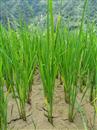
5) Field draining generally lasts about 5-10 days. For lightly drained fields, the field surface should show fine cracks and soil should not stick to the feet when stepping down; for moderately drained fields, drain until chicken-claw-shaped cracks appear on the field surface; for heavily drained fields, white roots should be exposed, leaf color should fade, and leaves should stand upright.
Click to get more rice cultivation techniques
Click to get more grain crop cultivation techniques