How to control the brown planthopper and white-backed planthopper in rice?
How to control the brown planthopper and white-backed planthopper in rice? Please provide an explanation of the methods. The brown planthopper has occurred at level 5 for two consecutive years, with strong pesticide resistance, while the white-backed planthopper has occurred at levels 3 to 4 for many consecutive years; the main factors affecting their occurrence are the amount of immigration and the summer-autumn climate conditions. In the winter of 2006, the brown planthopper broke out massively in the rice-growing areas of Vietnam, indicating that this...
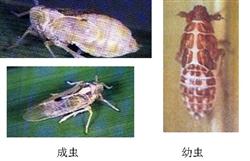
How to control the brown planthopper and white-backed planthopper in rice? Please provide an explanation of the methods
The brown planthopper has occurred at level 5 for two consecutive years, with strong pesticide resistance, while the white-backed planthopper has occurred at levels 3 to 4 for many consecutive years; the main factors affecting their occurrence are the amount of immigration and the summer-autumn climate conditions. In the winter of 2006, the brown planthopper broke out massively in the rice-growing areas of Vietnam, indicating that this year the base number of insect sources immigrating into China is large, and currently there are no resistant varieties in production, plus the rice growth period has been delayed, which will favor the late-season occurrence of the brown planthopper. Therefore, in 2007, if immigration conditions and the summer-autumn climate are suitable, the brown planthopper is expected to reach level 4 to 5 occurrence, slightly lighter than last year or similar to last year; the occurrence area of the white-backed planthopper and the brown planthopper will reach 75 million mu-times.
To control rice planthoppers, the control strategy of "treating the upper generation to suppress the lower generation" should be adhered to, adjusting pesticide types, improving application quality, and ensuring control effectiveness. (1) Adhere to the control strategy of "treating the upper generation to suppress the lower generation." "Treating the upper generation to suppress the lower generation" is an economical and effective practice for controlling the damage of the current generation and reducing the control pressure of the next generation. In the past two years, our province has consistently focused on the control of the fifth (2nd) and sixth (3rd) generation brown planthoppers, thereby greatly reducing the base number of occurrence of the sixth (3rd) and seventh (4th) generations, reducing the pressure of late-season control, and gaining the initiative in control. (2) Adjust pesticide types. Since the brown planthopper has developed high resistance to imidacloprid, imidacloprid should be discontinued, and pesticides such as buprofezin, fipronil, chlorpyrifos, and dichlorvos should be used in rotation, with new pesticides such as pymetrozine demonstrated and promoted, pyrethroid and methamidophos pesticides prohibited, and the use of triazophos controlled. It should be noted that imidacloprid can still be used in fields where the white-backed planthopper is dominant. For each mu, 30 to 50 ml of 5% fipronil, or 80 to 100 ml of 40% chlorpyrifos, or 150 ml of 20% isoprocarb, or 50 to 60 g of 25% thiazinone (buprofezin) can be used, diluted with water for spray control. (3) Improve application quality. Since pesticides such as buprofezin and fipronil have good efficacy against young nymphs, the appropriate control period should be from the peak of egg hatching to the peak of young nymphs, with sufficient water volume, accurate targeting, large water volume and coarse spray, and maintaining a water layer in the field for a period after application to improve control effectiveness. If the field lacks water and the population is mainly older nymphs and adults, dichlorvos toxic soil fumigation can be used.
Click to get more rice cultivation techniques
Click to get more food crop cultivation techniques