When is the best time to spray foliar fertilizer on rice?
When is the best time to apply foliar fertilizer to rice? Here is a detailed introduction: Applying foliar fertilizer during the middle and late stages of rice growth can increase grain number and grain weight, generally increasing yield by 5%-10%, and improve quality. Therefore, the following foliar fertilizers can be selected according to conditions. For Guli Bao (Grain-Filling Fertilizer), during the heading stage and milk-ripening stage of rice, use 1 packet (50 grams) per mu dissolved in 50...
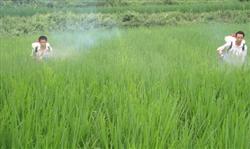
When is the best time to apply foliar fertilizer to rice? Here is a detailed introduction
Applying foliar fertilizer during the middle and late stages of rice growth can increase grain number and grain weight, generally increasing yield by 5%-10%, and improve quality. Therefore, the following foliar fertilizers can be selected according to conditions.
For Guli Bao (Grain-Filling Fertilizer): during the heading stage and milk-ripening stage of rice, use 1 packet (50 grams) per mu, dissolve thoroughly in 50 kg of water, stir evenly, and spray on the leaves. Guli Bao can be mixed with pesticides for pest and disease control, but must not be mixed with alkaline pesticides or other alkaline substances. It must be applied on rain-free days, after the dew has dried, using a sprayer to evenly apply a fine mist on the rice leaves. Mix and use immediately; if rain occurs within 6 hours after spraying, spray once more. It is strictly prohibited to spray Guli Bao during all stages before rice heading and on late-maturing plants that remain green and are prone to lodging.
Potassium dihydrogen phosphate and urea: If the leaves can maintain a certain nitrogen level in the late stage of rice, it helps prevent premature aging and improve the seed-setting rate, while also preventing phosphorus and potassium deficiency in the plant. Spraying potassium dihydrogen phosphate and urea on the leaves in the late stage of rice helps extend the functional period of the canopy leaves. At the full heading stage and about 7 days after full heading, spray a mixed solution of 0.3% potassium dihydrogen phosphate and 0.5% urea on the leaves.
"920" (gibberellin) is a plant growth regulator that can supplement hormones and maintain growth functions. Applying an appropriate amount of "920" in the late stage of rice helps prevent premature aging and extend leaf photosynthesis. It can also promote full heading and reduce the neck-enclosed panicle of hybrid rice. When 20%-30% of rice has headed, use 1 gram of "920" powder per mu (dissolved in a small amount of strong alcohol) or 25 milliliters of emulsifiable concentrate in 50 kg of water and spray, and adding 0.3% potassium dihydrogen phosphate at the same time gives better results. Note: strictly control the dosage; "920" must not be used on excessively lush, spindly seedlings or varieties (combinations) with poor lodging resistance, and it is strictly prohibited to apply "920" before heading.
Multi-element high-grade compound fertilizer contains nitrogen, phosphorus, potassium, sulfur, and various trace elements such as iron, boron, manganese, copper, zinc, molybdenum, and magnesium. Spraying at the initial heading stage of rice can increase the number of effective panicles and improve the seed-setting rate and grain weight. At the initial heading stage of rice, use 8-10 small packets (20 grams per small packet) per mu in 50 kg of water and spray on the leaves.
Rare earth is the collective term for 17 elements such as lanthanum, cerium, praseodymium, and neodymium. Applying an appropriate amount of rare earth can improve root vitality, promote crop absorption of nutrient elements, and increase chlorophyll content in leaves. From the boot-splitting stage to the initial heading stage of rice, spray a 0.03% rare earth solution on the leaves.
Triacontanol: At the early heading stage of rice, spray a triacontanol solution at 5 parts per million with 0.3% potassium dihydrogen phosphate added on the leaves, which can improve the seed-setting rate and grain weight of rice.
Click to get more rice cultivation techniques
Click to get more grain crop cultivation techniques