What are the correct methods and precautions for draining and drying rice fields?
How to dry a rice field properly? An introduction. Draining and drying a rice field is an important measure for improving paddy soil structure, promoting rice seedling roots to grow downward, enhancing rice root vigor, increasing rice stalk toughness and lodging resistance, controlling ineffective tillering, raising the percentage of productive tillers, improving the field microclimate, and reducing the occurrence of rice diseases and insect pests. But...
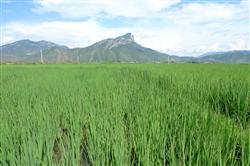
How to dry a rice field properly? An introduction
Draining and drying a rice field is an important measure for improving paddy soil structure, promoting rice seedling roots to grow downward, enhancing rice root vigor, increasing rice stalk toughness and lodging resistance, controlling ineffective tillering, raising the percentage of productive tillers, improving the field microclimate, and reducing the occurrence of rice diseases and insect pests. But for rice field drying, only by getting the "heat just right" can the desired effect be achieved.
As for the timing of field drying, adhere to the principle of "when the seedlings are ready, do not wait for the time; when the time comes, do not wait for the seedlings." The so-called "when the seedlings are ready, do not wait for the time" means that once enough seedlings are present (generally a total stem-tiller count of 200,000 to 250,000 per mu), the field should be dried; there is no need to wait until rice growth and development reaches a certain stage. Because hybrid rice has strong tillering ability and can still continue tillering when field drying just begins, the field drying time should be appropriately moved earlier, starting when the total stem-tiller count reaches 80% of the planned seedling number. The so-called "when the time comes, do not wait for the seedlings" means that once rice enters the late tillering stage to the early young panicle differentiation stage, even if the total stem-tiller count per mu has not yet reached the predetermined target, the field should still be drained and dried in a timely manner. Otherwise, if the opportunity is missed, rice sensitivity to water increases, and it is no longer suitable to cut off water and dry the field.
As for the degree of field drying, it should be flexibly controlled according to the field, the seedlings, and the weather. Generally, fertile fields with dark green leaves and vigorous growth, as well as low-lying, cold, waterlogged, muddy fields, should be dried heavily; lean fields with green leaves, ordinary growth, and little fertilizer, as well as dry fields where irrigation is difficult, should be dried lightly; for sandy fields with poor water retention, clay fields where the soil tends to harden after drying and is difficult to soften again after rewatering, and "sky-watching fields" lacking irrigation conditions, field drying is not suitable. The field drying time is generally controlled at 5 to 7 days, and it is appropriate to dry until chicken-claw cracks appear on the field surface, the seedling leaf color turns lighter, the leaves stand upright like swords, one can stand in the field without feet sinking, new roots appear at the field surface, and old roots grow downward. After field drying, rewater promptly, and at the same time, according to seedling condition and growth vigor, apply 2 to 3 kg of urea per mu as a topdressing, and do not cut off water again until before heading, to promote rice booting and jointing.
Special attention should be paid this year: due to continuous drought and water shortage, some rice fields have been "dried without being intended for drying," that is, before the field drying time has arrived, there is already no water layer in the field, and some field surfaces have even cracked dry, causing difficulty in rice tillering and insufficient seedling numbers. In such cases, shallow ploughing should be carried out on the paddy field to loosen the surface soil, cut off capillaries, reduce soil moisture loss, prevent large-area cracking of the field surface, and at the same time help receive rainwater. Once water is available, apply topdressing promptly to promote recovery of seedling growth.
Click to get more rice cultivation techniques
Click to get more grain crop cultivation techniques