Key Technical Points for Late-Stage Rice Growth Management
How should rice be managed in the late growth stage? What should be noted? In the late growth stage of rice, premature senescence must especially be prevented. If premature senescence occurs from the heading to maturity stage, it will lead to poor grain filling and an increase in blighted grains, causing reduced yield. There are many factors causing premature senescence in the late growth stage of rice. First, improper cultivation management. Planting...
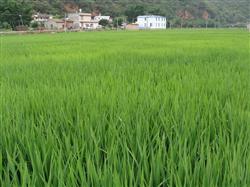
How should rice be managed in the late growth stage? What should be noted?
In the late growth stage of rice, premature senescence must especially be prevented. If premature senescence occurs from the heading to maturity stage, it will lead to poor grain filling and an increase in blighted grains, causing reduced yield.
There are many factors causing premature senescence in the late growth stage of rice. First, improper cultivation management. Excessive planting density makes plants grow thin and weak; applying too much nitrogen fertilizer in the early and middle stages while insufficient phosphorus, potassium and trace element fertilizers are applied causes excessive aboveground growth, floppy leaves, shading in the field, and premature death of lower leaves; at the same time, it seriously hinders root growth, resulting in few and short new roots and weakened nutrient absorption capacity, causing premature senescence. Under long-term flooding and fertilizer deficiency, premature senescence is also likely to occur. Second, soil oxygen deficiency and compaction. On low-lying land with high groundwater levels, poor permeability and strong reducing conditions, the soil has insufficient oxygen and many toxic reducing substances, which reduces rice root activity, causes poor root development, blackening and rotting, and loss of nutrient absorption capacity, resulting in premature aging of roots and leaves. Soil compaction and poor permeability cause poor rice root development, and in the late growth stage premature senescence is likely due to insufficient nutrients. Third, adverse climatic conditions. The influence of adverse climate such as low-temperature cold waves in autumn can obstruct the physiological activities of rice roots and leaves, causing premature senescence. Especially when the cold dew wind comes earlier, rice is more prone to premature senescence. During the rice grain-filling period, if the temperature is low or the sunshine hours are too few, the formation and translocation speed of assimilates slows down. If low temperatures of 5-6°C are encountered during the grain-filling stage in September, varieties with poor cold tolerance or plants with poor root development will discolor and undergo premature senescence. Fourth, variety factors. Generally, short-stalked and early-maturing rice varieties are prone to premature senescence.
Premature senescence in rice has a great impact on yield, so measures should be taken early to prevent it. (1) Scientific irrigation. In the late growth stage of rice, long-term flooding irrigation is strictly prohibited; moist irrigation should be used, water cutoff should be delayed, and intermittent irrigation with alternating wet and dry conditions should be adopted to enhance root activity and extend the functional period of leaves. Prevent cutting off water too early, advocate "raising old rice," and nourish roots to protect leaves. During the heading and flowering stage and grain-filling stage, maintain a shallow water layer in the field under normal weather. During continuous high-temperature weather, adopt the method of irrigating by day and draining at night to lower the temperature and prevent premature senescence. For fields with heavy clay soil and poor permeability, intermittent irrigation should be used in the late stage, that is, irrigate once with shallow water, let it dry naturally after 2-3 days, and then irrigate again. (2) Improve the soil. For low-lying land or saline-alkali land, open ditches and drain water in time to improve soil aeration, and at the same time apply a large amount of high-quality farmyard manure. For compacted rice fields, increase the number of plowings to loosen the soil, enhance soil aeration capacity, and promote rice rooting and nutrient absorption. (3) Rational fertilization. For rice fields with premature senescence due to fertilizer deficiency, grain fertilizer or foliar topdressing can be applied at the heading stage. Use 100 grams of potassium dihydrogen phosphate per mu plus 50 kg of water for spraying, once every 5-7 days. For rice lacking trace elements, only one supplemental spraying is needed. For rice fields with severe yellowing in the late stage, as well as sandy loam soil with poor fertilizer retention, supplement fertilizer in time. Generally, apply 2-5 kg of urea and 2-3 kg of potassium chloride per mu, and at the same time use 15 grams of potassium dihydrogen phosphate per mu plus 50 kg of water for spraying.
Click to get more rice planting techniques
Click to get more food crop planting techniques