-
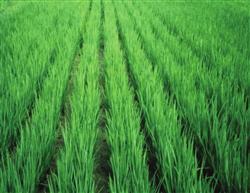
Zinc supplementation for rice boosts disease resistance and high yields, making rice plants healthier
When rice enters the jointing and panicle elongation stage, it is an important period of transition from vegetative growth to reproductive growth, and also a critical period that determines yield. Doing a good job of field management in the middle and late stages of rice is crucial for ensuring sufficient panicles, developing large panicles, shaping a high-yield plant type, and building a good framework for a bumper harvest. I. Seedling characteristics According to a survey on July 21...
-
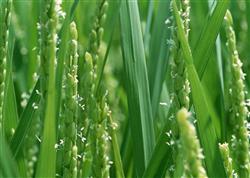
Fertilizer Requirements and Key Fertilization Techniques for Rice at Different Growth Stages
I. Fertilizer Requirements of Rice. Nitrogen, phosphorus, and potassium are the nutrient elements that rice requires in relatively large amounts while soils are relatively deficient in them. Generally, for every 100 kg of rice grain produced, about 1.6-1.9 kg of nitrogen, 0.8-1.3 kg of phosphorus, and 1.8-3.8 kg of potassium are absorbed, with a ratio of approximately 1:0.5:1.3. Nitrogen uptake is highest from the greening stage to the tillering stage...
-
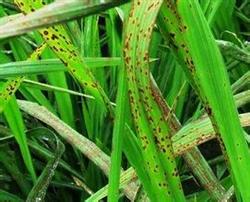
Identifying Zinc Deficiency Symptoms in Rice and Techniques for Skillfully Applying Zinc Fertilizer in Paddy Fields
Zinc is one of the essential trace elements for the growth and development of rice. Zinc deficiency in rice shows obvious symptoms. When rice is deficient in zinc, chlorotic yellow-white spots first appear in the midrib area of the lower leaves, with reddish-brown spots and irregular patches forming on them, which then gradually expand into reddish-brown streaks, turning reddish-brown and drying from the leaf tip downward, and from...
-
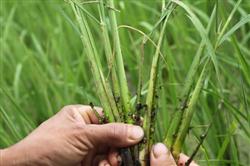
Key Technical Points for Controlling Diseases, Pests and Weeds in the Field After Rice Seedling Broadcasting
Southern rice black-streaked dwarf disease is a viral disease mainly transmitted by the white-backed planthopper. It mainly harms staple grain crops such as rice and corn. Once a crop is infected, the plant becomes stunted, tillering increases, and in the later growth stage the diseased rice cannot head or set grain, sometimes resulting in a complete loss of harvest, seriously threatening the safety of our county's grain production. In order to scientifically...
-
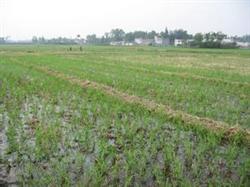
Key Operational Points for No-Till Rice Seedling Broadcasting Cultivation Technology
No-till rice seedling broadcasting refers to a new rice tillage and cultivation technique in which, after harvesting the previous crop, without any plowing or harrowing of the paddy field, herbicide is first applied to kill weed plants and shed-grain seedlings and to wither rice stubble, then the field is irrigated and fertilized for retting, and after the water layer naturally drains or shallow water is released, plastic-tray seedlings or paper-tube seedlings are broadcast-transplanted into the main field...
-
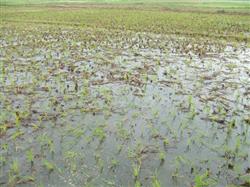
Detailed Explanation of Rice No-Till Dry Direct Seeding Cultivation Technology
(1) Paddy field selection: Select a field where the previous crop was rice and which has not been plowed for no-till dry direct seeding cultivation. Fields with many malignant weeds, heavy clay soil, etc. are not suitable for no-till cultivation. (2) Weed treatment: 4 to 6 days before sowing, choose a sunny or cloudy day with a temperature above 15 degrees, use 10% "Glyphosate" 2 kg + 20% "Gramoxone" 100 ml per mu, diluted in 60 kg of water (four containers of water), and add one tablespoon of laundry detergent to each container of water, then spray to control weeds. If rain occurs within 4 hours after spraying, re-spray, otherwise the weed control effect will be poor.
-
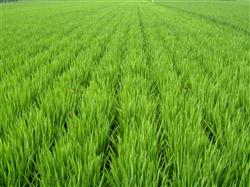
Causes and Control Methods of Rice Deadheart Disease
Key Points of Rice Dry Seedbed Cultivation Technology 1. Apply sufficient base fertilizer: In combination with deep ploughing or leveling the field with irrigation water, apply 30-40 kg of rice-specific compound fertilizer, ammonium bicarbonate and 20-25 kg of ordinary calcium superphosphate per mu, applied all at once as a middle fertilizer. Fields with broad bean as the previous crop should receive a larger amount, while vegetable or potato fields should receive a smaller amount. 2. Transplant shallowly and sparsely at the right time...
-
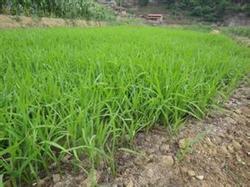
Key Field Management Techniques After Transplanting Dry-Raised Rice Seedlings to the Paddy Field
1. Prepare the field carefully so that the field is level and the soil is puddled, with not even a inch of water exposing the mud. 2. Fertilization principle: apply a heavy basal fertilizer and skillfully apply panicle-grain fertilizer. Apply no less than 1500 kg of farmyard manure per mu. When harrowing the field, apply phosphate and potassium fertilizers plus 70% of the nitrogen fertilizer as a one-time basal application, 20% of the nitrogen fertilizer as tillering fertilizer, and 10% as panicle fertilizer (apply 5-10 days before heading). ...
-
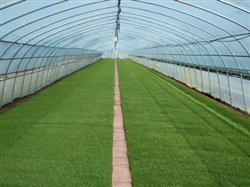
Operating and Maintenance Methods for Rice Seedling-Raising Greenhouse Seedbeds
The rice seedling-raising seedbed greenhouse is mainly composed of a greenhouse frame, light-transmitting covering materials (including plastic film, plastic panels, PC boards, etc.), several individual seedbeds and a spray irrigation system. This device features a compact structure, high land utilization rate and convenient operation. Operating methods 1. Before installation, the site must be leveled...
-
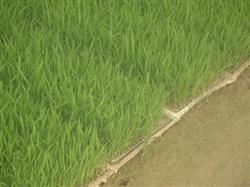
How to prevent and control pests and diseases during the rice seedling-raising period
During the rice seedling-raising stage, phenomena such as stunted rooting, yellowing, and stalled growth are prone to occur. For fields where stunted rooting has already occurred, drainage should be carried out immediately to increase temperature and aeration and reduce toxicity, and at the same time quick-acting nitrogen, phosphorus, and potassium fertilizers should be applied, along with supplementary micro-fertilizers, with zinc fertilizer being the key; where deficiency symptoms are present, the corresponding deficient nutrient fertilizer should be applied promptly. Withdraw the water and sun the field, or use circuitous...
条件筛选