-
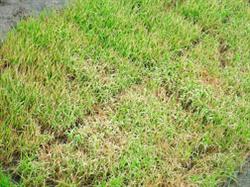
What to Do About Rice Seedling Rot? Detailed Prevention Measures
Rice seedling rot is the general term for seed rot, sprout rot and seedling death occurring at the seedling stage. Rice seedling rot can be divided into two categories: physiological and infectious. Physiological seedling rot is mainly caused by low temperatures and mistakes or poor management practices in the seedling nursery; infectious seedling rot is caused by pathogen infection, and the main diseases include rice cottony rot, rice rot disease and rice...
-
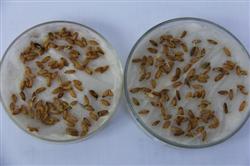
Detailed Explanation of Rice Blast Resistance Breeding Techniques
The main diseases transmitted by rice seeds include bakanae disease, rice blast, rice false smut, bacterial leaf blight, and striped virus disease transmitted by the small brown planthopper at the seedling stage. Currently, it is time for soaking rice seeds in Qilin District. When soaking rice seeds, all demonstration households must insist on soaking seeds with fungicides, the main purpose of which is to kill the pathogens carried by rice seeds...
-
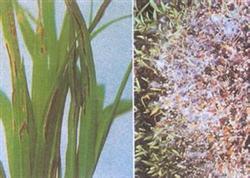
How to prevent and control rice Phytophthora disease? Detailed explanation of control methods
Rice Phytophthora disease: Diseased fields should be drained and dried in time, which can effectively inhibit the spread of the disease. Chemical control should focus on protecting early rice seedlings at the 3-leaf stage. Generally, pesticides should be applied before cold-protection irrigation or after drainage. The pesticides include: 50% carbendazim 1000-fold solution; 50% thiophanate or 50% benomyl 500-fold solution; 40% Phytophthora-killing 500-fold solution....
-
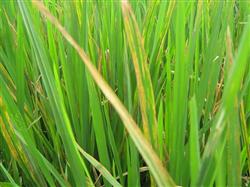
How to prevent and control bacterial brown stripe disease of rice?
Control of bacterial brown stripe disease of rice: 20% Yekuning (Chuanhua 018) wettable powder at 6000 times dilution; 25% Dikushuang at 1500 to 2000 times dilution; 20% Shakujing (Yekujing) wettable powder at 300 to 400 times dilution (not to be used after heading); during the seedling stage, Daisenzam at 1000 to 1500 times dilution may be used; during the main field stage, use 2 to 1 to 500...
-
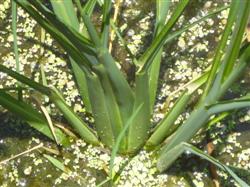
What causes wild rice stem to turn male? Here's how to prevent male wild rice stem
During the cultivation of wild rice stem, plants often emerge that bolt and produce flower stems instead of forming wild rice stem; these are called "male wild rice stem" or "strong wild rice stem". Wild rice stem forms after the plant is infected by the smut fungus, loses the ability to bolt, flower and set seed, and its flower stem swells. The spread of the smut fungus is mainly from the previous year's...
-
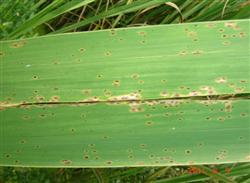
Jiaobai (wild rice stem) is prone to Helminthosporium leaf spot disease under high-temperature and high-humidity weather
Jiaobai Helminthosporium leaf spot is a fungal disease. In recent years, as the jiaobai planting area has continued to increase, the scope of occurrence of this disease has gradually expanded, and the severity has become increasingly worse. This disease can occur throughout the entire growth period of jiaobai. It mainly damages the leaves. In the early stage, small yellow-brown spots appear on the leaves, which later expand into brown spots the size of sesame seeds, with a few forming...
-
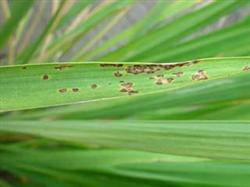
Identification Methods and Control Techniques for Rice Sheath Blight in Water Bamboo
[Symptom Characteristics] Water bamboo blast, also known as water bamboo gray heart disease, mainly infects the leaves. Leaf lesions fall into 3 types: acute, chronic and brown spot. Acute-type lesions are round-dot shaped, dark green, with a grayish-green mold layer (conidiophores and conidia) on the back of the lesion that is relatively obvious; their appearance is a precursor to a water bamboo blast epidemic. Chronic-type lesions are nearly spindle-shaped, ...
-
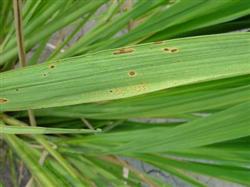
Symptom Identification and Control Methods of Rice Blast Leaf Spot on Water Bamboo
Rice blast leaf spot is a major disease of water bamboo, widely distributed and commonly occurring, found in all water bamboo growing areas, with more severe incidence in summer and autumn, diseased plants often reaching 80%-100%, significantly affecting water bamboo production. [Symptoms] This disease mainly affects the leaves. The lesions initially appear as small brown necrotic spots, which later develop into nearly oval to spindle-shaped...
-
Detailed Explanation of Key Overwintering Management Techniques for Wild Rice Stem
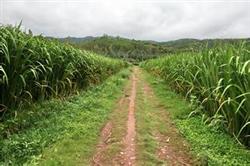
Wild rice stem (Zizania latifolia) is a warmth-loving plant that reproduces asexually through tillering and division. Its optimum growth temperature is 10-25°C, and it is not tolerant of cold or of high-temperature drought. The frost-free period in cultivation areas must be more than 150 days. After frost, the wild rice stem leaves wither and die, and during dormancy it can withstand low temperatures of -10°C. In northern China, where the frost-free period is short, single-harvest wild rice stem is mainly planted. Single-harvest wild rice stem is suitable...
-
Green control methods for rice diseases, insect pests and weeds
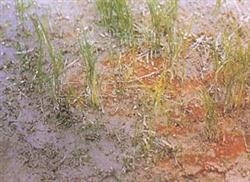
Rice seedling rot refers to the death of rice seeds and seedlings during the seedling-bed stage (that is, seed rot, bud rot and seedling death), and can be divided into two major categories: physiological and infectious. Physiological seedling rot refers to that caused purely by adverse environmental conditions; infectious seedling rot mostly refers to adverse environmental conditions inducing weakly parasitic fungi such as Pythium, Achlya, Fusarium and Rhizoctonia...
条件筛选