Key Operational Points for No-Till Rice Seedling Broadcasting Cultivation Technology
No-till rice seedling broadcasting refers to a new rice tillage and cultivation technique in which, after harvesting the previous crop, without any plowing or harrowing of the paddy field, herbicide is first applied to kill weed plants and shed-grain seedlings and to wither rice stubble, then the field is irrigated and fertilized for retting, and after the water layer naturally drains or shallow water is released, plastic-tray seedlings or paper-tube seedlings are broadcast-transplanted into the main field...
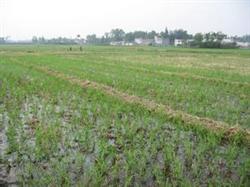
No-till rice seedling broadcasting refers to a new rice tillage and cultivation technique in which, after harvesting the previous crop, without any plowing or harrowing of the paddy field, herbicide is first applied to kill weed plants and shed-grain seedlings and to wither rice stubble, then the field is irrigated and fertilized for retting, and after the water layer naturally drains or shallow water is released, plastic-tray seedlings or paper-tube seedlings are broadcast-transplanted into the main field. The key techniques for late-season no-till seedling broadcasting are introduced as follows:
1. Selection of no-till paddy fields
No-till seedling broadcasting is suitable for paddy fields with sufficient water sources, convenient drainage and irrigation, level field surface, deep plow layer, and good water and fertilizer retention capacity. Drought-prone fields and shallow, lean, leaky sandy shallow-foot fields are not suitable as no-till fields. For low-lying fields, mountain pit fields, cold-soaked fields, and rotten fields, etc., before no-till chemical weed control, ring ditches and cross ditches around the field should be opened well, and field water should be drained in time.
2. Treatment methods for rice stubble and weeds
In the late season, due to abundant rainfall, the main targets of chemical stubble killing are rice stubble and shed-grain seedlings. Therefore, the non-selective herbicide selected for no-till should have the characteristics of being fast, efficient, and highly rain-resistant. Years of trial screening and production application have shown that Gramoxone is a relatively ideal herbicide for no-till chemical stubble killing, with good application results in both early and late seasons, especially in the late season where its advantages of speed and efficiency can be better utilized. The specific operation is as follows: when harvesting early rice, the stubble should be cut as low as possible, and the rice stubble height should generally not exceed 15 cm. After removing the rice straw, irrigate to moisten the field block to promote the germination and emergence of shed grains. 7-10 days before seedling broadcasting, drain the field water, and per mu use 200-250 ml of 20% Gramoxone plus 2-2.5 kg of ammonium bicarbonate or potassium chloride, diluted with 50-60 kg of water, and spray evenly with a sprayer onto rice stubble, shed-grain seedlings, and weed stems and leaves. On the second day after spraying, re-spray the missed spots. On the second day after re-spraying, irrigate deep water to soak the field, with the water depth preferably submerging the rice stubble. When soaking the field, apply superphosphate, ammonium bicarbonate, or compound fertilizer as base fertilizer, which can accelerate the decay of rice stubble and weeds. Soak the paddy field for 5-7 days until the water layer naturally drains or shallow water is released, then broadcast the seedlings. Pre-emergence weeds can be controlled by soil treatment before seedling broadcasting or by applying herbicide after seedling broadcasting, with the herbicide types and application methods the same as those for conventionally tilled seedling-broadcast fields.
3. Key high-yield cultivation management techniques for no-till seedling-broadcast rice
For no-till seedling broadcasting, it is advisable to use seedling trays with larger apertures (350-400 holes per tray) or special no-till seedling paper tubes for raising seedlings, and the suitable leaf age for broadcasting is 2.5-3.5 leaves. The broadcasting density in the main field should be increased by about 10% compared with conventional tillage seedling broadcasting. The total fertilizer application should be increased by about 10% compared with conventional tillage seedling broadcasting, with light base fertilizer application and heavy application of green-returning fertilizer and tillering fertilizer, and the early-stage fertilizer application amount should reach more than 60% of the total fertilizer application. The base fertilizer should be mainly compound fertilizer and phosphate fertilizer, with less ammonium bicarbonate applied. Un-decomposed organic fertilizer must not be applied as base fertilizer to avoid causing seedling burn. In water management, frequent irrigation and shallow irrigation are required, with more drying and light drying. Implement shallow-water seedling broadcasting, thin water to promote seedling establishment and tillering, and avoid deep water in the early tillering stage. Once enough seedlings are reached, expose and dry the field. After the young panicle differentiation stage, keep the field moist. During the heading and flowering stage, there should be a shallow water layer. During the grain-filling and maturing stage, alternate drying and wetting to prevent premature water cutoff. In pest and disease control, it is largely similar to conventional tillage seedling broadcasting. Do a good job in controlling rice blast, sheath blight, bacterial leaf blight, bacterial leaf streak, and apple snails, yellow stem borers, rice leaf rollers, and rice planthoppers, etc., with special emphasis on strengthening monitoring and control of apple snails and yellow stem borers.