Key Technical Points for Controlling Diseases, Pests and Weeds in the Field After Rice Seedling Broadcasting
Southern rice black-streaked dwarf disease is a viral disease mainly transmitted by the white-backed planthopper. It mainly harms staple grain crops such as rice and corn. Once a crop is infected, the plant becomes stunted, tillering increases, and in the later growth stage the diseased rice cannot head or set grain, sometimes resulting in a complete loss of harvest, seriously threatening the safety of our county's grain production. In order to scientifically...
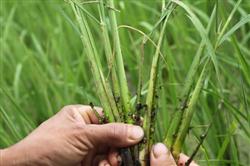 I. Control of Rice Stripe Disease
1. Control the virus-transmitting vector, the small brown planthopper: Rice stripe disease has now become an important disease on rice in our county. This year, the small brown planthopper population in our county's fields is high, the virus-carrying rate is high, and development is fast, so rice stripe disease is trending toward a major outbreak. According to surveys, this year the first-generation small brown planthopper reached 150,000 insects per mu in wheat fields; on May 25, immigrant adults appeared in seedling fields, and on May 30 the insect population in seedling fields began to surge, with the peak immigration period reaching 18,000 insects per mu in seedling fields, and some fields reaching 52,000 insects per mu; the virus-carrying rate of the overwintering generation of the small brown planthopper reached 40.2%, and that of the first generation reached 24.3%; both greatly exceeded the threshold for a major epidemic. The second-generation small brown planthopper is the main damaging generation in our county, and controlling the second generation in broadcast-seeded fields is the main measure to control the occurrence and damage of rice stripe disease. Control method: about 7 days after broadcasting, apply 10% Yashiiqing 30 g per mu once to all rice fields; about 7 days after the first application, apply once more, and when applying, also treat the weeds along the field edges; in addition, treated transplanting of seedling fields must be in place. For rice fields interplanted with wheat, on the basis of earlier control, apply once more from June 20-25.
2. Spray antiviral agents: together with the control of the small brown planthopper, use 100 ml of 20% Daoankang per mu each time, mixed with water and sprayed evenly.
II. Chemical Weeding in the Field
1. Chemical weeding in broadcast-seeded fields:
(1) 5-7 days after rice broadcasting, select one bag (50 g) of 53% Yinchui per mu, mix with 20 kg of moist fine soil, establish a water layer in the field, and after the dew has dried, spread evenly; maintain the water layer for more than 5 days after application. When applying, note: first, the dosage must be accurate and the mixture must be even; second, strengthen water management and maintain the water layer to help improve efficacy, while also making a level-water gap to prevent flooding of the heart leaves; third, apply the chemical once the rice has rooted, and on this basis applying earlier helps improve efficacy; fourth, prevent the chemical from contaminating other crops.
(2) About 10 days after rice broadcasting, select 1 bag (40 g) of 25% Daonongle per mu, drain the field water layer, then mix with an appropriate amount of water and spray finely and evenly; one day after application, establish and maintain a water layer in the field. Note that the dosage must be accurate; when the weed quantity and weed age are greater, appropriately increase the dosage, and at the same time prevent contamination of other crops.
2. Chemical weeding in wheat-interplanted rice fields: after the wheat harvest and after the water has been let in and then drained, when the rice has passed the 2.5-leaf stage, select 1 bag (40 g) of 25% Daonongle per mu, mix with water and spray finely and evenly; one day after application, establish a water layer in the field and keep it flooded. When applying, note: when barnyardgrass in the field exceeds the three-leaf stage or the weed quantity is relatively large, appropriately increase the dosage; keeping water is the key to improving efficacy, and at the same time prevent contamination of other crops.
III. Control of Rice Weevil
This year, the occurrence of rice weevil in our county is relatively light. For control, focus on wheat-interplanted rice and do the control work well. Wheat-interplanted rice should be treated as soon as water is let in, and broadcast-seeded fields should be treated about 7 days after broadcasting, together with the control of the small brown planthopper.