-
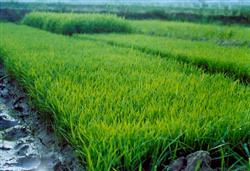
Common Problems in Rice Seedling Raising and Countermeasures
Cultivating robust seedlings is the key to high rice yields. By analyzing common problems that arise during seedling raising, corresponding solutions are proposed to provide technical reference for cultivating high-yield robust seedlings. (I) Common problems in machine-transplanted seedling raising and countermeasure techniques 1. Poor seed emergence. Machine-transplanted seedling raising often suffers from poor seed emergence, uneven emergence, and...
-
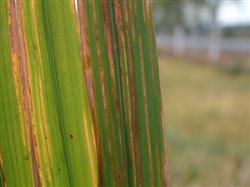
Key Technical Points and Operation Methods for Single-Application Fertilization of Rice
Distribution Rice bacterial leaf streak, commonly known as rice fine streak disease, is one of the important worldwide rice diseases. Its pathogen belongs to the genus Xanthomonas bacteria, and the bacteria mostly invade through leaf stomata; symptoms can appear at any growth stage of rice. The lesions are short and fine narrow streaks, with the stripes appearing between the leaf veins; when viewed against the light...
-

Timely early transplanting of rice helps increase yield
As a supporting seedling-raising method for manual transplanting, the wet seedling-raising technique for rice is suitable for seedling raising across different regions, rice-growing seasons and different types of rice varieties, and is widely adopted in China. This technique is easy to operate, widely applied and highly adaptable; when mastered properly, it produces seedlings of good quality and high yield. 1. Seedbed preparation...
-
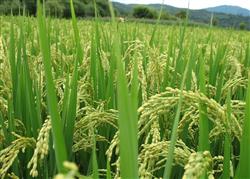
What is the effect of different fertilizer ratios on rice yield?
When rice shows premature senescence from the heading to the maturity stage, it leads to poor grain filling, an increase in blighted grains, and reduced yield. There are many factors that cause premature senescence in the late growth stage of rice. First, improper cultivation management. If the planting density is too high, the plants grow thin and weak; if too much nitrogen fertilizer is applied in the early and middle stages, while phosphorus, potassium and trace element fertilizers are applied...
-
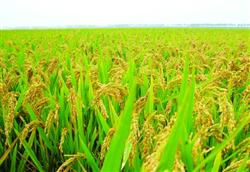
Methods and Key Technical Points for Topdressing Potassium Fertilizer on Rice
Topdressing potassium fertilizer on rice can achieve a significant yield increase. Sufficient potassium is beneficial for enhancing photosynthesis, promoting the synthesis and accumulation of sugars, and improving plant resistance. It can also enhance the respiratory capacity of the rice root system, promote the absorption of nitrogen and the synthesis of proteins, making the rice grains large and plump, with high and stable yields.
-
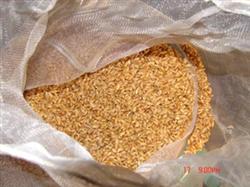
Correct Methods and Operating Steps for Disinfecting Rice Seeds
Rice seedling raising is about to begin, and seed disinfection is the key to raising seedlings. Here are 10 seed disinfection methods. 1. Soak rice seeds in a 500-fold dilution of 50% carbendazim, 50% thiophanate-methyl, or 50% thiram for 48 hours (200 g of the solution mixed evenly with 100 kg of water can soak 60-70 kg of rice seeds), then remove them, sprout them, and sow, ...
-
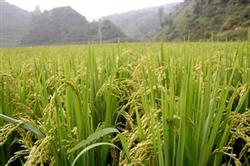
What are the practical measures for increasing rice yields?
Apply "no-deep-tillage" soil conditioner to increase soil permeability, promote rice root growth and development, and improve the rice plant's fertilizer use efficiency, thereby increasing rice yield. On this basis, firmly grasping the following measures also has a huge effect on increasing rice yield. 1. Increase the number of panicles. ① Cultivate strong seedlings. To...
-
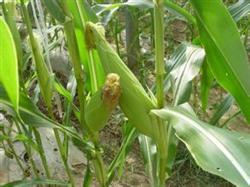
Detailed Explanation of Key Cultivation Techniques for Spring Maize and Late Rice
1. Deep planting of milk-stage seedlings, dry management to promote root growth and preserve seedlings. The techniques of raising seedlings in fertilizer balls and soft trays must be implemented, and the technique of deep planting of milk-stage seedlings must be carried out well. According to research, transplanting milk-stage seedlings has the advantages of early vigor and strong seedlings, strong dry matter accumulation capacity, sturdy plants, well-developed root systems, large and numerous ears with heavy grains, and low empty-stalk rate; its early-maturing and high-yielding growth advantage is 6 days earlier than production cultivation, and the seedling recovery period...
-
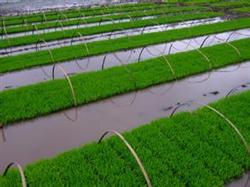
Detailed Explanation of Key Techniques for Raising Rice Seedlings for Mechanized Transplanting
Mechanized rice transplanting is one of the most direct and efficient light and simple cultivation methods. In recent years, the technology of mechanized rice transplanting has matured through wider promotion and application, and seedling raising technology is one of the key techniques for machine transplanting. The following technical measures are provided for reference. 1. Requirements of the transplanter for seedlings: walking-type or high-speed ride-on...
-
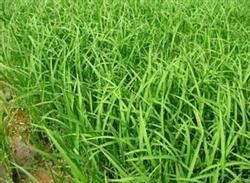
Detailed Explanation and Key Operation Points of Dry Rice Seedling Cultivation
According to surveys in recent years, most rice seedlings are raised in paddy fields; under year-round waterlogged conditions, paddy fields have poor aeration and cold, poorly aerated soil, which is not conducive to raising strong seedlings, and after transplanting the seedlings become stunted and develop late. Dry seedling cultivation is the raising of rice seedlings under dryland conditions; dryland soil is rich in oxygen, and water, air, and nutrients are easily coordinated, which...
条件筛选