Operating and Maintenance Methods for Rice Seedling-Raising Greenhouse Seedbeds
The rice seedling-raising seedbed greenhouse is mainly composed of a greenhouse frame, light-transmitting covering materials (including plastic film, plastic panels, PC boards, etc.), several individual seedbeds and a spray irrigation system. This device features a compact structure, high land utilization rate and convenient operation. Operating methods 1. Before installation, the site must be leveled...
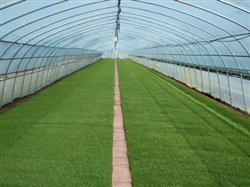
The rice seedling-raising seedbed greenhouse is mainly composed of a greenhouse frame, light-transmitting covering materials (including plastic film, plastic panels, PC boards, etc.), several individual seedbeds and a spray irrigation system. This device features a compact structure, high land utilization rate and convenient operation.
Operating methods
1. Before installation, the site must be leveled and a cement foundation floor must be laid. To make the foundation solid, a location with firm soil should be chosen. This prevents the frame from being damaged by ground subsidence or crustal movement.
2. Before installation, the orientation of the greenhouse, that is, the direction of the greenhouse ridge, should be determined. The orientation of the greenhouse should be comprehensively considered in combination with the local prevailing wind direction. Generally speaking, within most latitudes in China, the greenhouse should preferably be oriented north-south, so that light is distributed relatively evenly to all parts inside the greenhouse, so as to obtain sufficient sunlight and promote the growth of seedlings.
3. From a safety perspective, when choosing a site before installation, in order to reduce the impact of heat loss and wind pressure on the greenhouse, a wind-sheltered and sunny area should be chosen. In areas frequently hit by typhoons or prone to thunderstorms, attention should be paid to draining accumulated water on the roof and enhancing the firmness of the frame.
4. After the greenhouse is installed, users need to ensure normal water and power supply so that the facility can function properly.
5. Fix the seedling trays according to the operating instructions, and pay attention to the force applied during operation, so as not to damage the freedom and strength of the frame, and to avoid operational difficulties.
6. Turn on the water pump switch, and the irrigation water will sprinkle evenly from the nozzles onto the seedling trays. When ventilating, pay attention to the wind strength; it is best to spray water when the wind is weakest. Once the seedling trays have enough moisture, turn off the switch promptly.
7. Once the rice seedling-raising seedbed is fixed in place, do not move it arbitrarily.
8. When the rice seedling-raising seedbed is not in use, it should be dried to remove moisture and given waterproof and moisture-removal treatment, so that it can continue to be used the following year. The adjustable parts of the equipment should be coated with lubricating oil for maintenance.
9. Frequently observe changes in temperature inside the greenhouse and moisture in the seedling trays, and reasonably control temperature and humidity according to agronomic requirements. A hot-air furnace can optionally be installed to regulate temperature.
Maintenance and care
Keep the greenhouse balanced: When building the greenhouse, if the ground is uneven, the greenhouse may lean to one side. Once this is found, it should be corrected promptly. The method is to pull the frame from the opposite direction with ropes or wire and straighten it step by step. Before straightening, the ground at the bottom of the frame on the opposite side should first be leveled so that both sides are symmetrical, to prevent the frame from breaking due to excessive force.
Prevent artificially added load: Do not arbitrarily train climbing fruits and vegetables such as hyacinth beans, loofah and pumpkin onto the greenhouse; otherwise, in windy and rainy weather, the frame will be difficult to bear, which can easily cause cracks, breakage and collapse of the frame. Regularly check whether fasteners such as bolts at each connection are loose or falling off, repair them promptly and pay attention to rust prevention.
Avoid scratching the greenhouse film: During use of the greenhouse, be careful not to let sharp objects collide with the greenhouse film, so as not to scratch it. If a tear appears in the film, it can be repaired with adhesive or transparent tape. Polyethylene film can be repaired with polyurethane adhesive.
Keep the greenhouse film clean regularly: Generally, the greenhouse film must be replaced after 2~3 years of use, so as not to affect light transmittance and cause poor greenhouse cultivation benefits. For seedling raising in winter and spring, the use of new film is recommended.
Frame maintenance: Steel-frame greenhouses should be coated with anti-rust paint once a year, with special attention to rusted parts and connection components prone to rust. If the steel wire or bamboo strips embedded in the greenhouse frame are exposed, they should be polished and wrapped to avoid scratching the greenhouse film. Individual broken frames should be replaced promptly so as not to affect overall firmness.
Maintenance of ground anchor lines and film-pressing straps: If ground anchor lines and film-pressing straps become loose or break, they should be tightened or replaced promptly.