-
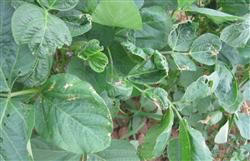
How to remedy herbicide damage in yardlong beans? A detailed guide to prevention and control methods
What should you do if yardlong beans suffer herbicide damage? What methods can save them? We ask fellow gardeners to help share. Zhongdiwang has compiled the symptoms and prevention and control measures for herbicide damage in yardlong beans, listed below for fellow gardeners' reference. Symptoms of herbicide damage in yardlong beans: after accidental spraying of herbicide, the old leaves of the yardlong beans first dry up...
-
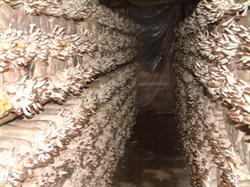
Fertilizer and Water Management Methods During the Fruiting Period of Enoki Mushroom Cultivation
How should fertilizer and water be managed during the fruiting period of enoki mushrooms? Please advise. Because during the fruiting period of enoki mushrooms it is not advisable to spray water directly onto the fruiting bodies and into the substrate, generally after harvesting 2 flushes of mushrooms the substrate becomes severely short of water, making it very difficult to fruit again. By changing the conventional management methods and timely strengthening fertilizer and water management during the fruiting period of enoki mushrooms, 3 to 5 flushes of mushrooms can be produced...
-
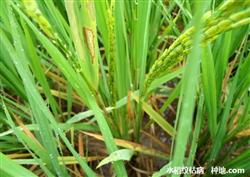
What pests and diseases affect rice in the late stage? A single article explains the control methods clearly
What pests and diseases affect rice in the late stage? How to control them? Please explain in detail. The main pests and diseases in the late stage of rice are: 1. Sheath blight: the disease has recently risen faster, with an average diseased-hill rate of 13.7% and a diseased-plant rate of 3.3%. The rise in disease severity is noticeably faster than in the previous period, especially for the Wuyunjing series varieties, where sheath blight is generally quite severe...
-
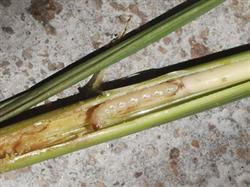
How to control rice stem borers? Rice pest and disease control methods
How to control rice stem borers? Please explain the control methods in detail. Rice stem borers can be controlled by referring to the following methods: 1. Update rice varieties: Reduce or eliminate a few especially susceptible varieties to reduce the pressure for chemical control and the base population. 2. Flooding to kill pupae: Because newly hatched Chilo suppressalis larvae damage the rice leaf sheath...
-
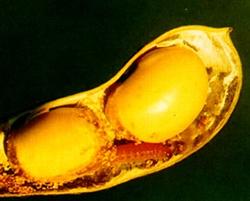
What Is the Soybean Pod Borer? A Detailed Guide to Soybean Cultivation and Control Methods
What is the soybean pod borer? How do you control it? Here is an introduction. The soybean pod borer, also known as the small red worm, belongs to the family Olethreutidae in the order Lepidoptera, and is commonly called the soybean pod-boring moth. The soybean pod borer larva has 4 instars in total; when newly hatched it is pale yellow, and after entering the pod and molting it turns milky white. The final-instar larva is 8 to 10 mm long, and when fully mature it turns red...
-
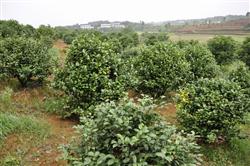
Camellia Cultivation Methods and Care Key Points
How are camellias cultivated? An introduction is given below. Camellias are semi-shade plants, suited to growing in diffused light and afraid of direct sunlight scorching, so seedlings need shading. However, long-term overly shady conditions are unfavorable for camellia growth, resulting in thin leaves and few flowers, which affects ornamental value. Mature plants need more light to promote flower bud formation and blooming...
-
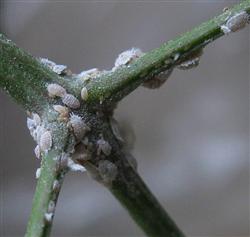
What are the methods for controlling camellia pests?
How do you control pests on camellias? Please explain the control methods. The scale insects commonly found on camellias are mainly four kinds: red wax scale, cottony cushion scale, chaff scale, and tea brown round scale. Red wax scale: the female adult's shell is hard and waxy, first rose red, then purplish red, 3 mm to 4 mm in diameter, with a navel-like top and lobed margins...
-
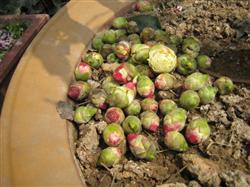
How to prevent camellia bud drop and scorched flowers? A detailed guide to the methods
How to prevent bud drop and scorched flowers in camellias? Please explain the prevention and control methods. Camellias suffering from bud drop and scorched flowers will produce fewer blooms, the flowers will decline prematurely, the flowering period will be shortened, and their ornamental value will be reduced. The main causes are as follows. First: the effects of drought and waterlogging. Camellias have fleshy roots, a strong need for oxygen, and a preference for moisture...
-
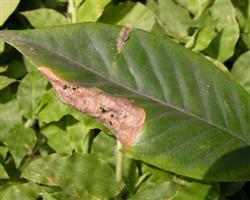
How to prevent and control pests and diseases in gardenias? A detailed guide to practical methods
How to prevent and control pests and diseases in gardenias? Please provide methods. Gardenias commonly suffer from leaf spot disease and chlorosis. For leaf spot disease, spray with 65% zineb wettable powder at 600 times dilution. To prevent chlorosis, regularly add a 0.1% ferrous sulfate solution to the watering water. Pests include slug moths, scale insects and whiteflies. Use 2.5% deltamethrin emulsifiable concentrate at 300...
-
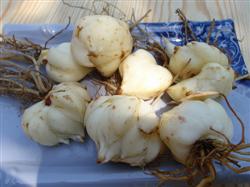
Detailed Explanation of Edible Lily Planting Methods and Technical Points
How do you plant edible lilies? How do you fertilize lilies and control pests and diseases? Please provide guidance. Edible lily planting can be carried out by referring to the following methods: 1. Site selection and land preparation: Choose fertile soil, high and well-drained terrain, and loose sandy loam for cultivation. While preparing the land, apply 2000 kg of organic fertilizer per mu plus Yangfeng...
条件筛选