How to control rice stem borers? Rice pest and disease control methods
How to control rice stem borers? Please explain the control methods in detail. Rice stem borers can be controlled by referring to the following methods: 1. Update rice varieties: Reduce or eliminate a few especially susceptible varieties to reduce the pressure for chemical control and the base population. 2. Flooding to kill pupae: Because newly hatched Chilo suppressalis larvae damage the rice leaf sheath...
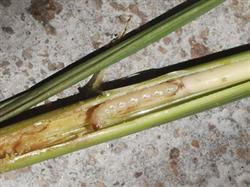 How to control rice stem borers? Please explain the control methods in detail.
Rice stem borers can be controlled by referring to the following methods:
1. Update rice varieties: Reduce or eliminate a few especially susceptible varieties to reduce the pressure for chemical control and the base population.
2. Flooding to kill pupae: Because newly hatched Chilo suppressalis larvae damage the rice leaf sheath, for late-maturing winter crop fields and grass seed production fields, flooding with 3.5-6.5 cm of water during the pupation period can drown most of the pupae. Alternatively, during the mature larval stage of the first and second generations, drain the field water and let the larvae burrow into the root zone to pupate; during the pupation period, flood with deep water for 3 days, which can drown most of the pupae, with a control effect of more than 90%.
3. Appropriate delayed sowing and cultivation to avoid borers: Comprehensively promote light cultivation techniques for rice, appropriately delay the rice sowing period, so that the rice seedling stage, which is prone to egg laying, avoids the peak egg-laying period of the first-generation borers, reduces the number of eggs laid in the seedling field, lessens the occurrence of first-generation borers and the annual base population, and achieves the purpose of avoiding borers through cultivation.
4. Chemical control: ① Adhere to the control strategy of "vigorously controlling the first generation and generally controlling the second generation." The first generation aims to reduce the base population, with concentrated control in seedling fields, and the control effect is obvious. The second generation aims to control damage and ensure yield for a bumper harvest. ② Grasp the pest situation and ensure pesticide application at the peak hatching period. ③ Select the right pesticides to ensure control efficacy. For chemical control, select pesticides according to different regions and different generations, minimize the number and amount of pesticide applications, rotate pesticides to slow down resistance, and choose low-toxicity and biological pesticides. ④ Apply pesticides correctly to give full play to their efficacy. For controlling the second-generation Chilo suppressalis, large-water pouring and coarse spraying are better application methods than fine spraying and mist spraying; grasp the withered sheath period for pesticide control.
At the peak hatching period, promptly spray fields with more than 50 egg masses per mu. To prevent dead heart and withered sheath, apply pesticides at the ant larva stage (peak hatching period); to prevent white heads, apply pesticides at the early stage of rice panicle emergence (about 10% panicle emergence). When pest numbers are high, a second application is needed 5-7 days after the first. Applicable pesticides: 40-50 ml of 5% fipronil suspension concentrate per mu; or 50-60 ml of 48% chlorpyrifos, to control the first and second generations of Tryporyza incertulas and the first generation of Chilo suppressalis, with broad-spectrum and residual activity, and it can also control small brown planthopper and rice weevil; the biological pesticide Suteling, applied before the peak of egg hatching and young larvae; 50 g of 51% Daonong No. 1 per mu, or 60 g of 46% Teshaming, mixed with 37.5 kg of water for spraying.
Click to get more rice cultivation techniques
Click to get more grain crop cultivation techniques