-
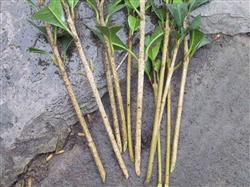
Detailed Explanation of Camellia Cutting Propagation Methods and Steps
How to propagate camellias by cuttings? Please provide an introduction to the method. Camellia is one of the ten traditional famous flowers of our country. It likes a warm environment, with an optimum growth temperature of 18-25 degrees. It prefers semi-shade, environments with relatively high air humidity, and deep, fertile, loose, well-drained soil. It dislikes strong sunlight and dryness. Cuttings...
-
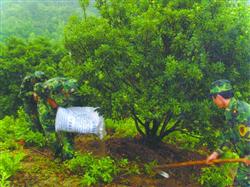
Management Methods for High Yields of Bayberry Trees the Following Year
How can you make bayberry trees produce high yields the following year? What methods can prevent alternate bearing in bayberry trees? Please introduce the methods. To make bayberry trees produce high yields the following year and avoid alternate bearing, you can refer to the following management methods: After harvesting the bayberries, while carrying out pest and disease control, promptly increase the application of organic fertilizer, supplement with micronutrients, and balance...
-
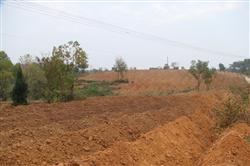
Detailed Explanation of Sweet Peach Planting Methods and Technical Points
How are sweet peaches grown? Please provide a detailed introduction to sweet peach planting methods. Sweet peach, also known as red peach, is a deciduous fruit tree belonging to the small-to-medium fruit category. Without fruit thinning, the single fruit weight is about 100 grams; with artificial fruit thinning, the single fruit weight can increase to 150 grams, and the maximum fruit weight can reach 250 grams. After trial planting in Guangdong...
-
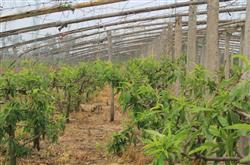
How to prune newly planted peach trees? A full breakdown of the key methods
How should newly planted peach trees be pruned? When is the best time to prune newly planted peach trees for the best results? Please provide guidance. Peach trees have a relatively large annual growth increment, and their buds have strong precocity, so a newly planted peach tree can sprout 3 to 4 flushes of shoots in the same year. Therefore, this characteristic of peach trees can be used, on the premise of strengthening fertilizer and water management, through summer pruning...
-
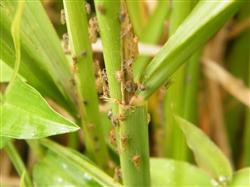
How to control brown planthopper? Detailed explanation of control methods and techniques
How to control brown planthopper? Please introduce methods for controlling brown planthopper. It is necessary to apply insecticides at the appropriate time according to the occurrence and damage characteristics of brown planthopper, and select suitable insecticides according to the occurrence situation of brown planthopper in the field. Occurrence and damage characteristics of brown planthopper: brown planthopper is a migratory pest and cannot overwinter north of 25°N...
-
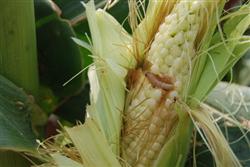
What are the control methods for corn borers?
How to control corn borers? Please explain the methods. Corn borers (corn borer) are a major pest of corn. In years with severe infestation, they can reduce corn yields by more than 20%. Their larvae bore into the main stalk and ears, which can break the main stalk of corn, causing reduced yield and quality. In the past, controlling corn borers mostly used methods such as pouring pesticide solution into the whorl, spraying, or applying poisoned soil into the whorl, which was labor-intensive and ineffective, and easily caused crop damage and human and livestock poisoning. Using granule formulations to control corn borers not only has low cost, saves labor, and is effective, but also is unlikely to cause human and livestock poisoning or crop damage. The following points should be mastered:
-
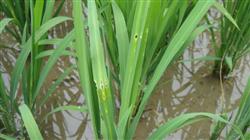
What are the control methods for rice stem borers?
What methods are there to control rice stem borers? Please provide an introduction. The following methods can be used to control rice stem borers: 1. Eliminate overwintering insect sources: Through plowing for planting or shallow rotary tillage to remove stubble, reduce the amount of residual rice stubble, clean up rice straw, and remove wild rice stems and weeds along field edges and ditches, to reduce insect sources, destroy the overwintering sites of stem borers, and lower their overwintering survival rate.
-
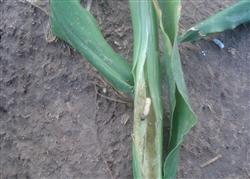
What are the control methods for the ginger stem borer?
What methods are there to control the ginger stem borer? Please describe the methods. When ginger grows to about 20 cm, the first generation of stem borers begins to cause damage. The newly hatched larvae first damage the tender leaves, and by the 3rd instar they begin to bore into the stems, mostly entering at the 2nd to 3rd nodes, often causing the central leaves to wilt or the whole plant to die. The second generation of stem borers mostly bores into the stems from the middle and upper parts...
-
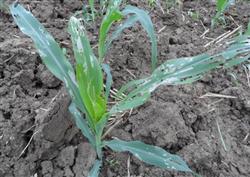
What are the control methods for the small brown planthopper on corn?
How to control the small brown planthopper on corn? Please explain the methods. When the small brown planthopper breaks out in corn fields, frequent and heavy applications of pesticides are usually required to bring the population under control. In recent years, accidents of phytotoxicity to corn caused by improper pesticide use have occurred frequently in production. Therefore, safe pesticide use should be paid attention to when controlling the small brown planthopper....
-
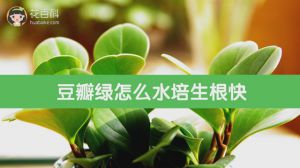
How to make Pilea peperomioides cuttings root quickly in water? Master these methods
Temperature: give it a growing environment of 18-30°C; the temperature should not be too high or too low. Light: if you use a transparent hydroponic container, shade it from light, and place it in a bright, indirect light environment. Fertilizer: the fertilizer in the water should be relatively sparse; too much fertilizer will inhibit the emergence of new roots.
条件筛选