How to prevent camellia bud drop and scorched flowers? A detailed guide to the methods
How to prevent bud drop and scorched flowers in camellias? Please explain the prevention and control methods. Camellias suffering from bud drop and scorched flowers will produce fewer blooms, the flowers will decline prematurely, the flowering period will be shortened, and their ornamental value will be reduced. The main causes are as follows. First: the effects of drought and waterlogging. Camellias have fleshy roots, a strong need for oxygen, and a preference for moisture...
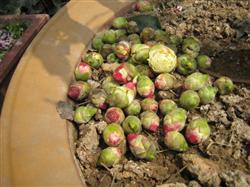
How to prevent bud drop and scorched flowers in camellias? Please explain the prevention and control methods
Camellias suffering from bud drop and scorched flowers will produce fewer blooms, the flowers will decline prematurely, the flowering period will be shortened, and their ornamental value will be reduced.
The main causes are as follows.
First: the effects of drought and waterlogging. Camellias have fleshy roots, a strong need for oxygen, and a preference for moisture. If they are short of water in a drought, the roots easily dry out; if they are watered too much, the roots rot from lack of oxygen, and the plant's water metabolism is disrupted, leading to leaf drop, bud drop and scorched flowers.
Second: poor nutrition, a lack of nutrients or an imbalance of nutrients. Camellias like fertilizer, and their bud-setting and flowering period is long, so they need plenty of nutrients. If not enough fertilizer is applied after the buds appear, the buds develop poorly and the plant lacks the energy to flower, making bud drop or scorched flowers likely. Excessive nitrogen fertilizer causes the plant to grow leggy; a lack of nitrogen leaves the branches and leaves thin and weak, with thin, pale yellow leaves, poor bud development, heavy bud drop and a tendency to scorched flowers. Applying strong fertilizer or undecomposed organic fertilizer during the flowering period can also cause scorched flowers.
Third: the effects of climate. Camellias mostly bloom in winter and spring, when the weather during the flowering period is changeable, cold waves are frequent, warm and cold spells alternate abruptly, and light is insufficient; the plant's physiological functions decline, causing flower drop and scorched flowers. Direct strong sunlight wilts and scorches the petals, while too much cloudy rain and excessive humidity cause the petals to rot and shorten the flowering period.
Fourth: poor potting soil structure. Camellias like acid soil and dislike alkaline soil, with a suitable pH of 5 to 6.5. Poor-quality water used for watering, the application of alkaline fertilizers or the use of chemical fertilizers alone can make the potting soil compact and saline-alkaline, leading to poor root growth, causing buds to drop and petals to scorch.
The measures to prevent bud drop and scorched flowers in camellias are as follows.
Scientific fertilization: with camellias, keep to light fertilizer applied frequently, combine various fertilizers sensibly, do not apply undecomposed organic fertilizer, and do not apply highly concentrated fertilizer. After the buds appear, increase the number of fertilizer applications appropriately, mainly with phosphorus and potassium fertilizers and supplemented by nitrogen fertilizer, to strengthen photosynthesis and promote full bud development. Apply or spray 0.1% ferrous sulfate once a year to adjust the soil pH.
Reasonable watering: camellias like a shady, moist environment and dislike drought and waterlogging. Watering should follow the rule of watering little or not at all in low temperatures and cloudy rain, not letting the plant dry out in high temperatures and drought, and keeping the potting soil moist at ordinary times. During long spells of cloudy rain or when the potting soil is too wet from overwatering, scatter dry plant ash on the surface of the pot to reduce the moisture, add nutrients such as calcium, potassium and magnesium, and achieve a balance between water and fertilizer, so that the branches and leaves grow vigorously and the buds develop fully.
Improving light: camellias like diffused light and dislike exposure to scorching sun, so in ordinary care direct light should be reduced and good ventilation maintained. Especially when the buds are swelling and about to open, prevent direct strong light. After being brought indoors in winter, maintain the light and prevent excessive humidity and temperature, so as to keep the plant's normal physiological functions, support bud development, and prevent bud drop and scorched flowers.
Hormone regulation: during the bud-swelling stage of camellias, spray the buds with 40ppm to 50ppm gibberellin or 15ppm to 20ppm 2,4-D, once every two days, for a total of 5 to 8 treatments. This can increase enzyme activity, inhibit the formation of the abscission layer, prevent bud drop and scorched flowers, promote larger and more colorful flowers, and extend the flowering period.
Repotting in fresh soil: after years of growth, the potting soil of a potted camellia ages and its nutrients are exhausted, which leads to root aging, poor nutrition for the plant, weak buds, and bud drop and scorched flowers. Therefore, camellias should be repotted and given fresh soil at regular intervals. Generally, small pots are repotted once every 1 to 2 years, and large pots once every 3 to 4 years. Along with repotting and changing the soil, prune away dead, rotten and aged roots, and replace the soil with moist, loose, fertile potting mix to promote new root growth and maintain vigorous absorption.
Click to get more camellia growing techniques
Click to get more flower and tree growing techniques