What are the methods for controlling camellia pests?
How do you control pests on camellias? Please explain the control methods. The scale insects commonly found on camellias are mainly four kinds: red wax scale, cottony cushion scale, chaff scale, and tea brown round scale. Red wax scale: the female adult's shell is hard and waxy, first rose red, then purplish red, 3 mm to 4 mm in diameter, with a navel-like top and lobed margins...
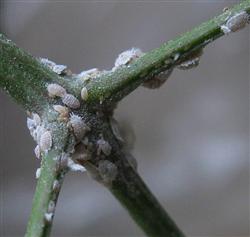
How do you control pests on camellias? Please explain the control methods
The scale insects commonly found on camellias are mainly four kinds: red wax scale, cottony cushion scale, chaff scale, and tea brown round scale.
Red wax scale: the female adult's shell is hard and waxy, first rose red, then purplish red, 3 mm to 4 mm in diameter, with a navel-like top, lobed margins, and four white lines. It has one generation a year, and generally mid-May to early to mid-June is the peak period when large numbers of nymphs climb onto the shoots to cause damage.
Cottony cushion scale: the female adult is orange-red, oval, 5 mm to 7 mm long, with a raised back, densely covered with small black hairs and coated with a white waxy substance. When laying eggs it secretes white cotton-like waxy filaments, and a white waxy egg sac is attached to the abdomen, with 14 to 16 ridge-like raised lines on the sac. It has 2 to 4 generations each year, and all stages can overwinter. It is most serious from April to June.
Chaff scale: the female shell is 1.5 mm to 2 mm long, grayish white or gray, with yellow or brown margins, and is named for its shape and color, which closely resemble chaff. The male shell is narrow and long, with nearly parallel sides, about 1.2 mm long, and grayish white. It has 2 to 3 generations a year, with nymphs appearing in early to mid-May, early to mid-July, and late August to early September respectively.
Tea brown round scale: the female shell is round, 1 mm to 2 mm in diameter, purplish brown or dark brown, hard and waxy, raised in the center, sloping slightly downward toward the margin, with a surface somewhat like a round bamboo hat, and two shell points located in the center of the shell, golden yellow or reddish brown. The male shell is long oval or egg-shaped, with the shell point near one end. This insect mostly overwinters as second-instar nymphs.
Scale insects usually gather in groups on young branches and leaf surfaces, parasitizing mostly on the undersides of leaves. Using their piercing-sucking mouthparts with a special structure, they pierce and suck the sap from camellia stems and leaves, causing the branches and leaves to wither and yellow, the leaves to fall early, and even the whole plant to die. Their excrement is rich in sugar liquid and often induces severe sooty mold, causing poor growth or death of the plant. This insect is most likely to occur and spread under high temperature, high humidity, and poor ventilation.
Control methods: ① When scale insects are found on individual branches or leaves, they can be gently brushed off with a soft brush or removed with clear tape. ② In winter, spray with 0.5 degree lime sulfur mixture or pine resin mixture to kill overwintering nymphs, etc. ③ Seize the peak period of egg hatching to spray, with the spring hatching period being the best time; before the insect body has formed a shell, it is easier to kill with pesticides; you can spray 40% omethoate emulsifiable concentrate at 1000 times dilution, 2.5% deltamethrin emulsifiable concentrate at 2500 times dilution, or 80% dichlorvos emulsifiable concentrate at 1000 times dilution, all with good insecticidal effects. ④ When the scale shell has formed, you can spray 40% Supracide emulsifiable concentrate at 1500 times dilution, which has strong penetration and also gives very good control; or in the early stage of scale insect occurrence, use 25% buprofezin (mainly containing thiazinone) wettable powder at 1500 times to 2000 times dilution for spraying, and spray again after 15 days depending on the pest situation, with fairly good results.
Click to get more camellia growing techniques
Click to get more flower and tree growing techniques