-

How to grow Peperomia obtusifolia fast? A detailed guide to its care methods
If you want Peperomia obtusifolia to grow faster, do the following well: First, soil - use loose, fertile, well-draining soil. Second, light - it needs bright indirect light, and should be shaded at midday in summer. Third, water - keep the potting soil slightly moist. Fourth, fertilizing - apply a dilute liquid fertilizer once every half month during the growing season. Fifth, temperature - give it a growing environment of 10-30°C.
-

How to extend the jasmine flowering period? These methods make the flowers last longer
To extend the jasmine flowering period, you should strengthen water and fertilizer management during the peak flowering period, applying light fertilizer frequently. Give it plenty of sunlight, and you can place it on a balcony for care. You should also promptly prune away spent flowers and thin, weak branches during the flowering period, pinch off the tips of new branches when they form buds, and properly supplement phosphorus and potassium fertilizer before flower bud differentiation, which helps it bloom.
-
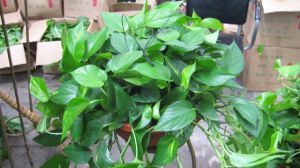
How to propagate pothos? A detailed guide to practical methods and tips
To propagate pothos, you first need to cut a sturdy vine with good growth and no obvious pests or diseases from a healthy, disease-free plant, then remove the leaves on it, keeping only two or three leaves. After that, you need to prepare sterilized potting soil or tap water that has been left to stand and exposed to sunlight for it, and finally insert the vine into the soil or water.
-
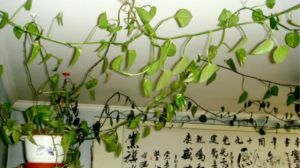
How do you grow pothos so it climbs the wall? Master these care methods
If you want pothos to climb a wall, the first thing you need is for it to be sufficiently lush and leafy. You can help it grow more vigorously by appropriately increasing the frequency of watering and fertilizing. Once its vines are long enough, you can place the pot next to the wall, then use your hands to guide its vines so they cling tightly to the wall and arrange them in the effect you want, then fix them in place with clear tape.
-
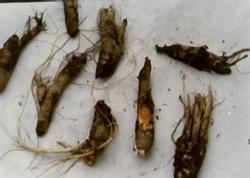
Detailed Explanation of Control Methods for Ginseng Bacterial Soft Rot
How to control ginseng bacterial soft rot? Please describe the symptoms of ginseng bacterial soft rot: it mainly affects the roots. The lesions appear as brown soft rot, with clear edges, round to irregular in shape, varying in size, often several merging together, and finally causing the entire ginseng root to become soft and rotten. When the lesion is squeezed by hand, white bacterial ooze overflows, with a strong pungent...
-
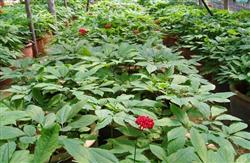
What are the management methods for ginseng in autumn, winter and spring?
How should ginseng be managed in autumn, winter and spring? Please explain the methods. Autumn, winter and spring are the overwintering dormancy period for ginseng, and field management during this stage is an important production step that cannot be ignored. The main tasks are cold protection and moisture conservation, and the key management points are: sealing the beds in autumn, allowing snow cover in winter, and digging drainage ditches in spring. Applying cold-protection soil in autumn...
-
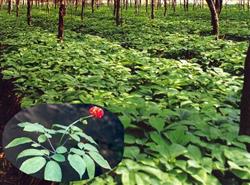
Detailed Explanation of Ginseng Planting Methods and Key Technical Points
How is ginseng planted? Please give an introduction. The environment selected for planting ginseng must be free from floods, droughts, wind damage and freezing damage. When cultivating ginseng in farmland in plain areas, choose land with high terrain, loose and fertile soil, strong water retention and good drainage. Ginseng likes forest humus soil. If the soil's organic matter content...
-
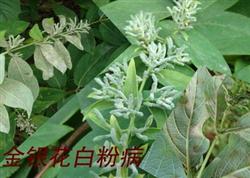
What are the common pests and diseases of honeysuckle (Japanese honeysuckle) and their control methods?
What pests and diseases need to be controlled when growing honeysuckle? Please provide an introduction and guidance on control methods. The main diseases controlled in honeysuckle cultivation are powdery mildew and leaf spot, and the main pest is aphids, etc. The control methods can refer to the following: (1) Powdery mildew. Powdery mildew is the main disease of honeysuckle, mainly harming the leaves and tender stems...
-
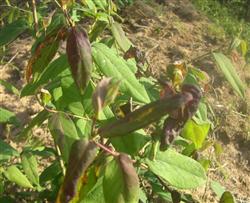
Identification of Symptoms and Control Methods for Honeysuckle Brown Spot Disease
What is honeysuckle brown spot disease? How is it controlled? An introduction to honeysuckle brown spot disease is given below: 1. Damage symptoms: This disease mainly damages the leaves. In the early stage of the disease, small yellowish-brown spots appear on the leaves. Later, several small spots merge together, forming round lesions or angular lesions limited by the leaf veins. When humid, the underside of the leaves also bears...
-
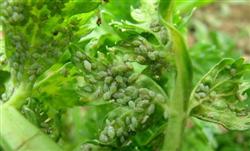
How to control aphids on honeysuckle? Detailed control methods
How to control aphids on honeysuckle? Please give guidance. Honeysuckle aphids: 1. Damage symptoms. They generally appear in early to mid-April. They mainly suck plant sap and spread viruses, causing leaves to turn yellow, curl and shrivel, and in severe cases can cause total crop failure. From April to June the infestation is heavier, and after the Start of Summer, especially on rainy days, it spreads faster...
条件筛选