-
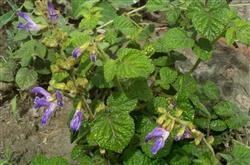
How to grow purple salvia miltiorrhiza? Detailed planting methods and techniques
How should purple salvia miltiorrhiza be planted? Here is how purple salvia miltiorrhiza can be planted: 1. Site selection and land preparation. (1) For the seedling bed, choose a plot with high terrain and loose soil. Make high ridges and apply decomposed farmyard manure or compost as base fertilizer. (2) For the planting site, choose a plot with deep soil, loose and fertile texture, relatively high terrain and good drainage for planting...
-
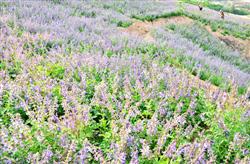
What are the cultivation techniques for Salvia miltiorrhiza (Danshen)? A detailed explanation of the planting methods
What are the cultivation techniques for Salvia miltiorrhiza (Danshen)? Please introduce the following methods for growing Salvia miltiorrhiza: Propagation and germplasm selection - select excellent Salvia miltiorrhiza varieties or strains (with a tanshinone content of no less than 0.2% and a salvianolic acid B content of no less than 3.0%) as propagation material. Seed seedling raising - pre-sowing preparation: deep-plow the seedling land 30cm...
-
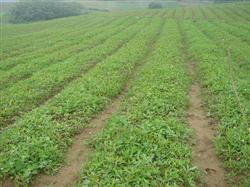
High-yield planting methods and key techniques for Pinellia ternata
How to plant Pinellia ternata for high yield? Please provide guidance. To achieve high yield when planting Pinellia ternata, the following key measures should be grasped: intercropping and relay cropping. Pinellia ternata prefers a warm, humid climate, can tolerate cold and shade, but is not drought-tolerant and fears strong light. Therefore, Pinellia ternata can be planted on gentle slopes with partial shade, or intercropped with wheat or in broadleaf...
-
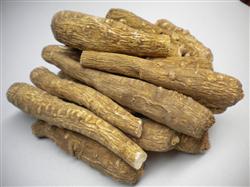
Cultivation Methods and Key Technical Points for the Chinese Medicinal Herb Angelica dahurica
How do you cultivate the Chinese medicinal herb Angelica dahurica? What are its environmental requirements? An introduction to Angelica dahurica cultivation techniques: 1. Biological characteristics of Angelica dahurica. Angelica dahurica prefers warm and humid conditions with plenty of sunlight; it fears high temperatures, can tolerate cold, and has strong adaptability. 1. Light requirements. Experimental studies have found that light can promote the germination of Angelica dahurica seeds...
-
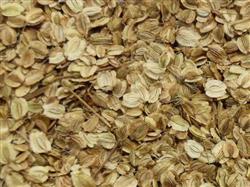
Seed-saving methods and key technical points for growing Angelica dahurica
How do you save seeds when growing Angelica dahurica? Please explain the method. Angelica dahurica is propagated by seed. Establish a high-quality seed breeding field at the Angelica dahurica production base, carry out good-variety breeding and germplasm preservation well, and ensure seed quality. When harvesting Angelica dahurica, select roots that are uniform in thickness, moderate in size, vigorous, and free of pests and diseases, and transplant them into the seed field. The seeds...
-
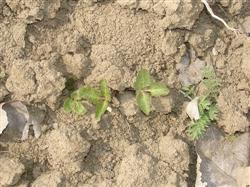
Detailed Explanation of Bai Zhi (Angelica dahurica) Planting Methods and Key Technical Points
How should Bai Zhi (Angelica dahurica) be planted? What should be noted? Please provide guidance. Bai Zhi prefers warm and humid conditions with ample sunlight, fears high temperatures, can tolerate cold, and has strong adaptability. Bai Zhi has no strict requirements for the previous crop; even continuous cropping land where the previous Bai Zhi crop grew well can be used. It is best to choose flat terrain with ample sunlight, deep tillage layer...
-
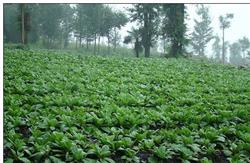
What are the key points of Rehmannia glutinosa cultivation management methods?
What management methods are there for Rehmannia glutinosa cultivation? Please provide guidance. Rehmannia glutinosa cultivation management is divided into several types, as follows: I. Field management 1. Timely thinning and replanting. When the seedlings are 10-12 cm tall, begin thinning, leaving 1 strong seedling per hole. If there are missing plants, replant promptly on a cloudy day, and when replanting, lift the seedlings with soil, ...
-
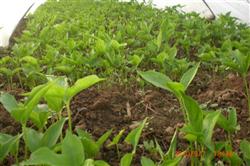
Open-field and greenhouse cultivation methods and techniques for Pinellia ternata (dry Pinellia)
How to grow dry Pinellia in a greenhouse? Please give an introduction. Dry Pinellia, also known as three-leaf Pinellia, Sanbujiao, and Mayuguo, is a commonly used Chinese medicinal herb, found growing wild in both northern and southern China. In recent years, due to the reclamation and use of barren hillsides and the heavy use of herbicides in farmland, its ecological environment has been damaged, resources have decreased year by year, and prices...
-
How to grow Pinellia ternata? Planting methods and key technical points
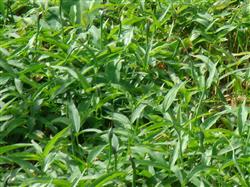
How to grow Pinellia ternata? Please give a detailed introduction. Pinellia ternata is also known as three-leaf pinellia, three-step jump, hemp jade fruit, swallow tail, etc. It is a plant of the genus Pinellia in the Araceae family. Pinellia is a commonly used traditional Chinese medicine, with its tubers used medicinally; it has functions such as drying dampness and transforming phlegm, and directing qi downward to stop vomiting. Raw pinellia is toxic. It is mainly produced in the provinces of the Yangtze River basin, and is now cultivated throughout the country...
-
Greenhouse Cultivation Methods and Technical Key Points for Pinellia ternata
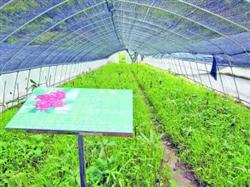
How to grow Pinellia ternata in a greenhouse? Please introduce the methods. Pinellia ternata, also known as three-leaf pinellia, three-step jump, and hemp jade fruit, is a commonly used Chinese medicinal herb, with wild distribution throughout both northern and southern China. In recent years, due to people's reclamation and utilization of barren hillsides and the heavy use of herbicides in farmland, its ecological environment has been damaged, resources have been decreasing year by year, and prices...
条件筛选