-
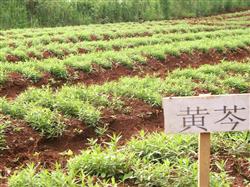
How to fertilize Scutellaria baicalensis (Baikal skullcap) when growing it? Introduction to scientific fertilization methods
How to fertilize when growing Scutellaria baicalensis? Please introduce the fertilization methods. When growing Scutellaria baicalensis, you can fertilize as follows. In the first year, after the seedlings are thinned to a stand, carry out the first fertilization, applying 500 kg of diluted human urine and manure per mu or 3-5 kg of urea, and in June-July topdress with 30 kg of ammonium phosphate. In the 2nd and 3rd years, after green-up, apply 40-50 kg of decomposed cake fertilizer, and in June...
-
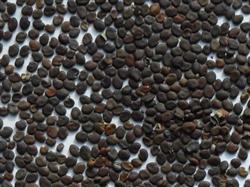
What are the common propagation methods for the medicinal herb Scutellaria baicalensis?
How is the medicinal herb Scutellaria baicalensis propagated? Please explain the methods. The propagation methods for the medicinal herb Scutellaria baicalensis can be carried out with reference to the following methods: 1. Cuttage propagation. The most suitable period for cuttage is May and June, when the plants are in a vigorous vegetative growth stage. Cut the semi-lignified young tender part from the upper end of the stem and branch (the survival rate is very low when the middle and lower parts of the stem are used as cuttings)...
-
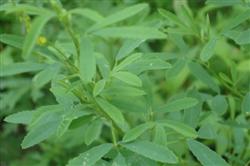
What environment suits Scutellaria baicalensis? Detailed sowing methods
What environment suits growing Scutellaria baicalensis? How do you sow Scutellaria baicalensis well? Here is an introduction: Scutellaria baicalensis can grow in areas with an annual average temperature of 4-10°C, an annual accumulated temperature of 2500-4000°C at ≥10°C, and a frost-free period of 120-180 days. Suitable soil conditions for sowing: deep soil layers, good drainage, loam, sandy loam or humus loam, and both flat land...
-
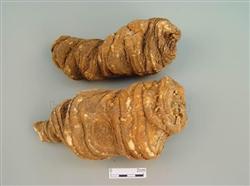
What are the uses of Paris polyphylla? A detailed guide to planting and management methods
What is Paris polyphylla used for? How do you plant and manage it? Please give an introduction. Paris polyphylla is also called Dulian (one-horn lotus), Qiyeyizhihua (seven leaves and one flower), Chonglou yizhijian (Paris polyphylla one arrow), etc. It belongs to the Liliaceae family and is a perennial herbaceous plant. It is one of the main ingredients of nationally protected traditional Chinese medicines such as "Yunnan Baiyao" and "Gongxuening". The medicinal part is the dried tuber of Paris polyphylla. Paris polyphylla tastes...
-
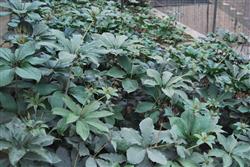
Paris polyphylla cultivation techniques shared, with practical methods explained in detail
Paris polyphylla is a perennial herbaceous plant with a long growth cycle; it takes 8 to 10 years from sowing to harvest. It is one of the main ingredients of state-protected traditional Chinese medicines such as "Yunnan Baiyao" and "Gongxuening". In recent years, with continuously increasing demand, the harvesting rate has far exceeded the rate of natural growth, causing Paris polyphylla resources to become sc...
-
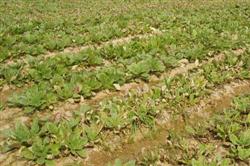
Detailed Explanation of Rehmannia Cultivation Methods and Technical Key Points
How is Rehmannia cultivated? Is there a technical introduction to Rehmannia planting? Rehmannia planting can be carried out by referring to the following methods: 1. Site selection and land preparation. It is advisable to choose sandy loam soil with deep soil layers, fertility, and good drainage. In the winter of the previous year or early spring, plow the soil more than 25 cm deep, and at the same time apply 2000-3000...
-
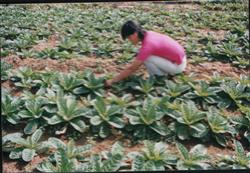
Detailed Explanation of Rehmannia Planting Methods and Technical Key Points
How to plant Rehmannia? Please give a detailed introduction to the planting method. Rehmannia, also known as Huai Rehmannia, Shengdi, and Shudi, is a plant of the genus Rehmannia in the Scrophulariaceae family. Its rhizome is used as medicine and has the effects of nourishing yin and clearing heat, stopping bleeding, and tonifying blood. It mainly treats conditions such as yin deficiency, blood deficiency, blurred vision and tinnitus, and soreness and pain in the waist and knees. The pollution-free cultivation techniques are introduced below...
-
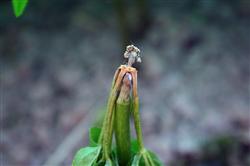
What are the control methods for ginseng gray mold?
How do you control ginseng gray mold? Please explain the methods. Ginseng gray mold symptoms: It damages ginseng leaves; the lesions on the leaves are limited by the leaf veins and appear polygonal or irregular. They are light brown, and on the underside of the lesions there is a sparse, thin, grayish-white or pale yellow mold layer, namely the pathogen's sporangiophores and sporangia. In the later stage, the lesion tissue necroses, breaks apart easily...
-
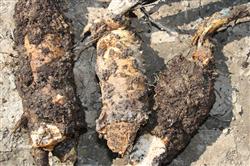
How to prevent and control ginseng root rot? These methods you need to master
How to prevent and control ginseng root rot? Please give an introduction. Symptoms of ginseng root rot: it mainly damages the roots of seedlings and the stem parts below the soil surface. The rotting ginseng roots appear dark brown and wet-rotten, and later become decayed and hollow, with only the hollow root skin remaining. The aboveground parts of affected ginseng seedlings show no obvious symptoms in the early stage, and in the middle and late stages the leaves fade to yellow, wilt and die....
-
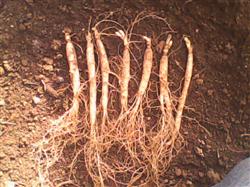
How to harvest ginseng? A detailed guide to harvest time and methods
How is ginseng harvested? Please give an introduction. Ginseng is a perennial herbaceous plant of the Araliaceae family, genus Panax, commonly known as bangchui. The dried root is used as medicine, and the medicinal material is called ginseng. In cultivation it is customarily called garden ginseng, while the wild form is called mountain ginseng. Ginseng is a traditional precious Chinese medicinal herb, with effects such as greatly tonifying vital energy, restoring the pulse and stabilizing collapse, tonifying the spleen and benefiting...
条件筛选